QUIZ ON ELECTROLYSIS
(UK GCSE Chemistry harder Higher Tier level)
In the electrolysis of moderately concentrated sodium chloride solution (brine) using carbon/platinum electrodes, the principal product formed at the positive anode is? [ef1]
chlorine
hydrogen
oxygen
sodium
In the electrolysis of moderately concentrated sodium chloride solution (brine) using carbon/platinum electrodes, the principal product formed at the negative cathode is? [ef2]
chlorine
hydrogen
oxygen
sodium
When copper(II) sulfate solution undergoes electrolysis using inert carbon or platinum electrodes the product at the positive anode is? [ef3]
sulfur
hydrogen
oxygen
copper
When copper(II) sulfate solution undergoes electrolysis using inert carbon or platinum electrodes the product at the negative cathode is? [ef4]
sulfur
hydrogen
oxygen
copper
In the electrolysis of sodium sulfate solution with carbon/platinum electrodes, what product is formed on the surface of the negative cathode? [ef5]
hydrogen
oxygen
sodium
sulfur dioxide
In the electrolysis of sodium sulfate solution with carbon/platinum electrodes, what product is formed on the surface of the positive anode? [ef6]
hydrogen
oxygen
sodium
sulfur dioxide
In the electrolysis of water acidified with sulfuric acid, using inert carbon or platinum electrodes, what product is formed on the surface of the negative cathode? [ef7]
sulfur
sulfur dioxide
hydrogen
oxygen
In the electrolysis of water acidified with sulfuric acid, using inert carbon or platinum electrodes, what product is formed on the surface of the positive anode? [ef8]
copper ions
sulfur dioxide
hydrogen
oxygen
When copper(II) sulfate solution undergoes electrolysis using carbon cathode and copper anode electrodes the product at the negative cathode is? [ef9]
copper
blue copper(II) ions
oxygen
hydrogen
When copper(II) sulfate solution undergoes electrolysis using a carbon cathode and copper anode electrodes the product at the positive anode is? [ef10]
copper
blue copper(II) ions
oxygen
hydrogen
When copper(II) chloride solution undergoes electrolysis using a carbon/platinum electrodes the product at the negative cathode is? [ef11]
hydrogen
blue copper(II) ions
copper
chlorine
When copper(II) chloride solution undergoes electrolysis using a carbon/platinum electrodes the product at the positive anode is? [ef12]
hydrogen
blue copper(II) ions
copper
chlorine
Which of the following statements is FALSE concerning the electrolysis of molten lead bromide, PbBr2 ? [ef13]
solid lead bromide can also undergo electrolysis
lead is formed at the cathode
bromine is formed at the anode
molten lead bromide can be decomposed by the passage of a d.c. electric current
Which of the following statements is FALSE concerning the electrolysis of molten lead bromide, PbBr2 ? [ef14]
solid lead bromide cannot undergo electrolysis
lead oxide is formed at the cathode
bromine is formed at the anode
molten lead bromide can be decomposed by the passage of a d.c. electric current
Which of the following statements is FALSE concerning the electrolysis of molten lead bromide, PbBr2 ? [ef15]
solid lead bromide cannot undergo electrolysis
lead is formed at the cathode
oxygen is formed at the anode
molten lead bromide can be decomposed by the passage of a d.c. electric current
Which of the following statements is FALSE concerning the electrolysis of molten lead bromide, PbBr2 ? [ef16]
solid lead bromide cannot undergo electrolysis
lead is formed at the cathode
bromine is formed at the anode
molten lead bromide can be decomposed by the passage of an a.c. electric current
Which of the following statements is FALSE concerning the electrolysis of molten sodium chloride, NaCl ? [ef17]
solid sodium chloride can also undergo electrolysis
sodium is formed at the cathode
chlorine is formed at the anode
molten sodium chloride can be decomposed by the passage of an d.c. electric current
Which of the following statements is FALSE concerning the electrolysis of molten sodium chloride, NaCl ? [ef18]
solid sodium chloride cannot undergo electrolysis
sodium is oxidised at the cathode
chlorine is formed at the anode
molten sodium chloride can be decomposed by the passage of an d.c. electric current
Which of the following statements is FALSE concerning the electrolysis of molten sodium chloride, NaCl ? [ef19]
solid sodium chloride cannot undergo electrolysis
sodium is formed at the cathode
chlorine is oxidised at the anode
molten sodium chloride can be decomposed by the passage of an d.c. electric current
Which of the following statements is FALSE concerning the electrolysis of molten sodium chloride, NaCl ? [ef20]
solid sodium chloride cannot undergo electrolysis
sodium is formed at the cathode
chlorine is formed at the anode
molten sodium chloride can be decomposed by the passage of an a.c. electric current
Which of the following statements is FALSE concerning the electrolysis of molten aluminium oxide, Al2O3 ? [ef21]
solid aluminium oxide can also undergo electrolysis
aluminium is formed at the cathode
oxygen is formed at the anode
molten aluminium oxide can be decomposed by the passage of an d.c. electric current
Which of the following statements is FALSE concerning the electrolysis of molten aluminium oxide, Al2O3 ? [ef22]
solid aluminium oxide cannot undergo electrolysis
aluminium is oxidised at the cathode
oxygen is formed at the anode
molten aluminium oxide can be decomposed by the passage of an d.c. electric current
Which of the following statements is FALSE concerning the electrolysis of molten aluminium oxide, Al2O3 ? [ef23]
solid aluminium oxide cannot undergo electrolysis
aluminium is formed at the cathode
oxygen cannot form at the anode
molten aluminium oxide can be decomposed by the passage of an d.c. electric current
Which of the following statements is FALSE concerning the electrolysis of molten aluminium oxide, Al2O3 ? [ef24]
solid aluminium oxide cannot undergo electrolysis
aluminium is formed at the cathode
oxygen is formed at the anode
molten aluminium oxide can be decomposed by the passage of an a.c. electric current
When copper(II) sulfate solution undergoes electrolysis using copper electrodes the product at the positive anode is? [ef25]
blue copper(II) ions
copper
hydrogen
oxygen
When copper(II) sulfate solution undergoes electrolysis using copper electrodes the product at the negative cathode is? [ef26]
blue copper(II) ions
copper
hydrogen
oxygen
Which of the following statements about electrolysis is FALSE? [ef27]
metals or hydrogen are formed at the cathode
any ionic compound dissolved in water can undergo electrolysis
an electrolyte is a solution or melt that cannot conduct a d.c. electrical current
positively charged ions migrate to the negatively charged cathode
Which of the following statements about electrolysis is FALSE? [ef28]
metals or hydrogen are formed at the cathode
any ionic compound dissolved in water can undergo electrolysis
an electrolyte is a solution or melt that contains ions and so conducts electricity
positively charged ions migrate to the anode
Which of the following statements about electrolysis is FALSE? [ef29]
metals or hydrogen are formed at the anode
any ionic compound dissolved in water can undergo electrolysis
an electrolyte is a solution or melt that contains ions and so conducts electricity
negatively charged ions migrate to the anode
Which of the following statements about electrolysis is FALSE? [ef30]
any ionic compound dissolved in water can undergo electrolysis
non-metals like oxygen and chlorine are formed at the cathode
an electrolyte is a solution or melt that contains ions and so conducts electricity
negatively charged ions migrate to the anode
Which of the following statements about electrolysis is FALSE? [ef31]
any ionic compound dissolved in water can undergo electrolysis
non-metals like oxygen and chlorine are formed at the anode
any compound dissolved in water can readily conduct electricity and undergo electrolysis.
positively charged ions migrate to the cathode
Which of the following statements about electrolysis is FALSE? [ef32]
any ionic compound dissolved in water can undergo electrolysis
non-metals like oxygen and chlorine are formed at the anode
What do we call the positive electrode in an electrolysis cell? [ef33]
anode
cathode
electrolyte
anion
cation
What do we call the negative electrode in an electrolysis cell? [ef34]
anode
cathode
electrolyte
anion
cation
What do we call a negatively charged ion? [ef35]
anode
cathode
electrolyte
anion
cation
What do we call a positively charged ion? [ef36]
anode
cathode
electrolyte
anion
cation
Electrolysis is brought about by passing a d.c. electrical current through a solution of ions (electrolyte). Which of the following statements is FALSE? [eh-1]
oxidation involves electron gain
an electrolyte is an electrically conducting solution of ions
oxidation occurs at the anode
cations are reduced at an electrode
Electrolysis is brought about by passing a d.c. electrical current through a solution of ions (electrolyte). Which of the following statements is FALSE? [eh-2]
an electrolyte is an electrically conducting solution of ions
reduction involves electron loss
oxidation occurs at the anode
cations are reduced at an electrode
Electrolysis is brought about by passing a d.c. electrical current through a solution of ions (electrolyte). Which of the following statements is FALSE? [eh-3]
anions are oxidised at an electrode
reduction involves electron gain
oxidation occurs at the cathode
an electrolyte is an electrically conducting solution of ions
Electrolysis is brought about by passing a d.c. electrical current through a solution of ions (electrolyte). Which of the following statements is FALSE? [eh-4]
anions are oxidised at an electrode
reduction involves electron gain
an electrolyte is an electrically conducting solution of ions
cations are reduced at the anode
Given the following half-equation for what may happen on the surface of an electrode in electrolysis. 2H+(aq) + 2e- ==> H2(g) Which statement is TRUE about this electrode equation? [eh-5]
it is a reduction at the cathode
it is an oxidation at the anode
the solution must to be acid for this cathode half-reaction to happen
it involves electron gain at the anode
Given the following half-equation for what may happen on the surface of an electrode in electrolysis. 2H+(aq) + 2e- ==> H2(g) Which statement is TRUE about this electrode equation? [eh-6]
it is an oxidation at the anode
the solution does not have to be acid for this cathode half-reaction to happen
it is an oxidation at the cathode
it involves electron loss at the anode
Given the following half-equation for what may happen on the surface of an electrode in electrolysis. 2Cl-(aq) ==> Cl2(g) + 2e- Which statement is TRUE about this electrode equation? [eh-7]
it is a reduction at the cathode
it involves electron loss at the cathode
it is an oxidation at the anode
it involves electron gain at the anode
Given the following half-equation for what may happen on the surface of an electrode in electrolysis. 2Cl-(aq) ==> Cl2(g) + 2e- Which statement is TRUE about this electrode equation? [eh-8]
it is a reduction at the cathode
it involves electron loss at the cathode
it is a reduction at the anode
it involves electron loss at the anode
Given the following half-equation for what may happen on the surface of an electrode in electrolysis. Cu2+(aq) + 2e- ==> Cu(s) Which statement is TRUE about this electrode equation? [eh-9]
it is a reduction at the cathode
it is an oxidation at the anode
it involves electron loss at the cathode
it involves electron gain at the anode
Given the following half-equation for what may happen on the surface of an electrode in electrolysis. Cu2+(aq) + 2e- ==> Cu(s) Which statement is TRUE about this electrode equation? [eh-10]
it is an oxidation at the cathode
it involves electron gain at the cathode
it involves electron loss at the anode
it involves electron gain at the anode
Given the following half-equation for what may happen on the surface of an electrode in electrolysis. Cu(s) ==> Cu2+(aq) + 2e- Which statement is TRUE about this electrode equation? [eh-11]
it is an oxidation at the cathode
it involves electron gain at the cathode
it involves electron loss at the anode
it involves reduction at the anode
Given the following half-equation for what may happen on the surface of an electrode in electrolysis. Cu(s) ==> Cu2+(aq) + 2e- Which statement is TRUE about this electrode equation? [eh-12]
it is an oxidation at the cathode
it involves electron gain at the cathode
it involves electron gain at the anode
it involves an oxidation at the anode
Given the following half-equation for what may happen on the surface of an electrode in electrolysis. 4OH- ==> 2H2O(l) + O2(g) + 4e- Which statement is TRUE about this electrode equation? [eh-13]
it involves electron loss at the anode
it involves electron gain at the cathode
it involves reduction at the anode
it involves an oxidation at the cathode
Given the following half-equation for what may happen on the surface of an electrode in electrolysis. 4OH- ==> 2H2O(l) + O2(g) + 4e- Which statement is TRUE about this electrode equation? [eh-13]
it is an reduction at the cathode
it involves an oxidation at the anode
it involves electron gain at the anode
it involves electron loss at the cathode
Which of the following is the correctly balanced electrode half equation for the cathode in the electrolysis of acidified water? [eh-15]
2H+(aq) + 2e- ==> H2(g)
4OH- ==> 2H2O(l) + O2(g) + 4e-
H+(aq) + e- ==> H(g)
2OH- ==> H2O(l) + O2(g) + 2e-
Which of the following is the correctly balanced electrode half equation for the anode in the electrolysis of acidified water? [eh-16]
2H+(aq) + 2e- ==> H2(g)
4OH- ==> 2H2O(l) + O2(g) + 4e-
H+(aq) + e- ==> H(g)
2OH- ==> H2O(l) + O2(g) + 2e-
Which of the following is the correctly balanced electrode half equation for the cathode in the electrolysis of copper(II) sulfate with carbon electrodes? [eh-17]
Cu2+(aq) + 2e- ==> Cu(s)
Cu(s) ==> Cu2+(aq) + 2e-
4OH- ==> 2H2O(l) + O2(g) + 4e-
2OH- ==> H2O(l) + O2(g) + 2e-
Cu2+(aq) + e- ==> Cu(s)
Cu(s) ==> Cu2+(aq) + e-
Which of the following is the correctly balanced electrode half equation for the anode in the electrolysis of copper(II) sulfate with carbon electrodes? [eh-18]
Cu2+(aq) + 2e- ==> Cu(s)
Cu(s) ==> Cu2+(aq) + 2e-
4OH- ==> 2H2O(l) + O2(g) + 4e-
2OH- ==> H2O(l) + O2(g) + 2e-
Cu2+(aq) + e- ==> Cu(s)
Cu(s) ==> Cu2+(aq) + e-
Which of the following is the correctly balanced electrode half equation for the anode in the electrolysis of copper(II) sulfate with copper electrodes? [eh-19]
Cu2+(aq) + 2e- ==> Cu(s)
Cu(s) ==> Cu2+(aq) + 2e-
4OH- ==> 2H2O(l) + O2(g) + 4e-
2OH- ==> H2O(l) + O2(g) + 2e-
Cu2+(aq) + e- ==> Cu(s)
Cu(s) ==> Cu2+(aq) + e-
Which of the following is the correctly balanced electrode half equation for the cathode in the electrolysis of copper(II) sulfate with copper electrodes? [eh-20]
 In the electrolysis of moderately concentrated sodium chloride solution (brine) using carbon/platinum electrodes, the principal product formed at the positive anode is? [ef1]
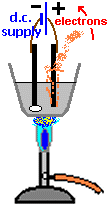 Which of the following statements is FALSE concerning the electrolysis of molten lead bromide, PbBr2 ? [ef13]
 When copper(II) sulfate solution undergoes electrolysis using copper electrodes the product at the positive anode is? [ef25]
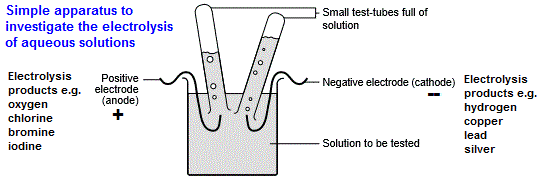 Electrolysis is brought about by passing a d.c. electrical current through a solution of ions (electrolyte). Which of the following statements is FALSE? [eh-1]