Which four quantities a, b, c and d are required to balance the equation ...
aCH4(g) + bO2(g) ==> cCO2(g) + dH2O(l) ?[eq-1]- 1 2 1 2
- 1 1 1 2
- 1 2 2 1
- 1 1 1 1
- Which four quantities a, b, c and d are required to balance the equation ...
aC2H6(g) + bO2(g) ==> cCO2(g) + dH2O(l) ?[eq-2]- 1 2 1 3
- 2 7 4 6
- 2 4 4 6
- 1 7 2 3
- Which four quantities a, b, c and d are required to balance the equation ...
aC3H8(g) + bO2(g) ==> cCO2(g) + dH2O(l) ?[eq-3]- 1 3 3 4
- 2 10 4 6
- 1 5 3 4
- 2 5 2 3
- Which four quantities a, b, c and d are required to balance the equation ...
aC4H10(g) + bO2(g) ==> cCO2(g) + dH2O(l) ?[eq-4]- 1 13 8 4
- 2 7 4 10
- 1 5 3 4
- 2 13 8 10
- Which four quantities a, b, c and d are required to balance the equation ...
aC5H12(l) + bO2(g) ==> cCO2(g) + dH2O(l) ?[eq-5]- 1 8 5 6
- 1 4 4 6
- 2 4 5 12
- 2 8 10 12
- Which four quantities a, b, c and d are required to balance the equation ...
aC6H14(g) + bO2(g) ==> cCO2(g) + dH2O(l) ?[eq-6]- 2 9 6 14
- 2 19 12 14
- 1 9 6 7
- 1 10 12 7
- Which four quantities a, b, c and d are required to balance the equation ...
aC7H16(l) + bO2(g) ==> cCO2(g) + dH2O(l) ?[eq-7]- 1 5 7 8
- 2 12 14 16
- 1 11 7 8
- 2 11 14 16
- Which four quantities a, b, c and d are required to balance the equation ...
aC8H18(g) + bO2(g) ==> cCO2(g) + dH2O(l) ?[eq-8]- 1 13 8 18
- 1 13 8 9
- 2 13 16 18
- 2 25 16 18
- Which four quantities a, b, c and d are required to balance the equation ...
aC2H4(g) + bO2(g) ==> cCO2(g) + dH2O(l) ?[eq-9]- 1 3 2 2
- 1 2 2 2
- 2 3 4 4
- 2 6 4 4
- Which four quantities a, b, c and d are required to balance the equation ...
aC3H6(g) + bO2(g) ==> cCO2(g) + dH2O(l) ?[eq-10]- 2 5 6 6
- 2 9 6 6
- 1 5 3 3
- 1 9 3 3
- Which four quantities a, b, c and d are required to balance the equation ...
aC4H8(g) + bO2(g) ==> cCO2(g) + dH2O(l) ?[eq-11]- 2 12 8 8
- 2 6 8 8
- 1 6 4 4
- 1 3 4 4
- Which four quantities a, b, c and d are required to balance the equation ...
aC7H8(g) + bO2(g) ==> cCO2(g) + dH2O(l) ?[eq-12]- 2 9 4 8
- 2 10 14 8
- 1 5 7 4
- 1 9 7 4
 Which three quantities a, b and c are required to balance the equation ...
aFe(s) + bO2(g) ==> cFe3O4(s) ? [eq-13]- 3 2 1
- 3 4 1
- 6 4 2
- 6 2 2
- Which three quantities a, b and c are required to balance the equation ...
aLi(s) + bO2(g) ==> cLi2O(s) ? [eq-14]- 2 1 2
- 4 1 2
- 4 2 1
- 2 2 1
- Which three quantities a, b and c are required to balance the equation ...
aAl(s) + bO2(g) ==> cAl2O3(s) ? [eq-15]- 1 3 2
- 4 6 4
- 4 3 2
- 2 3 2
- Which three quantities a, b and c are required to balance the equation ...
aMg(s) + bO2(g) ==> cMgO(s) ? [eq-16]- 1 1 2
- 4 2 2
- 2 1 1
- 2 1 2
- Which four quantities a, b, c and d are required to balance the equation ...
aZn(s) + bHCl(aq) ==> cZnCl2(aq) + dH2(g) ? [eq-17]- 1 2 1 1
- 2 2 2 1
- 2 1 1 2
- 1 1 2 2
- Which four quantities a, b, c and d are required to balance the equation ...
aFe(s) + bH2SO4(aq) ==> cFeSO4(aq) + dH2(g) ? [eq-18]- 1 1 1 2
- 1 1 1 1
- 2 2 2 1
- 2 1 2 2
- Which four quantities a, b, c and d are required to balance the equation ...
aAl(s) + bHCl(aq) ==> cAlCl3(aq) + dH2(g) ? [eq-19]- 1 6 3 2
- 2 3 2 3
- 2 6 2 3
- 1 3 3 2
- Which four quantities a, b, c and d are required to balance the equation ...
aAl(s) + bH2SO4(aq) ==> cAl2(SO4)3(aq) + dH2(g) ? [eq-20]- 1 3 1 3
- 2 3 2 3
- 1 2 2 2
- 2 3 1 3
- Which four quantities a, b, c and d are required to balance the equation ...
aNa(s) + bH2O(l) ==> cNaOH(aq) + dH2(g) ? [eq-21]- 2 2 2 1
- 2 1 2 1
- 1 2 1 2
- 1 1 1 2
- Which four quantities a, b, c and d are required to balance the equation ...
aCa(s) + bH2O(l) ==> cCa(OH)2(aq) + dH2(g) ? [eq-22]- 2 2 2 1
- 1 2 1 1
- 1 2 1 2
- 2 1 1 2
- Which four quantities a, b, c and d are required to balance the equation ...
aFe(s) + bH2O(g) ==> cFe3O4(s) + dH2(g) ? [eq-23]- 3 4 1 2
- 2 3 1 4
- 3 4 1 4
- 2 3 2 2
- Which four quantities a, b, c and d are required to balance the equation ...
aAl(s) + bH2O(g) ==> cAl2O3(s) + dH2(g) ? [eq-24]- 3 4 1 6
- 1 3 1 3
- 2 4 2 6
- 2 3 1 3
- Which four quantities a, b, c and d are required to balance the equation ...
aMg(s) + bCuSO4(aq) ==> cMgSO4(aq) + dCu(s) ? [eq-25]- 1 1 1 1
- 2 1 2 2
- 1 2 1 2
- 2 2 2 1
- Which four quantities a, b, c and d are required to balance the equation ...
aCu(s) + bAgNO3(aq) ==> cCu(NO3)2(aq) + dAg(s) ? [eq-26]- 1 1 2 1
- 1 2 1 2
- 2 2 1 2
- 2 2 2 1
- Which four quantities a, b, c and d are required to balance the equation ...
aZn(s) + bFe2(SO4)3(aq) ==> cZnSO4(aq) + dFe(s) ? [eq-27]- 3 2 6 2
- 3 1 3 3
- 3 1 3 2
- 2 2 6 3
- Which four quantities a, b, c and d are required to balance the equation ...
aAl(s) + bFe2O3(s)) ==> cAl2O3(s) + dFe(s) ? [eq-28]- 1 2 2 1
- 3 1 1 3
- 2 3 2 3
- 2 1 1 2
- Which four quantities a, b, c and d are required to balance the equation ...
aCl2(aq) + bKBr(aq) ==> cKCl(aq) + dBr2(aq) ? [eq-29]- 1 2 2 1
- 2 1 1 1
- 1 1 2 2
- 2 2 1 2
- Which four quantities a, b, c and d are required to balance the equation ...
aBr2(aq) + bNaI(aq) ==> cNaBr(aq) + dI2(aq) ? [eq-30]- 1 2 1 2
- 1 2 2 1
- 1 1 2 2
- 2 2 1 2
- Which four quantities a, b, c and d are required to balance the equation ...
aCl2(aq) + bCaI2(aq) ==> cCaCl2(aq) + dI2(s) ? [eq-31]- 2 1 2 1
- 1 2 2 2
- 1 1 1 1
- 2 2 1 2
- Which four quantities a, b, c and d are required to balance the equation ...
aAlBr3(aq) + bCl2(aq) ==> cAlCl3(aq) + dBr2(s) ? [eq-32]- 1 3 2 2
- 1 3 1 3
- 3 2 2 2
- 2 3 2 3
- Which five quantities a, b, c, d and e are required to balance the equation ...
aCaCO3(s) + bHCl(aq) ==> cCaCl2(aq) + dH2O(l) + eCO2(g) ? [eq-33]- 1 2 1 1 1
- 2 2 1 2 1
- 1 1 1 1 1
- 2 1 2 2 2
- Which five quantities a, b, c, d and e are required to balance the equation ...
aNa2CO3(s) + bHCl(aq) ==> cNaCl(aq) + dH2O(l) + eCO2(g) ? [eq-34]- 1 4 4 2 2
- 1 2 2 1 1
- 2 2 4 2 2
- 2 2 2 1 1
- Which five quantities a, b, c, d and e are required to balance the equation ...
aTl2(CO3)3(s) + bHCl(aq) ==> cTlCl3(aq) + dH2O(l) + eCO2(g) ? [eq-35]- 2 6 4 3 6
- 1 3 2 6 2
- 1 6 2 3 3
- 2 3 4 3 6
- Which five quantities a, b, c, d and e are required to balance the equation ...
aTl2(CO3)3(s) + bH2SO4(aq) ==> cTl2(SO4)3(aq) + dH2O(l) + eCO2(g) ? [eq-36]- 2 6 4 3 6
- 1 3 2 6 6
- 1 6 2 6 3
- 1 3 1 3 3
- Which three quantities a, b and c are required to balance the equation ...
aNa(s) + bCl2(g) ==> cNaCl(s) ? [eq-37]- 2 1 2
- 1 1 1
- 1 2 1
- 2 1 1
- Which three quantities a, b and c are required to balance the equation ...
aAl(s) + bCl2(g) ==> cAlCl3(s) ? [eq-38]- 1 3 1
- 2 3 2
- 2 2 3
- 1 3 2
- Which three quantities a, b and c are required to balance the equation ...
aCa(s) + bCl2(g) ==> cCaCl2(s) ? [eq-39]- 1 2 1
- 1 1 2
- 1 1 1
- 2 2 1
- Which three quantities a, b and c are required to balance the equation ...
aP(s) + bCl2(g) ==> cPCl5(s) ? [eq-40]- 1 5 1
- 1 5 2
- 2 5 4
- 2 5 2
- Which four quantities a, b, c and d are required to balance the equation ...
aFe2O3(s) + bCO(g) ==> cFe(l) + dCO2(g) ? eq-41]- 1 3 2 3
- 1 6 2 6
- 2 6 4 3
- 2 3 4 6
- Which four quantities a, b, c and d are required to balance the equation ...
aCuO(s) + bH2(g) ==> cCu(l) + dH2O(g) ? [eq-42]- 2 1 1 1
- 1 1 1 1
- 1 2 2 1
- 2 1 2 1
- Which four quantities a, b, c and d are required to balance the equation ...
aCuO(s) + bC(s) ==> cCu(s) + dCO2(g) ? [eq-43]- 1 2 1 2
- 2 2 2 1
- 2 1 2 1
- 1 1 1 2
- Which four quantities a, b, c and d are required to balance the equation ...
aFe3O4(s) + bC(s) ==> cFe(l) + dCO2(g) ? [eq-44]- 2 1 3 2
- 1 3 2 1
- 2 1 2 1
- 1 2 3 2
- Which four quantities a, b, c and d are required to balance the equation ...
aNaOH(aq) + bHCl(aq) ==> cNaCl(aq) + dH2O(l) ? [eq-45]- 1 1 1 1
- 1 2 2 1
- 2 1 1 2
- 1 2 2 1
- Which four quantities a, b, c and d are required to balance the equation ...
aCa(OH)2(aq) + bHCl(aq) ==> cCaCl2(aq) + dH2O(l) ? [eq-46]- 1 2 1 1
- 1 2 1 2
- 2 1 1 2
- 2 2 2 1
- Which four quantities a, b, c and d are required to balance the equation ...
aAl(OH)3(s) + bHCl(aq) ==> cAlCl3(aq) + dH2O(l) ? [eq-47]- 2 6 2 3
- 1 6 2 6
- 1 3 1 3
- 2 3 2 3
- Which four quantities a, b, c and d are required to balance the equation ...
aFe2O3(s) + bHCl(aq) ==> cFeCl3(aq) + dH2O(l) ? [eq-48]- 2 6 2 3
- 1 6 2 6
- 1 3 1 3
- 1 6 2 3
- Which four quantities a, b, c and d are required to balance the equation ...
aMgO(s) + bHCl(aq) ==> cMgCl2(aq) + dH2O(l) ? [eq-49]- 1 2 1 1
- 1 1 1 1
- 2 2 1 2
- 1 4 1 2
- Which four quantities a, b, c and d are required to balance the equation ...
aMg(OH)2(s) + bH2SO4(aq) ==> cMgSO4(aq) + dH2O(l) ? [eq-50]- 1 2 1 1
- 1 1 1 2
- 2 2 1 2
- 1 4 1 2
- Which four quantities a, b, c and d are required to balance the equation ...
aLi2O(s) + bHCl(aq) ==> cLiCl(aq) + dH2O(l) ? [eq-51]- 1 2 1 1
- 1 1 1 1
- 1 2 2 1
- 1 2 1 2
- Which four quantities a, b, c and d are required to balance the equation ...
aKOH(aq) + bH2SO4(aq) ==> cK2SO4(aq) + dH2O(l) ? [eq-52]- 1 2 1 1
- 1 1 1 1
- 2 2 1 2
- 2 1 1 2
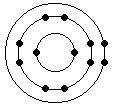
- Which electron arrangement is a Halogen? [as-5]


- electron arrangement W
- electron arrangement X
- electron arrangement Y
- electron arrangement Z
- Which electron arrangement corresponds to the most reactive metal? [as-6]
- electron arrangement W
- electron arrangement X
- electron arrangement Y
- electron arrangement Z
- Which electron arrangement corresponds to the first element on period 2 of the Periodic Table? [as-8]
- electron arrangement W
- electron arrangement X
- electron arrangement Y
- electron arrangement Z
- Which electron arrangement corresponds to the most reactive non-metallic element of the Periodic Table? [as-9]
- electron arrangement W
- electron arrangement X
- electron arrangement Y
- electron arrangement Z
- Which electron arrangement corresponds to a metal in Group 3 of the Periodic Table? [as-10]
- electron arrangement W
- electron arrangement X
- electron arrangement Y
- electron arrangement Z
- Which electron arrangements correspond to two elements in the same Group of the Periodic Table? [as-11]
- electron arrangement W and X
- electron arrangements X and Z
- electron arrangement Y and Z
- electron arrangement W and Z
- Which electron arrangements correspond to two elements on the same period of the Periodic Table? [as-13]
- electron arrangement W and X
- electron arrangements X and Z
- electron arrangement Y and Z
- electron arrangement W and Z

Which of the elements listed has 1 outer electron? [as-19]- element Q
- element R
- element Z
- element G
Which of the elements listed is a Halogen? [as-20]- element Q
- element R
- element Z
- element G
Which of the elements listed is an Alkali Metal? [as-21]- element Q
- element R
- element Z
- element G
Which of the elements listed would be chemically the most similar? [as-22]- elements Q and R
- elements R and A
- elements M and X
- elements G and M
Which of the elements listed are in the same period? [as-23]- elements Q and R
- elements R and A
- elements M and X
- elements G and M
Which of the elements listed are both Halogen non-metals with 7 outer electrons? [as-25]- elements Z and Y
- elements Q and R
- elements G and E
- elements T and W
Which of the elements listed are both in Group 3? [as-26]- elements Z and Y
- elements Q and E
- elements G and E
- elements D and Y
Which of the elements listed are both Noble Gases? [as-27]- elements Z and T
- elements Q and R
- elements G and E
- elements T and W
 The nucleus of an atom consists of? [as-28]
- protons and neutrons
- neutrons and electrons
- protons and electrons
- protons only
- The Atomic Number of an element is? [as-29]
- the number of neutrons in the nucleus
- the sum of the protons and neutrons in the nucleus
- the number of protons in the nucleus
- the number of electrons in the outer shell
- The Mass Number of an element is? [as-30]
- the number of neutrons in the nucleus
- the sum of the protons and neutrons in the nucleus
- the number of protons in the nucleus
- the number of electrons in the outer shell
- Which description corresponds to a neutron? [as-31]
- mass = 1/1850, electric charge = -1
- mass = 1, electric charge = 0
- mass = 1, electric charge = +1
- mass = 4, electric charge = +2
- Which description corresponds to a proton? [as-32]
- mass = 1/1850, electric charge = -1
- mass = 1, electric charge = 0
- mass = 1, electric charge = +1
- mass = 4, electric charge = +2
- Which description corresponds to a electron? [as-36]
- mass = 1/1850, electric charge = -1
- mass = 1, electric charge = 0
- mass = 1, electric charge = +1
- mass = 4, electric charge = +2
- Which is an electron arrangement of an element in Group 5 of the Periodic Table? [as-37]
- 2.5
- 2.7
- 2.8.8
- 2.8.8.1
- Which is an electron arrangement of a Halogen? [as-38]
- 2.5
- 2.7
- 2.8.8
- 2.8.8.1
- Which is the electron arrangement of a Noble Gas? [as-39]
- 2.5
- 2.7
- 2.8.8
- 2.8.8.1
- Which is the electron arrangement of an Alkali Metal? [as-40]
- 2.5
- 2.7
- 2.8.8
- 2.8.8.1
- Which is an electron arrangement of a Noble Gas? [as-41]
- 2
- 2.3
- 2.8.5
- 2.8.8.2
- Which is an electron arrangement of a Period 1 element? [as-42]
- 2
- 2.3
- 2.8.7
- 2.8.8.1
- Which is an electron arrangement of a Period 2 element? [as-43]
- 2
- 2.3
- 2.8.6
- 2.8.8.2
- Which is an electron arrangement of a Group 3 element? [as-44]
- 2
- 2.3
- 2.8.5
- 2.8.8.2
- Which is an electron arrangement of a Group 5 element? [as-45]
- 2
- 2.3
- 2.8.5
- 2.8.8.2
- Which is an electron arrangement of a Period 3 element? [as-46]
- 2.1
- 2.3
- 2.8.5
- 2.8.8.2
- Which is an electron arrangement of a Group 2 element? [as-47]
- 2
- 2.3
- 2.8.6
- 2.8.8.2
- Which is an electron arrangement of a Period 4 element? [as-48]
- 2
- 2.4
- 2.2
- 2.8.8.2

Which statement is TRUE about the modern PERIODIC TABLE? [pt-14]- the elements are laid out in order of atomic number
- elements in the same group have an increasing number of electrons in the outer shell with increase in atomic number down the group
- from left to right, elements in the same period, use an increasing number of electron shells (energy levels)
- most elements are non-metals
Which statement is TRUE about the modern PERIODIC TABLE? [pt-15]- the elements are laid out in order of relative atomic mass
- elements in the same group have the same number of electrons in the outer shell or energy level
- from left to right, elements in the same period, use an increasing number of electron shells (energy levels)
- most elements are non-metals
Which statement is TRUE about the modern PERIODIC TABLE? [pt-16]- the elements are laid out in order of relative atomic mass
- elements in the same group have an increasing number of electrons in the outer shell with increase in atomic number down the group
- elements in the same period use the same number of shells (energy levels)
- most elements are non-metals
Which statement is TRUE about the modern PERIODIC TABLE? [pt-17]- the elements are laid out in order of relative atomic mass
- elements in the same group have an increasing number of electrons in the outer shell with increase in atomic number down the group
- from left to right, elements in the same period, use an increasing number of electron shells (energy levels)
- most elements are metals
Which statement is TRUE about the modern PERIODIC TABLE? [pt-18]- the elements are laid out in order of number of neutrons
- elements in the same group have an increasing number of electrons in the outer shell with increase in atomic number down the group
- from left to right, elements in the same period, use an increasing number of electron shells (energy levels)
- the elements were originally laid out in order of atomic mass
Which of the elements shown has 1 outer electron? [pt-19]- element Q
- element R
- element Z
- element G
Which of the elements shown is a Halogen? [pt-20]- element Q
- element R
- element Z
- element G
Which of the elements shown is an Alkali Metal? [pt-21]- element Q
- element R
- element Z
- element G
Which of the elements shown would be chemically the most similar? [pt-22]- elements Q and R
- elements R and A
- elements M and X
- elements G and M
Which of the elements shown are in the same period? [pt-23]- elements Q and R
- elements R and A
- elements M and X
- elements G and M
Which of the elements shown are both likely to be metals? [pt-24]- elements Z and Y
- elements Q and R
- elements G and E
- elements T and W
Which of the elements shown are both Halogen non-metals with 7 outer electrons? [pt-25]- elements Z and Y
- elements Q and R
- elements G and E
- elements T and W
Which of the elements shown are both in Group 3? [pt-26]- elements Z and Y
- elements Q and E
- elements G and E
- elements D and Y
Which of the elements shown are both Noble Gases? [pt-27]- elements Z and T
- elements Q and R
- elements G and E
- elements T and W
Where in the Periodic Table are you MOST LIKELY to find an element that is a shiny solid and reacts fast with cold water? [pt-28]- Group 1
- Group 7
- Group 0 (8)
- Transition Series
- The Atomic Number of an element is? [pt-29]
- the number of neutrons in the nucleus
- the sum of the protons and neutrons in the nucleus
- the number of protons in the nucleus
- the number of electrons in the outer shell
- The Mass Number of an element is? [pt-30]
- the number of neutrons in the nucleus
- the sum of the protons and neutrons in the nucleus
- the number of protons in the nucleus
- the number of electrons in the outer shell
Where in the Periodic Table are you MOST LIKELY to find an element that forms an alkaline hydroxide in water? [pt-31]- Group 1
- Group 7
- Group 0 (8)
- Transition Series
Where in the Periodic Table are you MOST LIKELY to find an element that is a soft silvery solid? [pt-32]- Group 1
- Group 7
- Group 0 (8)
- Transition Series
Where in the Periodic Table are you MOST LIKELY to find an element that readily forms an M+ ion? [pt-33]- Group 1
- Group 7
- Group 0 (8)
- Transition Series
Where in the Periodic Table are you MOST LIKELY to find an element that is rapidly oxidised (corroded) in air? [pt-34]- Group 1
- Group 7
- Group 0 (8)
- Transition Series
Where in the Periodic Table are you MOST LIKELY to find an element that is a low melting solid and a good conductor of heat? [pt-35]- Group 1
- Group 7
- Group 0 (8)
- Transition Series
- Four electron arrangements are given below.
Which is of an element in Group 5 of the Periodic Table? [pt-37]- 2.5
- 2.7
- 2.8.8
- 2.8.8.1
- Four electron arrangements are given below.
Which is a Halogen? [pt-38]- 2.5
- 2.7
- 2.8.8
- 2.8.8.1
- Four electron arrangements are given below.
Which is a Noble Gas? [pt-39]- 2.5
- 2.7
- 2.8.8
- 2.8.8.1
- Four electron arrangements are given below.
Which is an Alkali Metal? [pt-40]- 2.5
- 2.7
- 2.8.8
- 2.8.8.1
- Four electron arrangements are given below.
Which is of a Noble Gas? [pt-41]- 2
- 2.3
- 2.8.5
- 2.8.8.2
- Four electron arrangements are given below.
Which is of a Period 1 element? [pt-42]- 2
- 2.3
- 2.8.7
- 2.8.8.1
- Four electron arrangements are given below.
Which is of a Period 2 element? [pt-43]- 2
- 2.3
- 2.8.6
- 2.8.8.2
- Four electron arrangements are given below.
Which is of a Group 3 element? [pt-44]- 2
- 2.3
- 2.8.5
- 2.8.8.2
- Four electron arrangements are given below.
Which is of a Group 5 element? [pt-45]- 2
- 2.3
- 2.8.5
- 2.8.8.2
- Four electron arrangements are given below.
Which is of a Period 3 element? [pt-46]- 2.1
- 2.3
- 2.8.5
- 2.8.8.2
- Four electron arrangements are given below.
Which is of a Group 2 element? [pt-47]- 2
- 2.3
- 2.8.6
- 2.8.8.2
- Four electron arrangements are given below.
Which is of a Period 4 element? [pt-48]- 2
- 2.4
- 2.2
- 2.8.8.2
Where in the Periodic Table are you MOST LIKELY to find a solid element that is a poor conductor of heat and electricity? [pt-51]- Group 1
- Group 7
- Group 0 (8)
- Transition Series
Where in the Periodic Table are you MOST LIKELY to find an element that is a very reactive non-metal? [pt-52]- Group 1
- Group 7
- Group 0 (8)
- Transition Series
Where in the Periodic Table are you MOST LIKELY to find an element that shows little reaction with other elements? [pt-54]- Group 1
- Group 7
- Group 0 (8)
- Transition Series
Where in the Periodic Table are you MOST LIKELY to find an element that is a colourless gas? [pt-55]- Group 1
- Group 7
- Group 0 (8)
- Transition Series
Where in the Periodic Table are you MOST LIKELY to find an element that has a full outer electron shell? [pt-56]- Group 1
- Group 7
- Group 0 (8)
- Transition Series
Where in the Periodic Table are you MOST LIKELY to find an element that is used to provide an 'inert' atmosphere in welding? [pt-58]- Group 1
- Group 7
- Group 0 (8)
- Transition Series
Where in the Periodic Table are you MOST LIKELY to find an element that is a hard tough metal? [pt-60]- Group 1
- Group 7
- Group 0 (8)
- Transition Series
Where in the Periodic Table are you MOST LIKELY to find an element that is a high melting solid? [pt-61]- Group 1
- Group 7
- Group 0 (8)
- Transition Series
Where in the Periodic Table are you MOST LIKELY to find an element that forms a variety of coloured compounds? [pt-62]- Group 1
- Group 7
- Group 0 (8)
- Transition Series
Where in the Periodic Table are you MOST LIKELY to find an element that shows catalytic properties? [pt-63]- Group 1
- Group 7
- Group 0 (8)
- Transition Series
Where in the Periodic Table are you MOST LIKELY to find an element that is a strong dense solid? [pt-64]- Group 1
- Group 7
- Group 0 (8)
- Transition Series
Where in the Periodic Table are you MOST LIKELY to find an element that forms a coloured oxide used to stain glass windows? [pt-65]- Group 1
- Group 7
- Group 0 (8)
- Transition Series
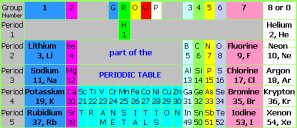
Which of the following elements is a liquid non-metal at room temperature and pressure? [pt-66]- bromine
- carbon
- copper
- mercury
Which of the following elements is a solid non-metal at room temperature and pressure? [pt-67]- bromine
- carbon
- copper
- mercury
Which of the following elements is a solid metal at room temperature and pressure? [pt-68]- bromine
- carbon
- copper
- mercury
Which of the following elements is a liquid metal at room temperature and pressure? [pt-69]- bromine
- carbon
- copper
- mercury
Which of the following elements is a gas at room temperature and pressure? [pt-70]- nitrogen
- sulfur
- chromium
- tin
Which of the following elements is a yellow solid non-metal at room temperature and pressure? [pt-71]- carbon
- sulfur
- chromium
- tin
Which of the following elements is a shiny solid at room temperature and pressure? [pt-72]- carbon
- sulfur
- nickel
- phosphorus
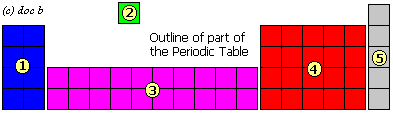
The diagram shows an outline of parts of the Periodic Table.
In which section will you find the most reactive metals? [pt-73]- section 1
- section 3
- section 4
- section 5
The diagram shows an outline of parts of the Periodic Table.
In which section will you find the Transition Metals? [pt-74]- section 1
- section 3
- section 4
- section 5
The diagram shows an outline of parts of the Periodic Table.
In which section will you find most of the non-metals? [pt-75]- section 1
- section 3
- section 4
- section 5
- The diagram shows an outline of parts of the Periodic Table.
In which section will you find the Noble Gases? [pt-76]- section 1
- section 3
- section 4
- section 5
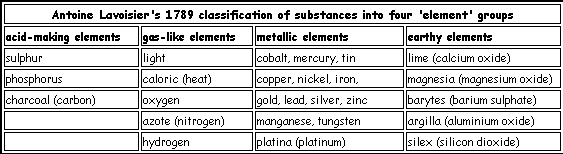
Which statement about Lavoisier's 1789 classification of elements is TRUE? [pt-77]- 'light' and 'caloric' are neither elements or compounds
- sulfur, phosphorus and charcoal are 'acid making elements' because they react with water to form acids
- not all the 'metallic elements' listed are true elements
- some of the 'earthy elements' really are elements
Which statement about Lavoisier's 1789 classification of elements is TRUE? [pt-78]- 'light' and 'caloric' are an element and a compound respectively
- sulfur, phosphorus and charcoal are 'acid making elements' because they form oxides which dissolve in water to form acids
- not all the 'metallic elements' listed are true elements
- some of the 'earthy elements' really are elements
Which statement about Lavoisier's 1789 classification of elements is TRUE? [pt-79]- 'light' and 'caloric' are an element and a compound respectively
- sulfur, phosphorus and charcoal are acid making elements because they react with water to form acids
- all the 'metallic elements' listed are true elements
- some of the 'earthy elements' really are elements
Which statement about Lavoisier's 1789 classification of elements is TRUE? [pt-80]- 'light' and 'caloric' are an element and a compound respectively
- sulfur, phosphorus and charcoal are acid making elements because they react with water to form acids
- not all the 'metallic elements' listed are true elements
- none of the 'earthy elements' really are elements

Which statement about Mendeleev's 1869 Periodic Table of elements is TRUE? [pt-83]- If X represents the element missing between silicon (Si) and tin (Sn) the formula of its chloride would be XCl3
- the group known as the Alkali Metals are missing
- they were set out in order of atomic mass (atomic weight)
- If X represents the element missing between silicon (Si) and tin (Sn) the formula of its oxide would be X2O3
Which statement concerning Mendeleev's 1869 Periodic Table of elements is TRUE? [pt-87]- the group known as the Alkali Metals are missing
- If X represents the element missing between silicon (Si) and tin (Sn) the formula of its chloride would be XCl
- in the modern Periodic Table they are set out in order of atomic number
- If X represents the element missing between silicon (Si) and tin (Sn) the formula of its oxide would be XO3

Which statement is TRUE about the modern Periodic Table? [pt-92]- a group is a complete horizontal row of similar elements
- a period is a vertical column of elements of different chemical character
- elements behave in the same way when the same number of electron shells are used
- about a 1/4 of the elements are non-metals
Which statement is TRUE about the modern Periodic Table? [pt-93]- a group is a vertical column of elements of similar chemical character
- a period is a vertical column of elements of different chemical character
- elements behave in the same way when the same number of electron shells are used
- about a 3/4 of the elements are non-metals
Which statement is TRUE about the modern Periodic Table? [pt-94]- a group is a vertical column of very different elements
- a period is a complete horizontal row of elements of different chemical character
- elements behave in the same way when the same number of electron shells are used
- about a 1/4 of the elements are metals
Which statement is TRUE about the modern Periodic Table? [pt-95]- a group is a vertical column of very different elements
- a period is a complete horizontal row of elements of similar chemical character
- elements behave in the same way when the outer shell contains the same number of electrons
- about a 1/4 of the elements are metals
Which statement about Lavoisier's 1789 classification of elements is TRUE? [pt-96]- he thought the 'earthy elements' were elements because many reacted with acids to form salts
- sulfur, phosphorus and charcoal are acid making elements because they react with water to form acids
- not all the 'metallic elements' listed are true elements
- all of the 'earthy elements' are compounds
Which of the following is likely to be a Group 7 element? [pt-97]- a very toxic and reactive green gas
- grey tough metal forming coloured compounds
- readily corroded silvery solid that fizzes with water
- an unreactive colourless gas
Which of the following is likely to be a Transition Metal? [pt-98]- a very toxic and reactive green gas
- grey tough metal forming coloured compounds
- readily corroded silvery solid that fizzes with water
- an unreactive colourless gas
Which of the following is likely to be an Alkali Metal? [pt-99]- a very toxic and reactive green gas
- grey tough metal forming coloured compounds
- readily corroded silvery solid that fizzes with water
- an unreactive colourless gas
Which of the following is likely to be a Noble Gas? [pt-100]- a very toxic and reactive green gas
- low boiling liquid forming an unreactive gas
- pale yellow reactive gas
- an unreactive colourless gas
Which of the following is likely to be a Transition Metal? [pt-101]- orange high melting solid and good electrical conductor
- soft low melting solid which is a good conductor of heat
- very reactive red liquid
- a gas used to fill the bulb of a lamp to stop the filament burning out
Which of the following is likely to be an Alkali Metal? [pt-102]- orange high melting solid and good electrical conductor
- soft low melting solid which is a good conductor of heat
- very reactive red liquid
- a gas used to fill the bulb of a lamp to stop the filament burning out
Which of the following is likely to be a Halogen? [pt-103]- orange high melting solid and good electrical conductor
- soft low melting solid which is a good conductor of heat
- very reactive red liquid
- a gas used to fill the bulb of a lamp to stop the filament burning out
Which of the following is likely to be in Group 0 (8)? [pt-104]- orange high melting solid and good electrical conductor
- soft low melting solid which is a good conductor of heat
- very reactive red liquid
- a gas used to fill the bulb of a lamp to stop the filament burning out
The 'Alkali Metals' are all in the same Group of the Periodic Table because they are all? [pt-105]- have one electron in the outer shell
- react fast with water to form an alkaline hydroxide
- soft silvery solids
- form an ionic chloride
The 'Halogen' non-metals are all in the same Group of the Periodic Table because they all? [pt-106]- form coloured vapours
- have seven electrons in the outer shell
- form ionic compounds with metals
- react rapidly with hydrogen by sharing one electron
The 'Noble Gas' non-metals are all in the same Group of the Periodic Table because they all? [pt-107]- very unreactive elements
- colourless gases
- have a full outer shell of electrons
- have a full inner shell of electrons
The 'Transition Metals' are all chemically similar because they? [pt-108]- are all strong metals due to strong chemical bonding
- all have several free electrons per atom in the crystal structure
- are not very reactive metals
- have similar electron structures
 In 1866 the English chemist John Newlands proposed a 'Periodic Table' based on the 'Law of octaves'. This meant that every 8th element was very similar and placed in the same 'group'. Which statement is TRUE concerning his 'element classification'? [pt-109]
- the Noble Gas 'group' are missing
- not all the halogens are correctly placed together in the same 'group'
- not all the Alkali Metals are correctly placed together in the same 'group'
- transition metals are at least separated from non-metallic elements
- In 1866 the English chemist John Newlands proposed a 'Periodic Table' based on the 'Law of octaves'. This meant that every 8th element was very similar and placed in the same 'group'. Which statement is TRUE concerning his 'element classification'? [pt-111]
- some of the Noble Gas 'group' are included
- not all the halogens are correctly placed together in the same 'group'
- all the known Alkali Metals are correctly placed together in the same 'group'
- transition metals are at least separated from non-metallic elements
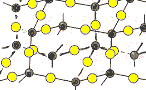


Which substance is likely to have a simple molecular structure? [cb-1]- melts at 17oC, insoluble in water, non-conductor of electricity either when solid or molten
- melts at 670oC, dissolves in water, non-conductor of electricity when molten, undergoes electrolysis in aqueous solution
- melts at 2600oC, dissolves in water, non-conductor of electricity when solid, undergoes electrolysis in aqueous solution
- melts at 1400oC, insoluble in water, good conductor of electricity either when solid or molten
-
Which substance is likely to have a giant ionic structure? [cb-2]- melts at 17oC, insoluble in water, non-conductor of electricity either when solid or molten
- melts at 2800oC, insoluble in water, non-conductor of electricity when molten or solid
- melts at 2600oC, dissolves in water, non-conductor of electricity when solid, undergoes electrolysis in aqueous solution
- melts at 1400oC, insoluble in water, good conductor of electricity either when solid or molten
-
Which substance is likely to have a metallic structure? [cb-3]- melts at 17oC, insoluble in water, non-conductor of electricity either when solid or molten
- melts at 2800oC, insoluble in water, non-conductor of electricity when molten or solid
- melts at 2600oC, dissolves in water, non-conductor of electricity when solid, undergoes electrolysis in aqueous solution
- melts at 1400oC, insoluble in water, good conductor of electricity either when solid or molten
-
Which substance is likely to have a giant covalent structure? [cb-4]- melts at 17oC, insoluble in water, non-conductor of electricity either when solid or molten
- melts at 2800oC, insoluble in water, non-conductor of electricity when molten or solid
- melts at 2600oC, dissolves in water, non-conductor of electricity when solid, undergoes electrolysis in aqueous solution
- melts at 1400oC, insoluble in water, good conductor of electricity either when solid or molten
 A solution of sodium chloride conducts electricity because the? [cb-6]
- current breaks down sodium chloride into sodium ions and chloride ions
- ions formed from the water carry the current
- sodium ions and chloride ions are free to move and carry the current
- the free moving water molecules are good conductors
- An atom can turn into an ion if it? [cb-7]
- gains an electron
- loses a proton
- gains a neutron
- loses a neutron
- An atom can turn into an ion if it? [cb-8]
- gains a proton
- loses a proton
- gains a neutron
- loses an electron
- When a covalent bond is formed between atoms of different elements ? [cb-9]
- electrons are shared
- electrons are transferred
- protons are shared
- protons are transferred
 When an ionic bond is formed between atoms of different elements? [cb-10]
- electrons are shared
- electrons are transferred
- protons are shared
- protons are transferred
-
Which of the following substances consists of a metal lattice? [cb-25]- high melting point, solid doesn't conduct electricity, aqueous solution conducts electricity
- high melting point, solid conducts electricity, insoluble in water
- low melting point, solid doesn't conduct electricity, insoluble in water
- low melting point, solid doesn't conduct electricity, aqueous solution doesn't conduct electricity
- A substance has an ionic structure. It conducts electricity when molten but not when solid. The substance could be? [cb-26]
- copper
- petrol
- ice
- sodium chloride
- Which of the following substances consists of small molecules? [cb-27]
- high melting point, solid doesn't conduct electricity, aqueous solution conducts electricity
- high melting point, solid conducts electricity, insoluble in water
- low melting point, solid conducts electricity, insoluble in water
- low melting point, solid doesn't conduct electricity, aqueous solution doesn't conduct electricity
- Molten or dissolved sodium chloride conducts electricity. The current is carried in the melt by? [cb-28]
- ions
- metal atoms
- molecules
- electrons
- Sodium chloride has a high melting point because it has? [cb-29]
- a giant covalent 3-dimentional structure
- many ions strongly attracted together
- molecules packed tightly together
- strong covalent double bonds
- Sodium chloride is a typical ionic compound formed by combining a metal with a non-metal. Sodium chloride will? [cb-30]
- conduct electricity when molten
- conduct electricity when solid
- have a low melting point
- consist of small NaCl molecules
- Sodium chloride is a typical ionic compound formed by combining a metal with a non-metal. Sodium chloride will? [cb-31]
- not conduct electricity when molten
- conduct electricity when dissolved in water
- have a low melting point
- consist of small NaCl molecules
- Sodium chloride is a typical ionic compound formed by combining a metal with a non-metal. Sodium chloride will? [cb-32]
- not conduct electricity when molten
- not conduct electricity when dissolved in water
- have a high melting point
- consist of small NaCl molecules
- Sodium chloride is a typical ionic compound formed by combining a metal with a non-metal.
Sodium chloride will? [cb-33]
- conduct electricity when solid
- not conduct electricity when dissolved in water
- have a low melting point
- consist of charged particles
- Sodium chloride is a typical ionic compound formed by combining a metal with a non-metal. Sodium chloride will? [cb-34]
- not conduct electricity when solid
- not conduct electricity when dissolved in water
- have a low melting point
- consist of NaCl molecules
- Sodium chloride is a typical ionic compound formed by combining a metal with a non-metal. Sodium chloride will? [cb-35]
- conduct electricity when solid
- will dissolved in water
- have a low melting point
- consist of NaCl molecules
-
A substance has a giant covalent structure and has a high melting point. The substance could be [cb-36]- aluminium
- copper
- poly(ethene)
- carbon (diamond)
 Sulphur is a solid non-metallic element at room temperature, so it is? [cb-41]
- a brittle substance
- a good conductor of electricity
- a good conductor of heat
- a substance with a high melting point
- Sulphur is a solid non-metallic element at room temperature, so it is? [cb-42]
- easily bent into shape
- a poor conductor of electricity
- a good conductor of heat
- a substance with a high melting point
- Sulphur is a solid non-metallic element at room temperature, so it is? [cb-43]
- easily bent into shape
- a good conductor of electricity
- a poor conductor of heat
- a substance with a high melting point
- Sulphur is a solid non-metallic element at room temperature, so it is? [cb-44]
- easily bent into shape
- a good conductor of electricity
- a good conductor of heat
- a substance with a low melting point
 Copper is a metallic element so it is likely to be a? [cb-45]
- substance with a high melting point
- poor conductor of electricity
- substance with a low boiling point
- poor conductor of heat
- Copper is a metallic element so it is likely to be a? [cb-46]
- substance with a low melting point
- good conductor of electricity
- substance with a low boiling point
- poor conductor of heat
- Copper is a metallic element so it is likely to be a? [cb-47]
- substance with a low melting point
- poor conductor of electricity
- substance with a high boiling point
- poor conductor of heat
- Copper is a metallic element so it is likely to be a? [cb-48]
- substance with a low melting point
- poor conductor of electricity
- substance with a low boiling point
- good conductor of heat
- Copper is a metallic element so it is likely to be a? [cb-49]
- substance with a low melting point
- poor conductor of electricity
- substance with a shiny surface
- poor conductor of heat
- Copper is a metallic element so it is likely to be a? [cb-50]
- substance with a low melting point
- poor conductor of electricity
- substance easily hammered into shape
- poor conductor of heat
- Aluminium fluoride is an ionic compound. When this compound is formed from aluminium and fluorine? [cb-53]
- electrons are shared
- electrons are transferred
- protons are shared
- protons are transferred
 Water is a covalent compound. When this compound is formed from hydrogen and oxygen? [cb-54]
- electrons are shared
- electrons are transferred
- protons are shared
- protons are transferred
-
From four substances described below, which is most likely to be an ionic compound? [cb-55]- melting point 20oC, molten substance doesn't conduct electricity
- melting point 150oC, molten substance doesn't conduct electricity
- melting point 800oC, molten substance readily conducts electricity
- melting point 1500oC, molten substance is a poor electrical conductor
-
From four substances described below, which is most likely to consist of small molecules? [cb-56]- melting point 20oC, molten substance doesn't conduct electricity
- melting point 1150oC, molten substance conducts electricity
- melting point 480oC, molten substance readily conducts electricity
- melting point 1500oC, molten substance is a poor electrical conductor
-
From four substances described below, which is most likely to consist of a giant covalent structure? [cb-57]- melting point 20oC, molten substance doesn't conduct electricity
- melting point 1150oC, molten substance readily conducts electricity
- melting point 480oC, molten substance readily conducts electricity
- melting point 1500oC, molten substance is poor electrical conductor
- Fluorine (F) has an atomic number of 9. Which represents the electron arrangement of the fluoride ion (F-)? [cb-58]
-
 Given the following relative atomic masses: Cu = 64, S = 32 and O = 16; calculate the relative formula mass of copper
sulfate, CuSO4 [rfm-1]
Given the following relative atomic masses: Cu = 64, S = 32 and O = 16; calculate the relative formula mass of copper
sulfate, CuSO4 [rfm-1]- 160
- 112
- 96
- 336
- Given the following relative atomic masses: H = 1 and C = 12; calculate the relative molecular mass of ethane, C2H6 [rfm-2]
- 13
- 30
- 18
- 25
- Given the following relative atomic masses: H = 1 and C = 12; calculate the relative molecular mass of octane, C8H18 [rfm-3]
- 13
- 96
- 114
- 112
- Given the following relative atomic masses: H = 1, N = 14 and O = 16; calculate the relative formula mass of nitric acid, HNO3 [rfm-4]
- 31
- 93
- 62
- 63
- Given the following relative atomic masses: H = 1, N = 14 and O = 16; calculate the relative formula mass of ammonium nitrate, NH4NO3 [rfm-5]
- 80
- 31
- 90
- 180
- Given the following relative atomic masses: H = 1, N = 14, O = 16 and S = 32; calculate the relative formula mass of ammonium
sulfate, (NH4)2SO4 [rfm-6]
- 63
- 132
- 216
- 100
- Given the following relative atomic masses: H = 1, O = 16 and S = 32; calculate the relative formula mass of
sulfuric acid, H2SO4 [rfm-7]
- 49
- 194
- 98
- 66
- Given the following relative atomic masses: O = 16, Al = 27 and S = 32; calculate the relative formula mass of aluminium
sulfate, Al2(SO4)3 [rfm-8]
- 75
- 315
- 171
- 342
- Given the following relative atomic masses: H = 1 and Cl = 35.5, calculate the relative formula mass of hydrochloric acid, HCl [rfm-9]
- 36.5
- 18
- 35.5
- 37.5
- Given the following relative atomic masses: Na = 23 and Cl = 35.5, calculate the relative formula mass of sodium chloride, NaCl [rfm-10]
- 40
- 58.5
- 49.5
- 35
- Given the following relative atomic masses: Ca = 40 and Cl = 35.5, calculate the relative formula mass of calcium chloride, CaCl2 [rfm-11]
- 75.5
- 151
- 111
- 146.5
- Given the following relative atomic masses: H = 1, O = 16 and Mg = 24, calculate the relative formula mass of magnesium hydroxide, Mg(OH)2 [rfm-12]
- 41
- 82
- 42
- 58
- Given the following relative atomic masses: Al = 27 and Cl = 35.5, calculate the relative formula mass of aluminium chloride, AlCl3 [rfm-13]
- 133.5
- 62.5
- 187.5
- 98
- Given the following relative atomic masses: H = 1, O = 16 and Al = 27, calculate the relative formula mass of aluminium hydroxide, Al(OH)3 [rfm-14]
- 44
- 78
- 132
- 46
- Given the following relative atomic masses: H = 1, C = 12 and O = 16; calculate the relative molecular mass of glucose, C6H12O6 [rfm-5]
- 29
- 40
- 180
- 90
- Given the following relative atomic masses: H = 1, C = 12 and O = 16; calculate the relative molecular mass of ethanol ('alcohol'), C2H5OH [rfm-16]
- 29
- 23
- 41
- 46
- Given the following relative atomic masses: H = 1, C = 12 and O = 16; calculate the relative molecular mass of ethanoic acid ('acetic acid'), CH3COOH [rfm-17]
- 60
- 29
- 84
- 58
- Given the following relative atomic masses: O = 16 and Fe = 56; calculate the relative formula mass of iron(II) oxide, FeO [rfm-18]
- 40
- 72
- 56
- 16
- Given the following relative atomic masses: O = 16 and Fe = 56; calculate the relative formula mass of iron(III) oxide, Fe2O3 [rfm-19]
- 72
- 200
- 160
- 216
- Given the following relative atomic masses: O = 16 and Fe = 56; calculate the relative formula mass of the iron oxide, Fe3O4 [rfm-20]
- 72
- 272
- 174
- 232
- Given the following relative atomic masses: H = 1 and C = 12; calculate the relative molecular mass of methane, CH4 [rfm-21]
- 16
- 13
- 52
- 10
- Given the following relative atomic masses: H = 1 and C = 12; calculate the relative molecular mass of propane, C3H8 [rfm-22]
- 13
- 44
- 99
- 40
- Given the following relative atomic masses: C = 12 and O = 16; calculate the relative molecular mass of carbon dioxide, CO2 [rfm-23]
- 28
- 56
- 44
- 14
- Given the following relative atomic masses: C = 12, O = 16 and Cu = 64; calculate the relative formula mass of copper carbonate, CuCO3 [rfm-24]
- 92
- 276
- 148
- 124
- Given the following relative atomic masses: C = 12, O = 16 and Ca = 40; calculate the relative formula mass of calcium carbonate, CaCO3 [rfm-25]
- 100
- 68
- 204
- 124
 If 54g of aluminium combines with oxygen to form 102g of aluminium oxide, work out the formula of aluminium oxide. (Relative atomic masses: Al = 27 and O = 16) [emp-1]
- Al2O3
- Al2O
- AlO2
- AlO3
- In an experiment, 56g of iron combined with exactly 64g of
sulfur. Work out the formula of the iron sulfide formed. (Relative atomic masses: Fe = 56 and S = 32) [emp-2]
- FeS
- FeS2
- Fe2S
- FeS3
- In an experiment, 21g of lithium combined with exactly 14g of nitrogen. Work out the formula of lithium nitride. (Relative atomic masses: Li = 7 and N = 14) [emp-3]
- LiN2
- Li2N
- Li3N
- LiN3
- If 168g of iron combined with oxygen to form 232g of an iron oxide, work out the formula of the iron oxide. (Relative atomic masses: Fe = 56 and O = 16) [emp-4]
- FeO
- FeO2
- Fe2O3
- Fe3O4
- If 28g of silicon combined with oxygen to form 60g of silicon oxide, work out the formula of silicon oxide. (Relative atomic masses: Si = 28 and O = 16) [emp-5]
- SiO2
- SiO
- Si2O
- SiO3
- In an experiment, heating 128g of copper combined with exactly 32g of
sulfur. Work out the formula of the copper sulfide formed. (Relative atomic masses: Cu = 64 and S = 32) [emp-6]
- CuS
- Cu2S
- CuS2
- CuS4
- In an experiment, excess chlorine was passed over 24g of heated magnesium metal until all the metal had reacted. If 95g of white magnesium chloride solid was formed, work out the formula of magnesium chloride. (Relative atomic masses: Mg = 24 and Cl = 35.5) [emp-7]
- MgCl
- Mg2Cl
- MgCl2
- MgCl3
- In an experiment, excess chlorine was passed over 27g of heated aluminium metal until all the metal had reacted. If 133.5g of white aluminium chloride was formed work out the formula of aluminium chloride. (Relative atomic masses: Al = 27 and Cl = 35.5) [emp-8]
- Al3Cl
- AlCl2
- AlCl4
- AlCl3
- In an experiment, excess chlorine was passed over 28g of heated silicon until all of it had reacted. If 170g of liquid silicon chloride was formed work out the formula of silicon chloride. (Relative atomic masses: Si = 28 and Cl = 35.5) [emp-9]
- SiCl4
- SiCl2
- Si2Cl
- Si4Cl
- In an experiment, excess chlorine was passed over 31g of hot phosphorus until all of it had reacted. If 208.5g of white phosphorus chloride was formed work out the formula of phosphorus chloride. (Relative atomic masses: P = 31 and Cl = 35.5) [emp-10]
- PCl3
- PCl5
- PCl6
- PCl7
- If 8g of
sulfur combines with 12g of oxygen, what is the formula of the sulfur oxide formed? (Relative atomic masses: S = 32 and O = 16) [emp-11]
- SO
- SO2
- SO3
- SO4
- If 16g of
sulfur combines with 103.5g of lead, what is the formula of the lead sulfide formed? (Relative atomic masses: S = 32 and Pb = 207) [emp-12]
- Pb2S
- PbS2
- PbS6
- PbS
- If 40g of calcium combines with 160g of bromine, what is the formula of calcium bromide? (Relative atomic masses: Ca = 40 and Br = 80) [emp-13]
- CaBr2
- CaBr
- CaBr3
- Ca2Br
- 78g of potassium combines with 160g of bromine. What is the simplest formula of potassium bromide? (Relative atomic masses: K = 39 and Br = 80) [emp-14]
- KBr2
- KBr
- K2Br
- KBr4
- 48g of magnesium combines with 320g of bromine, what is the formula of magnesium bromide? (Relative atomic masses: Mg = 24 and Br = 80) [emp-15]
- MgBr
- Mg2Br
- MgBr2
- MgBr3
- 160g of calcium combines with 64g of oxygen, what is the formula of calcium oxide? (Relative atomic masses: Ca = 40 and O = 16) [emp-16]
- CaO2
- Ca2O
- Ca4O4
- CaO
- What is the formula of the phosphorus oxide formed when 62g of phosphorus combines with 80g of oxygen? (Relative atomic masses: P = 31 and O = 16) [emp-17]
- P2O5
- PO
- P2O
- PO5
- 72g of magnesium combines with 48g of oxygen, what is the formula of magnesium oxide? (Relative atomic masses: Mg = 24 and O = 16) [emp-18]
- MgO2
- MgO
- Mg3O3
- Mg2O
- 46g of sodium combined with 16g of oxygen. What is the formula of the sodium oxide formed? (Relative atomic masses: Na = 23 and O = 16) [emp-19]
- NaO
- NaO2
- Na2O
- Na2O2
- 78g of potassium combined with 32g of
sulfur. What is the formula of potassium sulfide formed? (Relative atomic masses: K = 39 and S = 32) [emp-20]
- KS
- KS2
- K2S2
- K2S
- 56g of iron combined with 240g of bromine. What is the formula of the iron bromide formed? (Relative atomic masses: Fe = 56 and Br = 80) [emp-21]
- FeBr3
- FeBr2
- Fe3Br
- FeBr
- If 20.9g of bismuth combines with 24.0g of bromine, what is the formula of the bismuth bromide formed? (Relative atomic masses: Bi = 209 and Br = 80) [emp-22]
- BiBr
- BiBr3
- Bi3Br
- BiBr2
- If 54g of aluminium combines with 96g of
sulfur, what is the formula of aluminium sulfide? (Relative atomic masses: Al = 27 and S = 32) [emp-23]
- AlS
- AlS3
- Al2S3
- Al2S
- When 117g of potassium combines with 31g of phosphorus, what is the formula of the potassium phosphide formed? (Relative atomic masses: K = 39 and P = 31) [emp-24]
- KP
- KP3
- KP2
- K3P
 Given the following symbol equation:
2Mg + O2 ==> 2MgO
Calculate how many g of magnesium oxide is formed by burning 24g of magnesium in air.
(Relative atomic masses, Ar: Mg = 24 and O = 16) [com-1]- 40
- 16
- 20
- 80
- Given the following symbol equation:
2Mg + O2 ==> 2MgO
Calculate how many tonne of magnesium is needed to make 80 tonne of magnesium oxide.
(Relative atomic masses, Ar: Mg = 24 and O = 16) [com-2]- 96
- 48
- 24
- 16
- Given the following symbol equation:
CaCO3(s) ==> CaO(s) + CO2(g)
Calculate how many kg of calcium carbonate is needed to make 56 kg of calcium oxide.
(Relative atomic masses, Ar: Ca = 40, C = 12 and O = 16) [com-3]- 50
- 44
- 100
- 40
- Given the following symbol equation:
CaCO3(s) ==> CaO(s) + CO2(g)
Calculate how many g of carbon dioxide is formed if 25g of calcium carbonate is decomposed on heating to form 14g of calcium oxide.
(Relative atomic masses, Ar: Ca = 40, C = 12 and O = 16) [com-4]- 22
- 44
- 10
- 11
- Given the symbol equation to show the formation of iron
sulfide:
Fe + S ==> FeS
Calculate the mass in g of iron sulfide formed when 5.6g of iron combines with 3.2g of sulfur.
(Relative atomic masses, Ar: Fe = 56 and S = 32) [com-5]- 8.8
- 2.4
- 5.6
- 3.2
- Given the symbol equation to show the formation of iron
sulfide:
Fe + S ==> FeS
Calculate the mass in g of iron sulfide formed when 28g of iron combines with 16g of sulfur.
(Relative atomic masses, Ar: Fe = 56 and S = 32) [com-6]- 12
- 44
- 28
- 16
- Given the symbol equation to show the formation of calcium chloride by burning calcium in chlorine:
Ca(s) + Cl2(g) ==> CaCl2(s)
Calculate the mass in g of calcium chloride formed when 20g of calcium combines with 35.5g of chlorine.
(Relative atomic masses, Ar: Ca = 40 and Cl = 35.5) [com-7]- 15.5
- 70.0
- 55.5
- 17.5
- Given the symbol equation to show the formation of calcium chloride by burning calcium in chlorine:
Ca(s) + Cl2(g) ==> CaCl2(s)
Calculate the mass in g of chlorine needed when 40g of calcium forms 111g of calcium chloride.
(Relative atomic masses, Ar: Ca = 40 and Cl = 35.5) [com-8]- 80
- 100
- 151
- 71
- Given the symbol equation to show the formation of aluminium
sulfide by heating a mixture of aluminium and sulfur:
2Al + 3S ==> Al2S3
How many g of sulfur is needed if 54g of aluminium is reacted to form 150g of aluminium sulfide?
(Relative atomic masses, Ar: Al = 27 and S = 32) [com-9]- 96
- 204
- 64
- 27
- Given the symbol equation to show the formation of aluminium
sulfide by heating a mixture of aluminium and sulfur:
2Al + 3S ==> Al2S3
How many kg of sulfur is needed if 108kg of aluminium is reacted to form 300kg of aluminium sulfide?
(Relative atomic masses, Ar: Al = 27 and S = 32) [com-10]- 408
- 192
- 96
- 32
- Given the symbol equation to show the formation of iron
sulfide by heating a mixture of iron and sulfur:
Fe + S ==> FeS
Calculate the mass in g of iron unreacted when 60g of iron reacts with 32g of sulfur to form 88g of iron sulfide.
(Relative atomic masses, Ar: Fe = 56 and S = 32) [com-11]- 8
- 32
- 4
- 56
- Given the symbol equation to show the formation of iron
sulfide by heating a mixture of iron and sulfur:
Fe + S ==> FeS
Calculate the mass in g of sulfur unreacted when 28g of iron reacts with 22g of sulfur to form 44g of iron sulfide.
(Relative atomic masses, Ar: Fe = 56 and S = 32) [com-12]- 22
- 16
- 12
- 6
- Given the symbol equation to show the formation of calcium chloride by burning calcium in chlorine:
Ca(s) + Cl2(g) ==> CaCl2(s)
Calculate the mass in g of calcium left unreacted when 25g of calcium reacts with 35.5g of chlorine.
(Relative atomic masses, Ar: Ca = 40 and Cl = 35.5) [com-13]- 10.5
- 5.0
- 7.1
- 12.5
- Given the symbol equation to show the formation of calcium chloride by burning calcium in chlorine:
Ca(s) + Cl2(g) ==> CaCl2(s)
Calculate the mass in g of chlorine left unreacted when 80g of calcium reacts with 150g of chlorine to form 222g of calcium chloride.
(Relative atomic masses, Ar: Ca = 40 and Cl = 35.5) [com-14]- 70
- 8
- 16
- 72
 Given the equation: 2Mg(s) + O2(g) ==> 2MgO(s)
and the atomic masses: Mg = 24, O = 16, how many g of magnesium is needed to make 10g of magnesium oxide? [rmc-1]- 6.0
- 3.0
- 1.2
- 2.4
- Given the equation: 2Mg(s) + O2(g) ==> 2MgO(s)
and the atomic masses: Mg = 24, O = 16, how many tonne of magnesium oxide can be made from 3 tonne of magnesium? [rmc-2]- 2.4
- 5.0
- 8.0
- 4.8
- Given the equation: 2Mg(s) + O2(g) ==> 2MgO(s)
and the atomic masses: Mg = 24, O = 16, what mass of oxygen in g, combines with 240g of magnesium? [rmc-3]- 64
- 80
- 160
- 32
- Iron
sulfide can be made by heating an iron and sulfur mixture.
Fe(s) + S(s) ==> FeS(s)
Given the atomic masses: Fe = 56, S = 32, how many g of iron sulfide can be made from 14g of iron? [rmc-4]- 44
- 28
- 16
- 22
- Iron
sulfide can be made by heating an iron and sulfur mixture.
Fe(s) + S(s) ==> FeS(s)
Given the atomic masses: Fe = 56, S = 32, how many g of sulfur reacts with 224g of iron? [rmc-5]- 128
- 32
- 64
- 112
- Iron
sulfide can be made by heating an iron and sulfur mixture.
Fe(s) + S(s) ==> FeS(s)
Given the atomic masses: Fe = 56, S = 32, how many g of iron is needed to make 440g of iron sulfide? [rmc-6]- 56
- 280
- 220
- 168
- The iron ore Haematite consists mainly of iron(III) oxide. In a blast furnace it is reduced to iron with carbon monoxide ...
Fe2O3(s) + 3CO(g) ==> 2Fe(l) + 3CO2(g)
Given the atomic masses: Fe = 56, O =16, C=12, how many tonne of iron can be made from 40 tonnes of haematite ore? [rmc-7]- 56
- 14
- 28
- 7
- The iron ore Haematite consists mainly of iron(III) oxide. In a blast furnace it is reduced to iron with carbon monoxide ...
Fe2O3(s) + 3CO(g) ==> 2Fe(l) + 3CO2(g)
Given the atomic masses: Fe = 56, O =16, C=12, how many tonne of haematite ore are needed to make 224 tonne of iron? [rmc-8]- 160
- 480
- 640
- 320
- The iron ore Haematite consists mainly of iron(III) oxide. In a blast furnace it is reduced to iron with carbon monoxide ...
Fe2O3(s) + 3CO(g) ==> 2Fe(l) + 3CO2(g)
Given the atomic masses: Fe = 56, O =16, C=12, how g of carbon monoxide are needed to reduce 32g of iron oxide to iron? [rmc-9]- 16.8
- 33.6
- 8.4
- 28.0
- The iron ore Haematite consists mainly of iron(III)
oxide. In a blast furnace it is reduced to iron with carbon monoxide ...
Fe2O3(s) + 3CO(g) ==> 2Fe(l) + 3CO2(g)
Given the atomic masses: Fe = 56, O =16, C=12, how many g of carbon dioxide are formed when 80 g of haematite is reduced to iron? [rmc-10]- 44
- 66
- 33
- 40
- Lime (calcium oxide) is made by heating limestone (calcium carbonate).
CaCO3(s) ==> CaO(s) + CO2(g)
Given the atomic masses: Ca = 40, C = 12, O = 16, how many tonne of limestone is needed to make 112 tonne of lime? [rmc-11]- 224
- 400
- 200
- 300
- Lime (calcium oxide) is made by heating limestone (calcium carbonate).
CaCO3(s) ==> CaO(s) + CO2(g)
Given the atomic masses: Ca = 40, C = 12, O = 16, what mass in g of lime is made from 20g of limestone? [rmc-12]- 8.8
- 5.6
- 4.4
- 11.2
- Lime (calcium oxide) is made by heating limestone (calcium carbonate).
CaCO3(s) ==> CaO(s) + CO2(g)
Given the atomic masses: Ca = 40, C = 12, O = 16, how many tonne of carbon dioxide is formed by decomposing 400 tonne of calcium carbonate? [rmc-13]- 176
- 44
- 88
- 132
- The salt zinc chloride can be made by dissolving zinc carbonate in dilute hydrochloric acid.
ZnCO3(s) + 2HCl(aq) ==> ZnCl2(aq) + H2O(l) + CO2(g)
Given the atomic masses: Zn = 65, C = 12, O =16, H = 1, Cl =35.5, how many g of zinc carbonate are needed to make 68g of zinc chloride?? [rmc-14]- 125.0
- 62.5
- 68.0
- 136.0
- The salt zinc chloride can be made by dissolving zinc carbonate in dilute hydrochloric acid.
ZnCO3(s) + 2HCl(aq) ==> ZnCl2(aq) + H2O(l) + CO2(g)
Given the atomic masses: Zn = 65, C = 12, O =16, H = 1, Cl =35.5, how many g of HCl are needed to make 408g of zinc chloride? [rmc-15]- 109.5
- 36.5
- 219.0
- 71.0
- The salt zinc chloride can be made by dissolving zinc carbonate in dilute hydrochloric acid.
ZnCO3(s) + 2HCl(aq) ==> ZnCl2(aq) + H2O(l) + CO2(g)
Given the atomic masses: Zn = 65, C = 12, O =16, H = 1, Cl =35.5, what mass of zinc chloride in g can be made from 25g of zinc carbonate? [rmc-16]- 54.4
- 12.5
- 13.6
- 27.2
- The salt zinc chloride can be made by dissolving zinc carbonate in dilute hydrochloric acid.
ZnCO3(s) + 2HCl(aq) ==> ZnCl2(aq) + H2O(l) + CO2(g)
Given the atomic masses: Zn = 65, C = 12, O =16, H = 1, Cl =35.5, how many g of water are formed when 250g of zinc carbonate reacts? [rmc-17]- 36
- 18
- 9
- 27
- The salt zinc chloride can be made by dissolving zinc carbonate in dilute hydrochloric acid.
ZnCO3(s) + 2HCl(aq) ==> ZnCl2(aq) + H2O(l) + CO2(g)
Given the atomic masses: Zn = 65, C = 12, O =16, H = 1, Cl =35.5, how many g of carbon dioxide are formed when 3.65g of hydrochloric acid reacts? [rmc-18]- 4.4
- 2.2
- 1.1
- 8.8
- The salt sodium
sulfate, Na2SO4, can be made by neutralising sodium hydroxide with
sulfuric acid.
2NaOH(aq) + H2SO4(aq) ==> Na2SO4(aq) + 2H2O(l)
Given the atomic masses: Na = 23, O = 16, H = 1, S = 32, how many g of sodium hydroxide is needed to make 213g of sodium sulfate? [rmc-19]- 40
- 80
- 120
- 160
- The salt sodium
sulfate, Na2SO4, can be made by neutralising sodium hydroxide with
sulfuric acid.
2NaOH(aq) + H2SO4(aq) ==> Na2SO4(aq) + 2H2O(l)
Given the atomic masses: Na = 23, O = 16, H = 1, S = 32, what mass in g of sulfuric acid is needed to make 7.1g of sodium sulfate? [rmc-20]- 9.8
- 14.7
- 19.6
- 4.9
- The salt sodium
sulfate, Na2SO4, can be made by neutralising sodium hydroxide with
sulfuric acid.
2NaOH(aq) + H2SO4(aq) ==> Na2SO4(aq) + 2H2O(l)
Given the atomic masses: Na = 23, O = 16, H = 1, S = 32, how many g of sodium sulfate is formed when 8g of sodium hydroxide reacts? [rmc-21]- 14.2
- 28.4
- 7.1
- 21.3
- The salt sodium
sulfate, Na2SO4, can be made by neutralising sodium hydroxide with
sulfuric acid.
2NaOH(aq) + H2SO4(aq) ==> Na2SO4(aq) + 2H2O(l)
Given the atomic masses: Na = 23, O = 16, H = 1, S = 32, how many g of water are formed when 49g of sulfuric acid reacts? [rmc-22]- 9
- 18
- 36
- 23
- Copper(I)
sulfide ore can be converted to copper by roasting in air:
Cu2S(s) + O2(g) ==> 2Cu(s) + SO2(g)
How many g of copper can be made from 320g of the copper ore?
(Relative atomic masses: Cu = 64, S = 32, O = 16) [rmc-23]- 128
- 64
- 256
- 192
- Copper(I)
sulfide ore can be converted to copper by roasting in air:
Cu2S(s) + O2(g) ==> 2Cu(s) + SO2(g)
How many tonnes of oxygen are needed to convert 40 tonnes of ore to copper?
(Relative atomic masses: Cu = 64, S = 32, O = 16) [rmc-24]- 16
- 32
- 12
- 8
- Copper(I)
sulfide ore can be converted to copper by roasting in air:
Cu2S(s) + O2(g) ==> 2Cu(s) + SO2(g)
How many tonnes of sulfur dioxide are produced for every 1280 tonnes of ore processed?
(Relative atomic masses: Cu = 64, S = 32, O = 16) [rmc-25]- 512
- 128
- 256
- 64
- Copper(I)
sulfide ore can be converted to copper by roasting in air:
Cu2S(s) + O2(g) ==> 2Cu(s) + SO2(g)
How many tonnes of ore are needed to make 25.6 tonnes of copper?
(Relative atomic masses: Cu = 64, S = 32, O = 16) [rmc-26]- 64
- 32
- 48
- 56
- Aluminium chloride can be prepared by passing dry chlorine or hydrogen chloride gas over heated aluminium metal. The equation for the hydrogen chloride reaction is:
2Al(s) + 6HCl(g) ==> 2AlCl3(s) + 3H2(g)
How many kg of aluminium chloride can be made from 27 kg of aluminium?
(Relative atomic masses: Al = 27.0, Cl = 35.5, H = 1.0) [rmc-27]- 267.0
- 400.5
- 133.5
- 66.75
- Aluminium chloride can be prepared by passing dry chlorine or hydrogen chloride gas over heated aluminium metal. The equation for the hydrogen chloride reaction is:
2Al(s) + 6HCl(g) ==> 2AlCl3(s) + 3H2(g)
How many tonnes of hydrogen would be produced by reacting 108 tonnes of aluminium?
(Relative atomic masses: Al = 27.0, Cl = 35.5, H = 1.0) [rmc-28]- 2
- 3
- 6
- 12
- Aluminium chloride can be prepared by passing dry chlorine or hydrogen chloride gas over heated aluminium metal. The equation for the chlorine reaction is:
2Al(s) + 3Cl2(g) ==> 2AlCl3(s)
How much aluminium is needed to make 89 g of aluminium chloride?
(Relative atomic masses: Al = 27.0, Cl = 35.5, H =1) [rmc-29]- 18
- 27
- 54
- 9
- Aluminium chloride can be prepared by passing dry chlorine or hydrogen chloride gas over heated aluminium metal. The equation for the chlorine reaction is:
2Al(s) + 3Cl2(g) ==> 2AlCl3(s)
How many tonne of chlorine is needed to make 1068 tonne of aluminium chloride?
(Relative atomic masses: Al = 27.0, Cl = 35.5, H = 1) [rmc-30]- 71
- 852
- 426
- 213
- Yellow lead(II) oxide ore can be reduced by heating with charcoal (carbon) in a furnace to give silvery liquid lead metal:
lead(II) oxide + carbon ==> lead + carbon dioxide
2PbO(s) + C(s) ==> 2Pb(l) + CO2(g)
How many tonne of lead can be made from 223 tonne of ore?
(Relative atomic masses: Pb = 207, O = 16, C = 12) [rmc-31]- 414.0
- 103.5
- 207.0
- 310.5
- Yellow lead(II) oxide ore can be reduced by heating with charcoal (carbon) in a furnace to give silvery liquid lead metal:
lead(II) oxide + carbon ==> lead + carbon dioxide
2PbO(s) + C(s) ==> 2Pb(l) + CO2(g)
How many tonne of ore is needed to make 828 tonne of lead?
(Relative atomic masses: Pb = 207, O = 16, C = 12) [rmc-32]- 223
- 446
- 1784
- 892
- Yellow lead(II) oxide ore can be reduced by heating with charcoal (carbon) in a furnace to give silvery liquid lead metal:
lead(II) oxide + carbon ==> lead + carbon dioxide
2PbO(s) + C(s) ==> 2Pb(l) + CO2(g)
How many kg of carbon is needed to make 828 kg of lead?
(Relative atomic masses: Pb = 207, O = 16, C = 12) [rmc-33]- 24
- 12
- 6
- 48
- Yellow lead(II) oxide ore can be reduced by heating with charcoal (carbon) in a furnace to give silvery liquid lead metal:
lead(II) oxide + carbon ==> lead + carbon dioxide
2PbO(s) + C(s) ==> 2Pb(l) + CO2(g)
How many g of carbon dioxide are formed when 207 g of lead are produced?
(Relative atomic masses: Pb = 207, O = 16, C = 12) [rmc-34]- 44
- 22
- 11
- 33