In the electrolysis of moderately concentrated sodium chloride solution (brine) using carbon/platinum electrodes, the principal product formed at the positive anode is? [ef1]
chlorine
hydrogen
oxygen
sodium
In the electrolysis of moderately concentrated sodium chloride solution (brine) using carbon/platinum electrodes, the principal product formed at the negative cathode is? [ef2]
chlorine
hydrogen
oxygen
sodium
When copper(II) sulfate solution undergoes electrolysis using carbon/platinum electrodes the product at the positive anode is? [ef3]
sulfur
hydrogen
oxygen
copper
When copper(II) sulfate solution undergoes electrolysis using carbon/platinum electrodes the product at the negative cathode is? [ef4]
sulfur
hydrogen
oxygen
copper
In the electrolysis of sodium sulfate solution with carbon/platinum electrodes, what product is formed on the surface of the negative cathode? [ef5]
hydrogen
oxygen
sodium
sulfur dioxide
In the electrolysis of sodium sulfate solution with carbon/platinum electrodes, what product is formed on the surface of the positive anode? [ef6]
hydrogen
oxygen
sodium
sulfur dioxide
In the electrolysis of water acidified with sulfuric acid, using carbon/platinum electrodes, what product is formed on the surface of the negative cathode? [ef7]
sulfur
sulfur dioxide
hydrogen
oxygen
In the electrolysis of water acidified with sulfuric acid, using carbon/platinum electrodes, what product is formed on the surface of the positive anode? [ef8]
copper ions
sulfur dioxide
hydrogen
oxygen
When copper(II) sulfate solution undergoes electrolysis using a carbon cathode and copper anode electrodes the product at the negative cathode is? [ef9]
copper
blue copper(II) ions
oxygen
hydrogen
When copper(II) sulfate solution undergoes electrolysis using a carbon cathode and copper anode electrodes the product at the positive anode is? [ef10]
copper
blue copper(II) ions
oxygen
hydrogen
When copper(II) chloride solution undergoes electrolysis using a carbon/platinum electrodes the product at the negative cathode is? [ef11]
hydrogen
blue copper(II) ions
copper
chlorine
When copper(II) chloride solution undergoes electrolysis using a carbon/platinum electrodes the product at the positive anode is? [ef12]
hydrogen
blue copper(II) ions
copper
chlorine
Which of the following statements is FALSE concerning the electrolysis of molten lead bromide, PbBr2 ? [ef13]
solid lead bromide can also undergo electrolysis
lead is formed at the cathode
bromine is formed at the anode
chlorine
Which of the following statements is FALSE concerning the electrolysis of molten lead bromide, PbBr2 ? [ef14]
solid lead bromide cannot undergo electrolysis
lead oxide is formed at the cathode
bromine is formed at the anode
molten lead bromide can be decomposed by the passage of a d.c. electric current
Which of the following statements is FALSE concerning the electrolysis of molten lead bromide, PbBr2 ? [ef15]
solid lead bromide cannot undergo electrolysis
lead is formed at the cathode
oxygen is formed at the anode
molten lead bromide can be decomposed by the passage of a d.c. electric current
Which of the following statements is FALSE concerning the electrolysis of molten lead bromide, PbBr2 ? [ef16]
solid lead bromide cannot undergo electrolysis
lead is formed at the cathode
bromine is formed at the anode
molten lead bromide can be decomposed by the passage of an a.c. electric current
Which of the following statements is FALSE concerning the electrolysis of molten sodium chloride, NaCl ? [ef17]
solid sodium chloride can also undergo electrolysis
sodium is formed at the cathode
chlorine is formed at the anode
molten sodium chloride can be decomposed by the passage of an d.c. electric current
Which of the following statements is FALSE concerning the electrolysis of molten sodium chloride, NaCl ? [ef18]
solid sodium chloride cannot undergo electrolysis
sodium is oxidised at the cathode
chlorine is formed at the anode
molten sodium chloride can be decomposed by the passage of an d.c. electric current
Which of the following statements is FALSE concerning the electrolysis of molten sodium chloride, NaCl ? [ef19]
solid sodium chloride cannot undergo electrolysis
sodium is formed at the cathode
chlorine is oxidised at the anode
molten sodium chloride can be decomposed by the passage of an d.c. electric current
Which of the following statements is FALSE concerning the electrolysis of molten sodium chloride, NaCl ? [ef20]
solid sodium chloride cannot undergo electrolysis
sodium is formed at the cathode
chlorine is formed at the anode
molten sodium chloride can be decomposed by the passage of an a.c. electric current
Which of the following statements is FALSE concerning the electrolysis of molten aluminium oxide, Al2O3 ? [ef21]
solid aluminium oxide can also undergo electrolysis
aluminium is formed at the cathode
oxygen is formed at the anode
molten aluminium oxide can be decomposed by the passage of an d.c. electric current
Which of the following statements is FALSE concerning the electrolysis of molten aluminium oxide, Al2O3 ? [ef22]
solid aluminium oxide cannot undergo electrolysis
aluminium is oxidised at the cathode
oxygen is formed at the anode
molten aluminium oxide can be decomposed by the passage of an d.c. electric current
Which of the following statements is FALSE concerning the electrolysis of molten aluminium oxide, Al2O3 ? [ef23]
solid aluminium oxide cannot undergo electrolysis
aluminium is formed at the cathode
oxygen cannot form at the anode
molten aluminium oxide can be decomposed by the passage of an d.c. electric current
Which of the following statements is FALSE concerning the electrolysis of molten aluminium oxide, Al2O3 ? [ef24]
solid aluminium oxide cannot undergo electrolysis
aluminium is formed at the cathode
oxygen is formed at the anode
molten aluminium oxide can be decomposed by the passage of an a.c. electric current
When copper(II) sulfate solution undergoes electrolysis using copper electrodes the product at the positive anode is? [ef25]
blue copper(II) ions
copper
hydrogen
oxygen
When copper(II) sulfate solution undergoes electrolysis using copper electrodes the product at the negative cathode is? [ef26]
blue copper(II) ions
copper
hydrogen
oxygen
Which of the following statements about electrolysis is FALSE? [ef27]
metals or hydrogen are formed at the cathode
any ionic compound dissolved in water can undergo electrolysis
an electrolyte is a solution or melt that cannot conduct a d.c. electrical current
positively charged ions migrate to the negatively charged cathode
Which of the following statements about electrolysis is FALSE? [ef28]
metals or hydrogen are formed at the cathode
any ionic compound dissolved in water can undergo electrolysis
an electrolyte is a solution or melt that contains ions and so conducts electricity
positively charged ions migrate to the anode
Which of the following statements about electrolysis is FALSE? [ef29]
metals or hydrogen are formed at the anode
any ionic compound dissolved in water can undergo electrolysis
an electrolyte is a solution or melt that contains ions and so conducts electricity
negatively charged ions migrate to the anode
Which of the following statements about electrolysis is FALSE? [ef30]
any ionic compound dissolved in water can undergo electrolysis
non-metals like oxygen and chlorine are formed at the cathode
an electrolyte is a solution or melt that contains ions and so conducts electricity
negatively charged ions migrate to the anode
Which of the following statements about electrolysis is FALSE? [ef31]
any ionic compound dissolved in water can undergo electrolysis
non-metals like oxygen and chlorine are formed at the anode
any compound dissolved in water can readily conduct electricity and undergo electrolysis.
positively charged ions migrate to the cathode
Which of the following statements about electrolysis is FALSE? [ef32]
any ionic compound dissolved in water can undergo electrolysis
non-metals like oxygen and chlorine are formed at the anode
What do we call the positive electrode in an electrolysis cell? [ef33]
anode
cathode
electrolyte
anion
cation
What do we call the negative electrode in an electrolysis cell? [ef34]
anode
cathode
electrolyte
anion
cation
What do we call a negatively charged ion? [ef35]
anode
cathode
electrolyte
anion
cation
What do we call a positively charged ion? [ef36]
anode
cathode
electrolyte
anion
cation
Which of the following is a test for hydrogen gas? [gt1]
Gives a squeaky pop with a lit splint.
Relights a glowing red splint.
Turns blue litmus red then bleaches it white.
Turns red litmus paper blue
Gives a milky white precipitate with limewater (calcium hydroxide solution).
Which of the following is a test for oxygen gas? [gt2]
Gives a squeaky pop with a lit splint.
Relights a glowing red splint.
Turns blue litmus red then bleaches it white.
Turns red litmus paper blue
Gives a milky white precipitate with limewater (calcium hydroxide solution).
Which of the following is a test for chlorine gas? [gt3]
Gives a squeaky pop with a lit splint.
Relights a glowing red splint.
Turns blue litmus red then bleaches it white.
Turns red litmus paper blue
Gives a milky white precipitate with limewater (calcium hydroxide solution).
Which of the following is a test for ammonia gas? [gt4]
Gives a squeaky pop with a lit splint.
Relights a glowing red splint.
Turns blue litmus red then bleaches it white.
Turns red litmus paper blue
Gives a milky white precipitate with limewater (calcium hydroxide solution).
Which of the following is a test for carbon dioxide gas? [gt5]
Gives a squeaky pop with a lit splint.
Relights a glowing red splint.
Turns blue litmus red then bleaches it white.
Turns red litmus paper blue
Gives a milky white precipitate with limewater (calcium hydroxide solution).
The reaction illustrated produces ...? [ab-1]
a salt + water
a salt only
a salt and hydrogen
water only
The type of reaction illustrated is called ...? [ab-2]
decomposition
neutralisation
displacement
oxidation
To produce sodium
sulfate by the reaction illustrated you need ...? [ab-3]
potassium
sulfate + sodium hydroxide
sodium chloride +
sulfuric acid
sodium hydroxide +
sulfuric acid
sodium hydroxide + hydrochloric acid
In the reaction illustrated, in order to add the correct amount of acid you would add a few drops of Universal Indicator and add acid until the indicator in the conical flask was ...? [ab-4]
blue
orange
yellow
green
In the reaction illustrated, in order to add the correct amount of acid you would add a few drops of Universal Indicator to the conical flask. If too little acid was added the indicator colour could be? [ab-5]
blue
orange
yellow
green
In the reaction illustrated, in order to add the correct amount of acid you would add a few drops of Universal Indicator to the conical flask. If too much acid was added the indicator colour could be? [ab-6]
blue
orange
purple
green
To produce potassium chloride by the reaction illustrated you need ...? [ab-7]
potassium
sulfate + hydrochloric acid
sodium chloride + potassium hydroxide
potassium hydroxide + hydrochloric acid
sodium hydroxide + hydrochloric acid
To produce lithium nitrate by the reaction illustrated you need ...? [ab-8]
lithium
sulfate + nitric acid
sodium nitrate + lithium hydroxide
potassium nitrate + lithium hydroxide
lithium hydroxide + nitric acid
The diagram shows a method of preparing salts. Which of the following will forms when a transition metal oxide reacts with hydrochloric acid? [ab-9]
transition metal chloride + water
transition metal chloride + hydrogen
transition metal chloride only
water only
The diagram shows a method of preparing salts from reacting an insoluble metal oxide and an acid. This type of reaction is called? [ab-10]
electrolysis
neutralisation
reduction
displacement
The diagram shows a method of preparing salts by reacting an insoluble metal oxide with an acid. How can you tell when all the acid has been used up before filtering the mixture? [ab-11]
universal indicator will give a yellow colour in the acid
universal indicator will give a pale blue colour in the acid
no more of the metal oxide will dissolve in the acid
the solution will go clear
The diagram shows a method of preparing salts. Which of the following will form a transition metal
sulfate and hydrogen? [ab-12]
transition metal oxide +
sulfuric acid
transition metal + sodium
sulfate
transition metal hydroxide + potassium
sulfate
transition metal +
sulfuric acid
Which is the strongest base or alkali? [ab-13]
limewater
baking soda
vinegar
wine
Which is the weakest base or alkali? [ab-14]
limewater
baking soda
vinegar
wine
Which is the strongest acid? [ab-15]
limewater
baking soda
vinegar
wine
Which is the weakest acid? [ab-16]
limewater
baking soda
vinegar
wine
Which of the following can be mixed to form a neutral solution? [ab-17]
limewater and fizzy drink
baking soda and toothpaste
vinegar and wine
calomine lotion and common salt
Which of the following can be mixed to form a neutral solution? [ab-18]
limewater and washing soda
baking soda and wine
vinegar and common salt
ammonia and limewater
Which of the following can be safely used to treat an acid bee sting? [ab-19]
limewater
wine
calomine lotion
common salt
Which of the following can be safely used to treat an alkaline wasp sting? [ab-20]
calomine lotion
vinegar
washing soda
common salt
Which of the following is most likely to be part of an ant-acid indigestion medicine? [ab-21]
sodium hydrogencarbonate
ammonia
washing soda
limewater
Which of the following is the safest to use to treat an acid nettle sting? [ab-22]
wine
sodium hydrogencarbonate
washing soda
limewater
A small amount of a dense white powder was mixed with water in a test tube. Non of the white powder sank to the bottom of the test tube. A few drops of universal indicator were added and the solution turned blue. This meant the white powder was ...? [ab-23]
a soluble neutral substance
a slightly soluble acid
a very soluble alkali
a slightly soluble alkali
A small amount of a dense white powder was mixed with water in a test tube. Some of the white powder sank to the bottom of the test tube. A few drops of universal indicator were added and the solution turned blue. This meant the white powder was ...? [ab-24]
a soluble neutral substance
a slightly soluble acid
a very soluble alkali
a slightly soluble alkali
A small amount of a dense white powder was mixed with water in a test tube. Non of the white powder sank to the bottom of the test tube. A few drops of universal indicator were added and the solution turned green. This meant the white powder was ...? [ab-25]
a soluble neutral substance
a slightly soluble acid
a slightly soluble neutral substance
a slightly soluble alkali
A small amount of a dense white powder was mixed with water in a test tube. Some of the white powder sank to the bottom of the test tube. A few drops of universal indicator were added and the solution turned green. This meant the white powder was ...? [ab-26]
a soluble acidic substance
a slightly soluble neutral substance
a soluble acidic substance
a slightly soluble alkali
A small amount of a dense white powder was mixed with water in a test tube. Non of the white powder sank to the bottom of the test tube. A few drops of universal indicator were added and the solution turned orange. This meant the white powder was ...? [ab-26]
a soluble weak alkali
a very soluble neutral substance
a soluble weak acid
a slightly soluble strong acid
A small amount of a dense white powder was mixed with water in a test tube. Some of the white powder sank to the bottom of the test tube. A few drops of universal indicator were added and the solution turned red. This meant the white powder was ...? [ab-26]
a soluble weak alkali
a slightly soluble neutral substance
a soluble weak acid
a slightly soluble strong acid
Which of the following is the pH of a strong acid? [ab-49]
pH 1
pH 14
pH 5
pH 9
Which of the following is the pH of a strong alkali? [ab-50]
pH 1
pH 14
pH 5
pH 9
Which of the following is the pH of a weak acid? [ab-51]
pH 1
pH 14
pH 5
pH 9
Which of the following is the pH of a weak alkali? [ab-52]
pH 1
pH 14
pH 5
pH 9
When dilute nitric acid reacts with sodium hydroxide the products are? [ab-53]
sodium nitrate + water
sodium nitrate + hydrogen
sodium hydride + hydrogen nitrate
sodium nitrite + oxygen
dilute acid X + copper(II) carbonate ==> copper(II)
sulfate + water + carbon dioxide. Acid X is? [ab-54]
nitric acid
sulfuric acid
sulfurous acid
hydrochloric acid
dilute acid X + magnesium hydroxide ==> magnesium chloride + water. Acid X is? [ab-55]
ammonium chlorate
sulfuric acid
hydrochloric acid
chloric acid
magnesium + dilute acid X ==> magnesium nitrate + hydrogen. Acid X is? [ab-56]
ammonium nitrate
nitrogen dioxide
nitrous acid
nitric acid
When hydrochloric acid is added to copper carbonate, the gas bubbles formed can be identified by? [ab-57]
burning with a squeaky pop
turning limewater cloudy
relighting a glowing splint
turning blue litmus red and then bleaching it
When
sulfuric acid is added to zinc, the gas bubbles formed can be identified by? [ab-58]
burning with a squeaky pop
turning limewater cloudy
relighting a glowing splint
turning blue litmus red and then bleaching it
An iron tray was cleaned with dilute hydrochloric acid and bubbles formed. The gas formed was? [ab-59]
oxygen
chlorine
hydrogen
carbon dioxide
A carbonate mineral rock was tested with dilute
sulfuric acid and bubbles formed. The gas formed was? [ab-60]
carbon monoxide
sulfur dioxide
hydrogen
carbon dioxide
Dilute
sulfuric acid will only form one product when reacted with? [ab-61]
ammonia
copper
magnesium oxide
zinc carbonate
Dilute
sulfuric acid will not readily react with? [ab-62]
ammonia
copper
magnesium oxide
zinc carbonate
Which will form a salt and water when reacted with dilute hydrochloric acid? [ab-63]
ammonia
copper
magnesium oxide
zinc carbonate
Which will form a salt, water and carbon dioxide when reacted with dilute hydrochloric acid? [ab-64]
ammonia
copper
magnesium oxide
zinc carbonate
Which of these reactants is the best combination to use to make magnesium
sulfate? [ab-65]
magnesium oxide +
sulfuric acid
magnesium chloride + sodium
sulfate
sulfuric acid + magnesium chloride
magnesium nitrate +
sulfuric acid
Which of these reactants is the best combination to use to make zinc nitrate? [ab-66]
zinc chloride + nitric acid
nitric acid + zinc hydroxide
nitric acid + zinc
sulfate
zinc oxide + nitrous acid
Which of these reactants is the best combination to use to make copper(II)
sulfate? [ab-67]
copper +
sulfuric acid
copper(II) chloride + sodium
sulfate
copper(II) oxide +
sulfuric acid
copper(II) nitrate + sodium chloride
Which of these reactants is the best combination to use to make zinc chloride? [ab-68]
calcium chloride + zinc carbonate
zinc nitrate + hydrochloric acid
sodium chloride + zinc oxide
zinc carbonate + hydrochloric acid
The diagram shows the preparation of a salt. Which word applies to stages 1-2? [ab-69]
neutralisation
filtration
evaporation
condensation
The diagram shows the preparation of a salt. Which word applies to stage 3? [ab-70]
neutralisation
filtration
evaporation
condensation
The diagram shows the preparation of a salt. Which word describes the change from 3 to 4? [ab-71]
neutralisation
filtration
evaporation
condensation
The diagram shows the preparation of a salt. Which word describes stage 4? [ab-72]
neutralisation
filtration
evaporation
crystallisation
The diagram shows the preparation of a salt using a solid and an acid. Which is true concerning this method? [ab-73]
the solid can be an insoluble base
it is not a neutralisation reaction
you cannot use an insoluble carbonate
the solid must be an alkali
The diagram shows the preparation of a salt. Which word means a 'soluble base'? [ab-74]
oxide
alkali
hydroxide
indicator
The diagram shows a method of salt preparation. Which statement is true about the method? [ab-75]
the method uses an insoluble base
the acid must be in the burette and the alkali in the flask
the neutralisation point is detected with an indicator
the salt will precipitate at the neutralisation point
The diagram shows one method of salt preparation. Which statement is true about the method illustrated? [ab-76]
the salt will precipitate at the neutralisation point
an alkali is used
the neutralisation point is detected with an indicator
the method uses an insoluble base
Complete the word equation: zinc oxide + hydrochloric acid ==> ..???.. [ab-77]
zinc chloride + hydrogen
zinc hydrochloride + water
zinc chloride + water
zinc hydrochloride chloride + water + carbon dioxide
Complete the word equation: zinc hydroxide + hydrochloric acid ==> ..???.. [ab-78]
zinc hydrochloride + water
zinc chloride + water + carbon dioxide
zinc hydrochloride + hydrogen
zinc chloride + water
Complete the word equation: zinc + hydrochloric acid ==> ..???.. [ab-79]
zinc chloride + hydrogen
zinc chloride + water
zinc hydrochloride + hydrogen
zinc hydrochloride + water
Complete the word equation: zinc carbonate + hydrochloric acid ==> ..???.. [ab-80]
zinc hydrochloride + water
zinc chloride + water + carbon dioxide
zinc hydrochloride + hydrogen
zinc chloride + carbon dioxide
Complete the word equation: nickel +
sulfuric acid ==> ..???.. [ab-81]
nickel
sulfate + hydrogen
nickel
sulfate + water
nickel
sulfite + water
nickel
sulfite + hydrogen
Complete the word equation: nickel oxide +
sulfuric acid ==> ..???.. [ab-82]
nickel
sulfate + hydrogen
nickel
sulfate + water
nickel
sulfite + water
nickel
sulfite + hydrogen
Complete the word equation: nickel hydroxide +
sulfuric acid ==> ..???.. [ab-83]
nickel
sulfate + hydrogen
nickel
sulfite + water
nickel
sulfate + water
nickel
sulfite + hydrogen
Complete the word equation: nickel carbonate +
sulfuric acid ==> ..???.. [ab-84]
nickel
sulfate + carbon dioxide
nickel
sulfite + water
nickel
sulfate + water
nickel
sulfate + water + carbon dioxide
Complete the word equation: ammonia +
sulfuric acid ==> ..???.. [ab-85]
ammonium
sulfate
ammonia
sulfate
ammonium hydrogensulfate
ammonia
sulfite
Complete the word equation: ammonia + hydrochloric acid ==> ..???.. [ab-86]
ammonia chloride
ammonium chloride
ammonium hydrochloride
ammonia hydrochloride
Complete the word equation: ammonia + nitric acid ==> ..???.. [ab-87]
ammonia nitrite
ammonium nitrite
ammonium nitrate
ammonia hydrogennitrate
Complete the word equation: sodium hydroxide +
sulfuric acid ===> ..???.. [ab-88]
sodium
sulfate
sodium
sulfate + hydrogen
sodium hydrogensulfite + water
sodium
sulfate + water
Given the following neutralisation equation: NaOH(aq) + HCl(aq) ==> NaCl(aq) + H2O(l) Which is the alkali? [ab-89]
NaOH
HCl
NaCl
H2O
Given the following neutralisation equation: NaOH(aq) + HCl(aq) ==> NaCl(aq) + H2O(l) Which is the acid? [ab-90]
NaOH
HCl
NaCl
H2O
Given the following neutralisation equation: NaOH(aq) + HCl(aq) ==> NaCl(aq) + H2O(l) Which is the salt? [ab-91]
NaOH
HCl
NaCl
H2O
Given the following neutralisation equation: NaOH(aq) + HCl(aq) ==> NaCl(aq) + H2O(l) Which is the base? [ab-92]
H2O
HCl
NaCl
NaOH
Which two reactants would you use to make potassium nitrate? [ab-101]
nitric acid and potassium hydroxide
sodium
nitrate and potassium chloride
sulfuric acid and sodium nitrate
nitric acid and sodium hydroxide
Insoluble metal oxides and metal hydroxides (bases) will not dissolve to form an alkaline solution. But they will dissolve in acids to give the same reaction as with alkalis. This method is particularly handy for making transition metal salts. Which reaction will produce a transition metal chloride and hydrogen? [ab-102]
transition metal oxide + sodium chloride
transition metal + hydrochloric acid
transition metal hydroxide + hydrochloric acid
transition metal +
sulfuric acid
Insoluble metal oxides and metal hydroxides (bases) will not dissolve to form an alkaline solution. But they will dissolve in acids to give the same reaction as with alkalis. This method is particularly handy for making transition metal salts. When sufficient base has been added so that no more dissolves, how is the excess base removed? [ab-103]
boiling
distillation
filtration
crystallisation
Insoluble metal oxides and metal hydroxides (bases) will not dissolve to form an alkaline solution. But they will dissolve in acids to give the same reaction as with alkalis. This method is particularly handy for making transition metal salts. When sufficient base has been added so that no more dissolves. How could you test that all the acid was neutralised? [ab-104]
see if crystals form on evaporating the solution
see if the solution is clear
measure the boiling point of the solution
use indicator paper
Insoluble bases and metals will not dissolve to form an alkaline solution, but they will dissolve in acids to form salts. This method is particularly handy for making transition metal salts. What pair of chemicals will make cobalt
sulfate and water? [ab-105]
cobalt oxide +
sulfuric acid
cobalt + hydrochloric acid
cobalt + nitric acid
cobalt hydroxide + nitric acid
Insoluble bases and metals will not dissolve to form an alkaline solution, but they will dissolve in acids to form salts. This method is particularly handy for making transition metal salts. What pair of chemicals will make cobalt chloride and hydrogen? [ab-106]
cobalt oxide +
sulfuric acid
cobalt + hydrochloric acid
cobalt hydroxide + sodium chloride
cobalt hydroxide + nitric acid
Which two reactants make ammonium chloride and water? [ab-107]
ammonium
sulfate and hydrochloric acid
ammonium hydroxide and sodium chloride
ammonium hydroxide and hydrochloric acid
ammonia and potassium chloride
Which of these gives an alkaline solution when dissolved in water? [ab-108]
aluminium hydroxide
copper hydroxide
iron hydroxide
ammonia (ammonium hydroxide)
Which of these gives an alkaline solution when dissolved in water? [ab-109]
sodium hydroxide
copper hydroxide
iron hydroxide
aluminium hydroxide
Which of these gives an alkaline solution when dissolved in water? [ab-109]
nickel hydroxide
potassium hydroxide
iron hydroxide
magnesium hydroxide
Which of A to D completes the equation ..?.. [ab-111] ..?.. + potassium hydroxide ==> potassium
sulfate + water
potassium nitrate
calcium hydroxide
sulfuric acid
sodium chloride
Which of A to D completes the equation ..?.. [ab-112] hydrochloric acid + sodium hydroxide ==> ..?.. + water
sodium
sulfate
potassium chloride
calcium chloride
sodium chloride
Which of A to D completes the equation ..?.. [ab-113] ..?.. + nitric acid ==> ammonium nitrate
ammonia (ammonium hydroxide)
calcium hydroxide
ammonium
sulfate
sodium nitrate
Which of A to D completes the equation ..?.. [ab-114]
sulfuric acid + ..?.. ==> calcium sulfate + water
 In the electrolysis of moderately concentrated sodium chloride solution (brine) using carbon/platinum electrodes, the principal product formed at the positive anode is? [ef1]
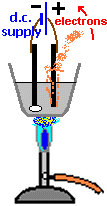 Which of the following statements is FALSE concerning the electrolysis of molten lead bromide, PbBr2 ? [ef13]
 When copper(II) sulfate solution undergoes electrolysis using copper electrodes the product at the positive anode is? [ef25]
 Which of the following is a test for hydrogen gas? [gt1]


 A small amount of a dense white powder was mixed with water in a test tube. Non of the white powder sank to the bottom of the test tube. A few drops of universal indicator were added and the solution turned blue. This meant the white powder was ...? [ab-23]
 A small amount of a dense white powder was mixed with water in a test tube. Some of the white powder sank to the bottom of the test tube. A few drops of universal indicator were added and the solution turned blue. This meant the white powder was ...? [ab-24]
 Which of the following is the pH of a strong acid? [ab-49]