 Which metal is less reactive than copper? [mr-1]
- Gold
- Sodium
- Iron
- Aluminium
- Which metal is more reactive than magnesium? [mr-2]
- Gold
- Sodium
- Iron
- Aluminium
- Which metal is more reactive than hydrogen but less reactive than carbon? [mr-3]
- Gold
- Sodium
- Iron
- Aluminium
- Which metal is less reactive than sodium but cannot be extracted using carbon? [mr-4]
- Gold
- Potassium
- Iron
- Aluminium
 Which is formed when a metal reacts with cold water? [mr-5]
- a metal hydroxide
- a salt
- carbon dioxide
- an oxide
- Which is a compound formed when a metal reacts with an acid? [mr-6]
- a metal hydroxide
- a salt
- hydrogen
- an oxide
- Which is formed when a metal reacts with either water or an acid? [mr-7]
- a metal hydroxide
- a salt
- hydrogen
- an oxide
 Which is formed when a heated metal reacts with steam? [mr-8]
- a metal hydroxide
- a salt
- carbon dioxide
- an oxide
- Information is given below on the reactivity of four metals Wa, Xb, Yc and Zd (NOT their real chemical symbols) ...
Metal Wa does not readily react with dilute acid
Metals Xb and Yc react slowly with acid
Metal Zd will displace Yc from the sulfate salt solution of Yc, YcSO4(aq).
Metal Zd will NOT displace Xb from the chloride salt solution of Xb, XbCl2(aq).
If their reactivity order is from the most reactive (1) (2) (3) (4) to the least reactive ...
which metal corresponds to (1), the most reactive of the four metals? [mr-9]- metal Xb
- metal Zd
- metal Yc
- metal Wa
- Information is given below on the reactivity of four metals Wa, Xb, Yc and Zd (NOT their real chemical symbols) ...
Metal Wa does not readily react with dilute acid
Metals Xb and Yc react slowly with acid
Metal Zd will displace Yc from the sulfate salt solution of Yc, YcSO4(aq).
Metal Zd will NOT displace Xb from the chloride salt solution of Xb, XbCl2(aq).
If their reactivity order is from the most reactive (1) (2) (3) (4) to the least reactive ...
which metal corresponds to (2), the 2nd most reactive of the four metals? [mr-10]- metal Xb
- metal Zd
- metal Yc
- metal Wa
- Information is given below on the reactivity of four metals Wa, Xb, Yc and Zd (NOT their real chemical symbols) ...
Metal Wa does not readily react with dilute acid
Metals Xb and Yc react slowly with acid
Metal Zd will displace Yc from the sulfate salt solution of Yc, YcSO4(aq).
Metal Zd will NOT displace Xb from the chloride salt solution of Xb, XbCl2(aq).
If their reactivity order is from the most reactive (1) (2) (3) (4) to the least reactive ...
which metal corresponds to (3), the 3rd most reactive of the four metals? [mr-11]- metal Xb
- metal Zd
- metal Yc
- metal Wa
- Information is given below on the reactivity of four metals Wa, Xb, Yc and Zd (NOT their real chemical symbols) ...
Metal Wa does not readily react with dilute acid
Metals Xb and Yc react slowly with acid
Metal Zd will displace Yc from the sulfate salt solution of Yc, YcSO4(aq).
Metal Zd will NOT displace Xb from the chloride salt solution of Xb, XbCl2(aq).
If their reactivity order is from the most reactive (1) (2) (3) (4) to the least reactive ...
which metal corresponds to (4), the least reactive of the four metals? [mr-12]- metal Xb
- metal Zd
- metal Yc
- metal Wa
- From the four elements listed, which is a metal which is most likely to be found in the ground as the metal itself? [mr-13]
- copper
- hydrogen
- iron
- magnesium
- From the four elements listed, which is a non-metal with no metallic character at all? [mr-14]
- copper
- hydrogen
- iron
- magnesium
- From the four elements listed, which is a metal that displaces hydrogen from acids but not from cold water? [mr-15]
- copper
- gold
- iron
- magnesium
- From the four elements listed, which is a metal that cannot be extracted by displacement with carbon? [mr-16]
- copper
- hydrogen
- iron
- magnesium
- Which is formed by the reaction of heated magnesium with steam? [mr-17]
- magnesium oxide + hydrogen
- magnesium hydroxide + hydrogen
- magnesium chloride + hydrogen
- magnesium sulfate + hydrogen
- Which is formed by the reaction of magnesium with cold water? [mr-18]
- magnesium oxide + hydrogen
- magnesium hydroxide + hydrogen
- magnesium chloride + hydrogen
- magnesium sulfate + hydrogen
- Which is formed by the reaction of magnesium with hydrochloric acid? [mr-19]
- magnesium chloride + water
- magnesium hydroxide + hydrogen
- magnesium chloride + hydrogen
- magnesium sulfate + chlorine
- Which is formed by the reaction of magnesium with
sulfuric acid? [mr-20]
- magnesium sulfate + water
- magnesium hydroxide + sulfur dioxide
- magnesium chloride + hydrogen
- magnesium sulfate + hydrogen
- Which of A to D is less reactive than copper? [mr-21]
- Platinum
- Potassium
- Zinc
- Magnesium
- Which is more reactive than magnesium? [mr-22]
- Platinum
- Potassium
- Zinc
- Tin
- Which is more reactive than hydrogen but less reactive than carbon? [mr-23]
- Platinum
- Potassium
- Zinc
- Magnesium
- Which is less reactive than sodium but cannot be extracted from its ore using carbon? [mr-24]
- Platinum
- Potassium
- Zinc
- Magnesium
- Which is found in rocks as the metal itself? [mr-25]
- Gold
- Carbon
- Zinc
- Potassium
- Which is a non-metal with a little metallic character? [mr-26]
- Gold
- Carbon
- Zinc
- Potassium
- Which is a metal that displaces hydrogen from dilute acids but not from cold water? [mr-27]
- Gold
- Carbon
- Zinc
- Potassium
- Which cannot be extracted from its ore with carbon? [mr-28]
- Gold
- iron
- Zinc
- Potassium
 Which of these in contact with iron will cause rusting? [mr-29]
- air and water
- boiled saltwater
- dry pure oxygen
- pure boiled water
- A steel pier in the sea rusts. The rust consists of? [mr-30]
- iron carbonate
- iron oxide
- iron chloride
- iron sulfate
- Which of these reactions is possible? [mr-33]
- CuO + Zn ==> ZnO + Cu
- Pb + ZnCl2 ==> PbCl2 + Zn
- Cu + FeSO4 ==> CuSO4 + Fe
- Au + 2HCl ==> AuCl2 + H2
- Which of these reactions is possible? [mr-34]
- PbO + Cu ==> CuO + Pb
- Zn + PbCl2 ==> ZnCl2 + Pb
- Cu + FeSO4 ==> CuSO4 + Fe
- Pt + 2HCl ==> PtCl2 + H2
- Which of these reactions is possible? [mr-35]
- SnO + Cu ==> CuO + Sn
- Pb + SnCl2 ==> PbCl2 + Sn
- Fe + CuSO4 ==> FeSO4 + Cu
- Cu + H2SO4 ==> CuSO4 + H2
- Which of these reactions is possible? [mr-36]
- PbO + Pt ==> PtO + Pb
- Pb + SnCl2 ==> PbCl2 + Sn
- Pt + CuSO4 ==> PtSO4 + Cu
- Sn + H2SO4 ==> SnSO4 + H2
- Which of these reactions is possible? [mr-37]
- lead + copper oxide ==> lead oxide + copper
- copper + hydrochloric acid ==> copper chloride + hydrogen
- iron + zinc sulfate ==> iron sulfate + zinc
- lead + tin sulfate ==> lead sulfate + tin
- Which of these reactions is possible? [mr-38]
- lead + zinc oxide ==> lead oxide + zinc
- zinc + hydrochloric acid ==> zinc chloride + hydrogen
- tin + zinc sulfate ==> tin sulfate + zinc
- lead + tin sulfate ==> lead sulfate + tin
- Which of these reactions is possible? [mr-39]
- copper + zinc oxide ==> copper oxide + zinc
- platinum + sulfuric acid ==> platinum sulfate + hydrogen
- zinc + iron sulfate ==> zinc sulfate + iron
- gold + tin chloride ==> gold chloride + tin
- Which of these reactions is possible? [mr-40]
- silver + copper oxide ==> silver oxide + copper
- copper + sulfuric acid ==> copper sulfate + hydrogen
- iron + zinc chloride ==> iron chloride + zinc
- tin + gold sulfate ==> tin sulfate + gold
- Rust readily forms if an iron object is surrounded by? [mr-45]
- water with dissolved oxygen
- water with no dissolved oxygen
- boiled dilute acid
- dry air
- Which of the following cannot be predicted about metal X, given its position in the reactivity series of metals? [mr-46]
- whether X reacts with acid to form hydrogen
- whether X acts as a catalyst
- the method of extraction of X from an ore
- the product of reacting metal X with the sulfate solution of another metal
- Which will displace iron from iron oxide? [mr-47]
- tin
- copper
- magnesium
- silver
- Road tankers carrying acid use steel tanks lined with glass. The glass is used because? [mr-48]
- glass only reacts with alkalis
- steel is not strong enough on its own
- glass is flexible enough to withstand a crash
- acid reacts with steel forming hydrogen
- Corrosion occurs when a metal is attacked by? [mr-49]
- oxygen
- hydrogen
- nitrogen
- carbon dioxide
- When scrap iron is added to blue copper
sulfate solution, a pinky-brown deposit is formed and a pale green solution is left above it. The pinky-brown deposit is? [mr-50]
- steel
- copper metal
- iron sulfate
- rust
- When scrap iron is added to blue copper
sulfate solution, a pinky-brown deposit is formed and a pale green solution is left above it. The pale green solution is of? [mr-51]
- sulfuric acid
- iron oxide
- iron sulfate
- copper chloride
- When iron becomes coated in rust, the chemical process is an example of? [mr-52]
- electrolysis
- electroplating
- reduction
- oxidation

The steel hulls of ships can be protected from rusting by bolting on blocks of which more reactive metal? [mr-61]- zinc
- tin
- copper
- iron
Steel pipes underground can be protected from rusting by attaching blocks of the more reactive metal? [mr-62]- tin
- magnesium
- copper
- iron
 Aluminium window frames do not corrode away because the aluminium is? [mr-63]
- not reactive enough with oxygen
- not reactive enough with water
- coated in a layer of aluminium oxide
- not capable of forming an oxide
- The rusting of iron is described as an oxidation because the iron atoms? [mr-65]
- combine with oxygen atoms
- gain electrons
- combine with water molecules
- are so reactive
- Which reacts with water to form hydrogen? [mr-66]
- zinc
- potassium
- copper
- mercury
- Salt water speeds up the corrosion of metals because it contains ions from salts like sodium chloride. Aluminium can be used for the upper structures of ships because the aluminium? [mr-68]
- will not react at all with sea water
- will not react with oxygen
- is not capable of forming soluble aluminium chloride
- is coated in a protective layer of aluminium oxide
- In which reaction is a metal oxidised? [mr-69]
- magnesium + water (steam) ==> magnesium oxide + hydrogen
- carbon + oxygen ==> carbon dioxide
- hydrogen + lead oxide ==> lead + water
- copper oxide + carbon ==> copper + carbon dioxide
- In which reaction is a solid non-metal oxidised? [mr-70]
- magnesium + water (steam) ==> magnesium oxide + hydrogen
- carbon + water ==> hydrogen + carbon monoxide
- hydrogen + lead oxide ==> lead + water
- copper oxide + hydrogen ==> copper + water
- In which reaction is a gaseous non-metal oxidised? [mr-71]
- magnesium + water ==> magnesium hydroxide + hydrogen
- carbon + water ==> hydrogen + carbon monoxide
- hydrogen + lead oxide ==> lead + water
- copper oxide + carbon ==> copper + carbon dioxide
- In which reaction is a metal oxide reduced? [mr-72]
- magnesium + water ==> magnesium hydroxide + hydrogen
- carbon + water ==> hydrogen + carbon monoxide
- water (steam) + magnesium ==> magnesium oxide + hydrogen
- copper oxide + carbon ==> copper + carbon dioxide
- Four chemical changes are shown below as part, or full, word equations. Which can be described as an oxidation only? [mr-73]
- carbon ==> carbon monoxide
- lead oxide ==> lead
- copper oxide + hydrogen ==> copper + water
- carbon dioxide ==> carbon monoxide
- Four chemical changes are shown below as part, or full, word equations. Which can be described as a reduction only? [mr-74]
- carbon ==> carbon monoxide
- lead oxide ==> lead
- copper oxide + hydrogen ==> copper + water
- carbon monoxide ==> carbon dioxide
- Four chemical changes are shown below as part, or full, word equations. Which can be described as an oxidation and reduction (redox)? [mr-75]
- carbon ==> carbon monoxide
- lead oxide ==> lead
- copper oxide + hydrogen ==> copper + water
- carbon monoxide ==> carbon dioxide
- Four chemical changes are shown below as part, or full, word equations. Which can be described as an oxidation and reduction (redox)? [mr-76]
- carbon ==> carbon monoxide
- lead oxide ==> lead
- carbon dioxide ==> carbon monoxide
- iron oxide + carbon ==> iron + carbon dioxide
- Given the following four observations of the reactions of four metals ...
(1) Metals F and G slowly react with water
(2) Metal H will displace metal G form its chloride salt solution
(3) Metal E will not react with dilute acids
(4) Metal H will NOT displace metal F from its sulfate salt solution
What is their reactivity order, from the most to the least reactive? [mr-86]- F > H > G > E
- H > E > F > G
- E > G > H > F
- H > G > F > E
- Given the following five observations of the reactions of four metals with hydrogen (H), carbon (C) and other metal oxides ...
(1) Metal Y can displace metal Z from its oxide
(2) Carbon can displace metal W and metal X from their oxides
(3) Hydrogen will displace metal W from its oxide
(4) Hydrogen will NOT displace metal X from its oxide
(5) Carbon will NOT displace metals Y and Z from their oxides
What is their reactivity order, from the most to the least reactive? [mr-87]- (C) > W > X (H) > Y > Z
- Y > Z > (C) > X > (H) > W
- Z > Y > (C) > W > (H) > X
- Y > W > (C) > X > (H) > Z
- Underground pipes made of steel (alloy of iron) can be protected from rusting if you attach metal blocks made of the more reactive metal? [mr-88]
- chromium alloy
- less reactive metal than iron
- metal more reactive than iron
- a metal of similar reactivity
 When copper is heated in air, the oxide compound formed is ? in colour. [mr-92]
- green
- orange
- black
- white
- When magnesium burns in air, the oxide compound formed is ? in colour. [mr-93]
- green
- orange
- black
- white
- Given the following three observations of the reactions of four metals ...
(1) Metal O will displace metal N from its chloride
(2) Only metal L reacts with cold water
(3) Metal N reacts faster with acid than metal M
What is their reactivity order, from the most to the least reactive? [mr-94]- L > O > N > M
- O > L > N > M
- L > N > O > M
- M > O > N > L
- Given the following ionic redox equation for the displacement of copper from copper(II)
sulfate using zinc metal ...
Zn(s) + Cu2+(aq) ==> Zn2+(aq) + Cu(s)
In the reaction which is oxidised? [mr-41]- Zn(s)
- Cu2+(aq)
- Zn2+(aq)
- Cu(s)
- Given the following ionic redox equation for the displacement of copper from copper(II)
sulfate using zinc metal ...
Zn(s) + Cu2+(aq) ==> Zn2+(aq) + Cu(s)
In the reaction which is reduced? [mr-42]- Zn(s)
- Cu2+(aq)
- Zn2+(aq)
- Cu(s)
- Given the following ionic redox equation for the displacement of copper from copper(II)
sulfate using zinc metal ...
Zn(s) + Cu2+(aq) ==> Zn2+(aq) + Cu(s)
In the reaction which is formed by an electron loss or oxidation process? [mr-43]- Zn(s)
- Cu2+(aq)
- Zn2+(aq)
- Cu(s)
- Given the following ionic redox equation for the displacement of copper from copper(II)
sulfate using zinc metal ...
Zn(s) + Cu2+(aq) ==> Zn2+(aq) + Cu(s)
In the reaction which is formed by an electron gain or reduction process? [mr-44]- Zn(s)
- Cu2+(aq)
- Zn2+(aq)
- Cu(s)
- Given the following equation: Mg(s) + ? ==> MgCl2(aq) + H2(g)
Which of A-D is missing ? [mr-77]- 2HCl(aq)
- H2Cl2(aq)
- HCl(aq)
- (HCl)2(aq)
- Given the following equation: Ca(s) + 2H2O(l) ==> ? + H2(g)
Which of A-D missing ? [mr-78]- CaOH2(aq)
- Ca(OH)2(aq)
- 2CaOH(aq)
- Ca2OH(aq)
- Given the following equation: Zn(s) + H2SO4(aq) ==> ? + H2(g)
Which of A-D is missing ? [mr-79]- 2ZnSO4(aq)
- Zn2SO4(aq)
- ZnSO4(aq)
- Zn(SO4)2(aq)
- Given the following equation: Mg(s) + ? ==> MgO(s) H2(g)
Which of A-D is missing ? [mr-80]- OH(g)
- H2O2(g)
- OH2(g)
- H2O(g)
- Given the following equation: Zn(s) + ? ==> ZnSO4(aq) + Fe(s)
Which of A-D is missing ? [mr-81]- FeSO4(aq)
- Fe2SO4(aq)
- Fe(SO4)2(aq)
- H2SO4(aq)
- Given the following equation: ? + 3Zn(s) ==> 2Fe(s) + 3ZnSO4(aq)
Which of A-D is missing ? [mr-82]- 2FeSO4(aq)
- Fe2(SO4)3(aq)
- 3FeSO4(aq)
- Fe(SO4)3(aq)
- Given the following equation: 2Al(s) + 3CuO(s) ==> ? + 3Cu(s)
Which of A-D is missing ? [mr-83]- 2AlO3(s)
- AlO3(s)
- Al2O3(s)
- Al3O2(s)
- Given the following equation: 2K(s) + 2H2O(l) ==> ? + H2(g)
Which of A-D is missing ? [mr-84]- KOH(aq)
- KOH2(aq)
- K2OH(aq)
- 2KOH(aq)
- The rusting of iron is described as an oxidation because the iron atoms? [mr-85]
- lose electrons
- lose oxygen atoms
- combine with water
- are not very reactive
- Which of the following is a definition of oxidation? [mr-95]
- gain of electrons
- loss of electrons
- gain of hydrogen
- loss of oxygen
- Which of the following is a definition of reduction? [mr-96]
- gain of oxygen
- loss of electrons
- gain of electrons
- loss of hydrogen
- Which of the following is a definition of reduction? [mr-97]
- gain of oxygen
- loss of electrons
- loss of hydrogen
- loss of oxygen
 Galvanising means coating an iron (Fe) or steel object with a layer of zinc (Zn) to protect it from corrosion. Steel cans can also be coated with tin (Sn), also to protect it from corrosion, including fruit juices in 'tin' cans. When the zinc coating is scratched through to the iron underneath, the iron still does not corrode
initially. However, if the tin surface is scratched through to the iron, the iron corrodes even faster compared to when there was no coating at. This means? [mr-103]
Galvanising means coating an iron (Fe) or steel object with a layer of zinc (Zn) to protect it from corrosion. Steel cans can also be coated with tin (Sn), also to protect it from corrosion, including fruit juices in 'tin' cans. When the zinc coating is scratched through to the iron underneath, the iron still does not corrode
initially. However, if the tin surface is scratched through to the iron, the iron corrodes even faster compared to when there was no coating at. This means? [mr-103]- iron corrodes faster when connected to a more reactive metal
- iron corrodes faster when connected to a less reactive metal
- tin is more reactive than iron
- zinc is less reactive than iron
- Galvanising means coating an iron (Fe) or steel object with a layer of zinc (Zn) to protect it from corrosion. Steel cans can also be coated with tin (Sn), also to protect it from corrosion, including fruit juices in 'tin' cans. When the zinc coating is scratched through to the iron underneath, the iron still does not corrode
initially. However, if the tin surface is scratched through to the iron, the iron corrodes even faster compared to when there was no coating at. This means? [mr-104]
- iron corrodes faster when connected to a more reactive metal
- iron corrodes slower when connected to a less reactive metal
- tin is less reactive than iron
- zinc is less reactive than iron
- Galvanising means coating an iron (Fe) or steel object with a layer of zinc (Zn) to protect it from corrosion. Steel cans can also be coated with tin (Sn), also to protect it from corrosion, including fruit juices in 'tin' cans. When the zinc coating is scratched through to the iron underneath, the iron still does not corrode
initially. However, if the tin surface is scratched through to the iron, the iron corrodes even faster compared to when there was no coating at. This means? [mr-105]
- iron corrodes faster when connected to a more reactive metal
- iron corrodes slower when connected to a less reactive metal
- tin is less reactive than iron
- zinc is less reactive than iron
- Galvanising means coating an iron (Fe) or steel object with a layer of zinc (Zn) to protect it from corrosion. Steel cans can also be coated with tin (Sn), also to protect it from corrosion, including fruit juices in 'tin' cans. When the zinc coating is scratched through to the iron underneath, the iron still does not corrode
initially. However, if the tin surface is scratched through to the iron, the iron corrodes even faster compared to when there was no coating at. This means? [mr-106]
- iron corrodes faster when connected to a more reactive metal
- iron corrodes slower when connected to a less reactive metal
- tin is more reactive than iron
- zinc is more reactive than iron
- Galvanising means coating an iron (Fe) or steel object with a layer of zinc (Zn) to protect it from corrosion. Steel cans can also be coated with tin (Sn), also to protect it from corrosion, including fruit juices in 'tin' cans. When the zinc coating is scratched through to the iron underneath, the iron still does not corrode
initially. However, if the tin surface is scratched through to the iron, the iron corrodes even faster compared to when there was no coating at. This means? [mr-107]
- iron corrodes slower when connected to a more reactive metal
- iron corrodes slower when connected to a less reactive metal
- tin is more reactive than iron
- zinc is less reactive than iron
- If an iron sheet is dipped into a silver nitrate solution it becomes coated in grey layer of silver. The overall reaction is an example of? [mr-115]
- displacement
- reduction only
- electrolysis
- neutralisation
- If an iron sheet is dipped into a copper
sulfate solution it becomes coated in pink-brown deposit of copper. This formation of the copper is an example of? [mr-116]
- oxidation only
- reduction only
- electrolysis
- neutralisation
 This means a chemical reaction is? [am-1]
- reversible
- exothermic
- endothermic
- decomposition
- For a chemical reaction, the word 'reversible' means? [am-4]
- heat is alternately given out and taken in as the reaction proceeds
- reactants can only be converted to products
- the products and reactants of a reaction are in a state of balance
- products can be readily converted back to reactants
- A + B
 C + D
C + D
For the type of reaction shown above, which statement is TRUE? [am-5]- from left to right is called the forward reaction
- from right to left is called the equilibrium reaction
- if left to right is exothermic, from right to left is also exothermic
- if left to right is endothermic, from right to left is also endothermic
- A + B C + D
For the type of reaction shown above, which statement is TRUE? [am-6]- from left to right is called the reversible reaction
- from right to left is called the backward reaction
- if left to right is exothermic, from right to left is also exothermic
- if left to right is endothermic, from right to left is also endothermic
- A + B C + D
For the type of reaction shown above, which statement is TRUE? [am-7]- from left to right is called the reversible reaction
- from right to left is called the equilibrium reaction
- if left to right is exothermic, from right to left is endothermic
- if left to right is endothermic, from right to left is also endothermic
- A + B C + D
For the type of reaction shown above, which statement is TRUE? [am-7]- from left to right is called the reversible reaction
- from right to left is called the equilibrium reaction
- if left to right is exothermic, from right to left is also exothermic
- if left to right is endothermic, from right to left is exothermic
 The equation shows the effect of heat on the salt ammonium chloride. Which statement is TRUE about this reversible reaction? [am-9]
- the gases formed are colourless
- the formation of the solid is endothermic
- ammonium gas is formed
- chloride gas is formed
- The equation shows the effect of heat on the salt ammonium chloride. Which statement is TRUE about this reversible reaction? [am-10]
- the gases formed are colourless and green
- the formation of the solid is exothermic
- ammonium gas is formed
- chloride gas is formed
- The equation shows the effect of heat on the salt ammonium chloride. Which statement is TRUE about this reversible reaction? [am-11]
- the gases formed are colourless and green
- the formation of the solid is endothermic
- ammonia gas is formed
- chloride gas is formed
- The equation shows the effect of heat on the salt ammonium chloride. Which statement is TRUE about this reversible reaction? [am-12]
- the gases formed are colourless and green
- the formation of the solid is endothermic
- ammonium gas is formed
- hydrogen chloride gas is formed
- The equation shows the effect of heat on the salt ammonium chloride. Which statement is TRUE about this reversible reaction? [am-13]
- the gases are formed by an endothermic reaction
- the formation of the solid is a decomposition reaction
- ammonium gas is formed
- chloride gas is formed
 The equation shows the effect of heat on the salt hydrated copper(II)
sulfate. Which statement is TRUE about this reversible reaction? [am-14]
The equation shows the effect of heat on the salt hydrated copper(II)
sulfate. Which statement is TRUE about this reversible reaction? [am-14]- the forward reaction (L to R) is exothermic
- on heating, the hydrated solid changes colour from blue to white
- the heating effect can be used as a test for water
- the reaction is not reversible
- The equation shows the effect of heat on the salt hydrated copper(II)
sulfate. Which statement is TRUE about this reversible reaction? [am-15]
- the forward reaction (L to R) is exothermic
- on heating, the hydrated solid changes colour from white to blue
- the reverse reaction can be used as a test for water
- the reaction is not reversible
- The equation shows the effect of heat on the salt hydrated copper(II)
sulfate. Which statement is TRUE about this reversible reaction? [am-16]
- the forward reaction (L to R) is exothermic
- on heating, the hydrated solid changes colour from white to blue
- the heating effect can be used as a test for water
- the reaction is reversible
- The equation shows the effect of heat on the salt hydrated copper(II)
sulfate. Which statement is TRUE about this reversible reaction? [am-17]
- the forward reaction (L to R) is endothermic
- on cooling the heated solid and adding water, it changes colour from blue to white
- the heating effect can be used as a test for water
- the reaction is not reversible
- The equation shows the effect of heat on the salt hydrated copper(II)
sulfate. Which statement is TRUE about this reversible reaction? [am-18]
- the reverse reaction (R to L) is endothermic
- on cooling the heated solid and adding water, it changes colour from white to blue
- the heating effect can be used as a test for water
- the reaction is not reversible
- The equation shows the effect of heat on the salt hydrated copper(II)
sulfate. Which statement is TRUE about this reversible reaction? [am-19]
- the forward reaction (L to R) is exothermic
- on cooling the heated solid and adding water, it changes colour from blue to white
- the reverse reaction (R to L) is exothermic
- the heating effect can be used as a test for water
- The equation shows the effect of heat on the salt hydrated copper(II)
sulfate. Which statement is TRUE about this reversible reaction? [am-20]
- the forward reaction (L to R) is exothermic
- on cooling the heated solid and adding water, it changes colour from blue to white
- the reverse reaction (R to L) is endothermic
- the heating effect can be used to make anhydrous copper(II) sulfate
 The in the equation means the reaction is? [am-57]
- reversible
- decomposable
- combustible
- unpredictable
 Which is TRUE about reversible reactions that have formed a chemical equilibrium? [am-93]
- reactants are always changing into products
- rate of forward reaction (L to R) is greater than the rate of the backward reaction (R to L)
- the concentrations of reactants and products are constantly changing
- using a catalyst increases the final amount of product formed
- Which is TRUE about reversible reactions that have formed a chemical equilibrium? [am-94]
- products stop changing into reactants
- rate of forward reaction (L to R) is equal to the rate of the backward reaction (R to L)
- the concentrations of reactants and products are constantly changing
- using a catalyst increases the final amount of product formed
- Which is TRUE about reversible reactions that have formed a chemical equilibrium? [am-95]
- products stop changing into reactants
- rate of forward reaction (L to R) is greater than the rate of the backward reaction (R to L)
- the concentrations of reactants and products remain the same
- using a catalyst increases the final amount of product formed
- Which is TRUE about reversible reactions that have formed a chemical equilibrium? [am-96]
- products stop changing into reactants
- rate of forward reaction (L to R) is greater than the rate of the backward reaction (R to L)
- the concentrations of reactants and products are constantly changing
- using a catalyst does not increase the final amount of product formed
- What is a typical pressure range in the operating conditions for the manufacture of ammonia by the Haber process? [am102]
- 200 to 400 atm.
- 1 to 10 atm.
- 50 to 100 atm.
- 600-800 atm.
- What is a typical temperature range in the operating conditions for the manufacture of ammonia by the Haber process? [am103]
- 25 to 100oC
- 300 to 450oC
- 100 to 200oC
- 500 to 800oC
- Which metal is used in making catalysts for the Haber synthesis of ammonia? [am104]
- copper
- sodium
- iron
- gold
- This means a chemical reaction is? [am-1]
- reversible
- exothermic
- endothermic
- decomposition
- A reaction which gives out heat to the surroundings is described as? [am-2]
- reversible
- exothermic
- endothermic
- decomposition
- A reaction which takes in heat from the surroundings is described as? [am-3]
- reversible
- exothermic
- endothermic
- decomposition
- For a chemical reaction, the word 'reversible' means? [am-4]
- heat is alternately given out and taken in as the reaction proceeds
- reactants can only be converted to products
- the products and reactants of a reaction are in a state of balance
- products can be readily converted back to reactants
- A + B C + D
For the type of reaction shown above, which statement is TRUE? [am-5]- from left to right is called the forward reaction
- from right to left is called the equilibrium reaction
- if left to right is exothermic, from right to left is also exothermic
- if left to right is endothermic, from right to left is also endothermic
- A + B C + D
For the type of reaction shown above, which statement is TRUE? [am-6]- from left to right is called the reversible reaction
- from right to left is called the backward reaction
- if left to right is exothermic, from right to left is also exothermic
- if left to right is endothermic, from right to left is also endothermic
- A + B C + D
For the type of reaction shown above, which statement is TRUE? [am-7]- from left to right is called the reversible reaction
- from right to left is called the equilibrium reaction
- if left to right is exothermic, from right to left is endothermic
- if left to right is endothermic, from right to left is also endothermic
- A + B C + D
For the type of reaction shown above, which statement is TRUE? [am-7]- from left to right is called the reversible reaction
- from right to left is called the equilibrium reaction
- if left to right is exothermic, from right to left is also exothermic
- if left to right is endothermic, from right to left is exothermic
- The equation shows the effect of heat on the salt ammonium chloride. Which statement is TRUE about this reversible reaction? [am-9]
- the gases formed are colourless
- the formation of the solid is endothermic
- ammonium gas is formed
- chloride gas is formed
- The equation shows the effect of heat on the salt ammonium chloride. Which statement is TRUE about this reversible reaction? [am-10]
- the gases formed are colourless and green
- the formation of the solid is exothermic
- ammonium gas is formed
- chloride gas is formed
- The equation shows the effect of heat on the salt ammonium chloride. Which statement is TRUE about this reversible reaction? [am-11]
- the gases formed are colourless and green
- the formation of the solid is endothermic
- ammonia gas is formed
- chloride gas is formed
- The equation shows the effect of heat on the salt ammonium chloride. Which statement is TRUE about this reversible reaction? [am-12]
- the gases formed are colourless and green
- the formation of the solid is endothermic
- ammonium gas is formed
- hydrogen chloride gas is formed
- The equation shows the effect of heat on the salt ammonium chloride. Which statement is TRUE about this reversible reaction? [am-13]
- the gases are formed by an endothermic reaction
- the formation of the solid is a decomposition reaction
- ammonium gas is formed
- chloride gas is formed
- The equation shows the effect of heat on the salt hydrated copper(II)
sulfate. Which statement is TRUE about this reversible reaction? [am-14]
- the forward reaction (L to R) is exothermic
- on heating, the hydrated solid changes colour from blue to white
- the heating effect can be used as a test for water
- the reaction is not reversible
- The equation shows the effect of heat on the salt hydrated copper(II)
sulfate. Which statement is TRUE about this reversible reaction? [am-15]
- the forward reaction (L to R) is exothermic
- on heating, the hydrated solid changes colour from white to blue
- the reverse reaction can be used as a test for water
- the reaction is not reversible
- The equation shows the effect of heat on the salt hydrated copper(II)
sulfate. Which statement is TRUE about this reversible reaction? [am-16]
- the forward reaction (L to R) is exothermic
- on heating, the hydrated solid changes colour from white to blue
- the heating effect can be used as a test for water
- the reaction is reversible
- The equation shows the effect of heat on the salt hydrated copper(II)
sulfate. Which statement is TRUE about this reversible reaction? [am-17]
- the forward reaction (L to R) is endothermic
- on cooling the heated solid and adding water, it changes colour from blue to white
- the heating effect can be used as a test for water
- the reaction is not reversible
- The equation shows the effect of heat on the salt hydrated copper(II)
sulfate. Which statement is TRUE about this reversible reaction? [am-18]
- the reverse reaction (R to L) is endothermic
- on cooling the heated solid and adding water, it changes colour from white to blue
- the heating effect can be used as a test for water
- the reaction is not reversible
- The equation shows the effect of heat on the salt hydrated copper(II)
sulfate. Which statement is TRUE about this reversible reaction? [am-19]
- the forward reaction (L to R) is exothermic
- on cooling the heated solid and adding water, it changes colour from blue to white
- the reverse reaction (R to L) is exothermic
- the heating effect can be used as a test for water
- The equation shows the effect of heat on the salt hydrated copper(II)
sulfate. Which statement is TRUE about this reversible reaction? [am-20]
- the forward reaction (L to R) is exothermic
- on cooling the heated solid and adding water, it changes colour from blue to white
- the reverse reaction (R to L) is endothermic
- the heating effect can be used to make anhydrous copper(II) sulfate
- The in the equation means the reaction is? [am-57]
- reversible
- decomposable
- combustible
- unpredictable

On the reaction profile diagrams above, which energy change corresponds to the uncatalysed activation energy for the endothermic thermal decomposition of ammonia? [am-65]- profile 1, E1
- profile 1, E3
- profile 2, E5
- profile 2, E6
On the reaction profile diagrams above, which energy change corresponds to the overall heat absorbed by the catalysed endothermic thermal decomposition of ammonia? [am-66]- profile 1, E1
- profile 1, E3
- profile 2, E5
- profile 2, E6
- Which is TRUE about reversible reactions and chemical equilibrium? [am-85]
- increase in temperature favours an endothermic reaction
- decrease in temperature favours the reaction absorbing heat
- increase in pressure favours a reaction forming the most gas molecules
- decrease in pressure favours a reaction that removes gas molecules
- Which is TRUE about reversible reactions and chemical equilibrium? [am-86]
- increase in temperature favours the heat releasing reaction
- decrease in temperature favours an exothermic reaction
- increase in pressure favours a reaction forming gas molecules
- decrease in pressure favours the reaction forming the least gas molecules
- Which is TRUE about reversible reactions and chemical equilibrium? [am-87]
- increase in temperature favours the heat releasing reaction
- decrease in temperature favours an endothermic reaction
- increase in pressure favours the reaction forming the least gas molecules
- decrease in pressure does not favour a reaction forming gas molecules
- Which is TRUE about reversible reactions and chemical equilibrium? [am-88]
- increase in temperature favours an exothermic reaction
- decrease in temperature favours a heat absorbing reaction
- increase in pressure favours a reaction forming gas molecules
- decrease in pressure favours the reaction forming the most gas molecules
- The equation shows the synthesis of ammonia in which 46 kJ heat energy is released (given out) per mole of ammonia formed. Which is TRUE about this reaction? [am-89]
- increased pressure favours a larger % of ammonia in the equilibrium mixture
- decrease in temperature does not favour a larger % of ammonia in the equilibrium mixture
- using a catalyst increases the % of ammonia in the equilibrium mixture
- increasing both pressure and temperature favour ammonia formation
- The equation shows the synthesis of ammonia in which 46 kJ heat energy is released (given out) per mole of ammonia formed. Which is TRUE about this reaction? [am-90]
- increased pressure does not favour a larger % of ammonia in the equilibrium mixture
- decrease in temperature favours a larger % of ammonia in the equilibrium mixture
- using a catalyst increases the % of ammonia in the equilibrium mixture
- increasing both pressure and temperature favour ammonia formation
- The equation shows the synthesis of ammonia in which 46 kJ heat energy is released (given out) per mole of ammonia formed. Which is TRUE about this reaction? [am-91]
- decreased pressure favours a larger % of ammonia in the equilibrium mixture
- increase in temperature favours a larger % of ammonia in the equilibrium mixture
- using a catalyst does not affect the % of ammonia in the equilibrium mixture
- decreasing both pressure and temperature favour ammonia formation
- The equation shows the synthesis of ammonia in which 46 kJ heat energy is released (given out) per mole of ammonia formed. Which is TRUE about this reaction? [am-91]
- decreased pressure favours a larger % of ammonia in the equilibrium mixture
- increase in temperature favours a larger % of ammonia in the equilibrium mixture
- using a catalyst increases the % of ammonia in the equilibrium mixture
- increasing pressure and decreasing temperature both favour ammonia formation
- Which is TRUE about reversible reactions that have formed a chemical equilibrium? [am-93]
- reactants are always changing into products
- rate of forward reaction (L to R) is greater than the rate of the backward reaction (R to L)
- the concentrations of reactants and products are constantly changing
- using a catalyst increases the final amount of product formed
- Which is TRUE about reversible reactions that have formed a chemical equilibrium? [am-94]
- products stop changing into reactants
- rate of forward reaction (L to R) is equal to the rate of the backward reaction (R to L)
- the concentrations of reactants and products are constantly changing
- using a catalyst increases the final amount of product formed
- Which is TRUE about reversible reactions that have formed a chemical equilibrium? [am-95]
- products stop changing into reactants
- rate of forward reaction (L to R) is greater than the rate of the backward reaction (R to L)
- the concentrations of reactants and products remain the same
- using a catalyst increases the final amount of product formed
- Which is TRUE about reversible reactions that have formed a chemical equilibrium? [am-96]
- products stop changing into reactants
- rate of forward reaction (L to R) is greater than the rate of the backward reaction (R to L)
- the concentrations of reactants and products are constantly changing
- using a catalyst does not increase the final amount of product formed
 The equation above shows the making of hydrogen from methane (natural gas) and steam, for the manufacture of ammonia in the Haber Process. For every mole of methane reacted, 206 kJ of heat energy is absorbed (taken in) in forming the three moles of hydrogen. Which is TRUE about this reaction? [am-97]
- decreasing the pressure favours a bigger % of hydrogen in the equilibrium mixture
- increasing the temperature does not favour a bigger % of hydrogen in the equilibrium mixture
- using a catalyst increases the final % of hydrogen in the equilibrium
- increasing both pressure and temperature favours the formation of ammonia
- The equation above shows the making of hydrogen from methane (natural gas) and steam, for the manufacture of ammonia in the Haber Process. For every mole of methane reacted, 206 kJ of heat energy is absorbed (taken in) in forming the three moles of hydrogen. Which is TRUE about this reaction? [am-98]
- decreasing the pressure does not favour a bigger % of hydrogen in the equilibrium mixture
- increasing the temperature favours a bigger % of hydrogen in the equilibrium mixture
- using a catalyst increases the final % of hydrogen in the equilibrium
- increasing both pressure and temperature favours the formation of ammonia
- The equation above shows the making of hydrogen from methane (natural gas) and steam, for the manufacture of ammonia in the Haber Process. For every mole of methane reacted, 206 kJ of heat energy is absorbed (taken in) in forming the three moles of hydrogen. Which is TRUE about this reaction? [am-99]
- decreasing the pressure does not favour a bigger % of hydrogen in the equilibrium mixture
- increasing the temperature does not favour a bigger % of hydrogen in the equilibrium
- using a catalyst does not increase the final % of hydrogen in the equilibrium
- increasing both pressure and temperature favours the formation of ammonia
- The equation above shows the making of hydrogen from methane (natural gas) and steam, for the manufacture of ammonia in the Haber Process. For every mole of methane reacted, 206 kJ of heat energy is absorbed (taken in) in forming the three moles of hydrogen. Which is TRUE about this reaction? [am-100]
- decreasing the pressure does not favour a bigger % of hydrogen in the equilibrium mixture
- increasing the temperature does not favour a bigger % of hydrogen in the equilibrium
- using a catalyst increases the final % of hydrogen in the equilibrium
- decreasing the pressure and increasing the temperature both favour the formation of ammonia
- What is a typical pressure range in the operating conditions for the manufacture of ammonia by the Haber process? [am102]
- 200 to 400 atm.
- 1 to 10 atm.
- 50 to 100 atm.
- 600-800 atm.
- What is a typical temperature range in the operating conditions for the manufacture of ammonia by the Haber process? [am103]
- 25 to 100oC
- 300 to 450oC
- 100 to 200oC
- 500 to 800oC
- Which metal is used in making catalysts for the Haber synthesis of ammonia? [am104]
- copper
- sodium
- iron
- gold
 Which reaction is causes the high temperature in a blast furnace? [me-9]
- carbon + oxygen ==> carbon dioxide
- carbon dioxide + carbon ==> carbon monoxide
- iron(III) oxide + carbon monoxide ==> iron + carbon dioxide
- calcium carbonate + silicon dioxide ==> calcium silicate + carbon dioxide
- In which reaction does an oxidation and a reduction produce the same product? [me-10]
- carbon + oxygen ==> carbon dioxide
- carbon dioxide + carbon ==> carbon monoxide
- iron(III) oxide + carbon monoxide ==> iron + carbon dioxide
- calcium carbonate + silicon dioxide ==> calcium silicate + carbon dioxide
- Which reaction represents the iron ore reduction in a blast furnace? [me-11]
- carbon + oxygen ==> carbon dioxide
- carbon dioxide + carbon ==> carbon monoxide
- iron(III) oxide + carbon monoxide ==> iron + carbon dioxide
- calcium carbonate + silicon dioxide ==> calcium silicate + carbon dioxide
- Which of these blast furnace reactions is the most exothermic? [me-13]
- carbon + oxygen ==> carbon dioxide
- carbon dioxide + carbon ==> carbon monoxide
- iron(III) oxide + carbon monoxide ==> iron + carbon dioxide
- calcium carbonate + silicon dioxide ==> calcium silicate + carbon dioxide
- Which reaction produces the molecule that reduces the iron ore to iron? [me-14]
- carbon + oxygen ==> carbon dioxide
- carbon dioxide + carbon ==> carbon monoxide
- iron(III) oxide + carbon monoxide ==> iron + carbon dioxide
- calcium carbonate + silicon dioxide ==> calcium silicate + carbon dioxide
- In which of these blast furnace reactions does one gas molecule get oxidised to another gas molecule? [me-15]
- carbon + oxygen ==> carbon dioxide
- carbon dioxide + carbon ==> carbon monoxide
- iron(III) oxide + carbon monoxide ==> iron + carbon dioxide
- calcium carbonate + silicon dioxide ==> calcium silicate + carbon dioxide
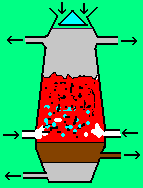
[me-17] The reactions in the blast furnace to produce iron are summarised by equations (1) to (4). The symbol equations may NOT be numerically balanced.
... (1) C + O2 ==> CO2
... (2) CO2 + C ==> CO
... (3) Fe2O3 + CO ==> Fe + CO2
... (4) CaCO3 + SiO2 ==> CaSiO3 + CO2
Which statement is TRUE?- in reaction (1) carbon is oxidised
- in reaction (2) carbon is reduced
- in reaction (3) carbon dioxide is oxidised
- in reaction (4) calcium carbonate is reduced
[me-18] The reactions in the blast furnace to produce iron are summarised by equations (1) to (4). The symbol equations may NOT be numerically balanced.
... (1) C + O2 ==> CO2
... (2) CO2 + C ==> CO
... (3) Fe2O3 + CO ==> Fe + CO2
... (4) CaCO3 + SiO2 ==> CaSiO3 + CO2
Which statement is TRUE?- in reaction (1) carbon is reduced
- in reaction (2) carbon is oxidised
- in reaction (3) carbon dioxide is oxidised
- in reaction (4) calcium carbonate is reduced
[me-19] The reactions in the blast furnace to produce iron are summarised by equations (1) to (4). The symbol equations may NOT be numerically balanced.
... (1) C + O2 ==> CO2
... (2) CO2 + C ==> CO
... (3) Fe2O3 + CO ==> Fe + CO2
... (4) CaCO3 + SiO2 ==> CaSiO3 + CO2
Which statement is TRUE?- in reaction (1) carbon is reduced
- in reaction (3) iron is oxidised
- in reaction (2) carbon dioxide is reduced
- in reaction (4) calcium carbonate is oxidised
[me-20] The reactions in the blast furnace to produce iron are summarised by equations (1) to (4). The symbol equations may NOT be numerically balanced.
... (1) C + O2 ==> CO2
... (2) CO2 + C ==> CO
... (3) Fe2O3 + CO ==> Fe + CO2
... (4) CaCO3 + SiO2 ==> CaSiO3 + CO2
Which statement is TRUE?- in reaction (1) carbon is reduced
- in reaction (4) calcium carbonate is oxidised
- in reaction (2) carbon monoxide is oxidised
- in reaction (3) iron oxide is reduced
[me-21] The reactions in the blast furnace to produce iron are summarised by equations (1) to (4). The symbol equations may NOT be numerically balanced.
... (1) C + O2 ==> CO2
... (2) CO2 + C ==> CO
... (3) Fe2O3 + CO ==> Fe + CO2
... (4) CaCO3 + SiO2 ==> CaSiO3 + CO2
Which statement is TRUE?- in reaction (3) carbon monoxide is oxidised
- in reaction (4) silicon dioxide is reduced
- in reaction (1) carbon is reduced
- in reaction (3) iron is oxidised
- In the reactions in a blast furnace what happens to most of the carbon monoxide? [me-22]
- it reacts with carbon to form carbon dioxide
- it combines with the oxygen in the iron oxide ore
- it reacts with the oxygen in the hot air to form carbon dioxide
- it reacts with silica and limestone to form the 'slag'
- Oxidation of a substance can be defined as? [me-23]
- a molecule reacting with oxygen molecules
- an atom losing oxygen atoms
- an atom or molecule combining with oxygen
- a molecule losing oxygen atoms
- Reduction of a substance can be defined as? [me-24]
- a molecule not reacting with oxygen molecules
- an atom gaining oxygen atoms
- an atom or molecule combining with oxygen
- a molecule losing oxygen atoms
 To produce aluminium, electricity is passed through? [me-31]
- molten aluminium oxide and molten cryolite
- molten cryolite
- molten aluminium oxide
- molten aluminium oxide and molten limestone
- To produce aluminium by electrolysis the
ore must be molten so that? [me-32]
- the aluminium oxide decomposes with the heat
- the ions from the ore are free to move
- the molecules from the ore are free to move
- the aluminium formed will be liquid
- During the electrolysis of molten aluminium oxide ore, the aluminium ions move? [me-33]
- to the negative electrode because they are negatively charged
- to the positive electrode because they are positively charged
- to the negative electrode because they are positively charged
- to the positive electrode because they are negatively charged
- During the electrolysis of molten aluminium oxide ore, the oxide ions move? [me-34]
- to the negative electrode because they are negatively charged
- to the positive electrode because they are positively charged
- to the negative electrode because they are positively charged
- to the positive electrode because they are negatively charged
- In the extraction of aluminium by electrolysis of molten aluminium oxide ore, the ore is dissolved in cryolite to? [me-35]
- lower the melting point of the aluminium ore to reduce the temperature of the process
- to decompose the ore into aluminium and oxygen at a higher temperature
- to help keep the aluminium molten at a higher temperature
- to help stop the electrodes from corroding away at high temperature
- In the extraction of aluminium by electrolysis of its ore, the positive electrodes have to be regularly replaced because? [me-36]
- they are attacked by hot molten aluminium
- they react with oxygen to form a gas
- they slowly dissolve in cryolite
- they gradually vaporise at the high temperature of the electrolysis cell
- In the extraction of aluminium by the electrolysis of molten aluminium oxide ore, the aluminium forms? [me-37]
- throughout the bulk of the molten ore
- only when the electrodes are close together
- only at the negative electrode
- only at the positive electrode
- In the extraction of aluminium by the electrolysis of molten aluminium oxide ore, oxygen forms? [me-38]
- throughout the bulk of the molten ore
- only when the electrodes are close together
- only at the negative electrode
- only at the positive electrode
- The name of a common ore from which iron can be extracted is called? [me-39]
- haematite
- bauxite
- cryolite
- charcoal
- The name of a common ore from which aluminium can be extracted is called? [me-40]
- haematite
- bauxite
- cryolite
- charcoal
- The name of the substance used to lower the melting point of aluminium oxide ore in the electrolytic extraction of aluminium is called? [me-41]
- haematite
- bauxite
- cryolite
- carbon
- In the electrolysis of aluminium oxide to extract aluminium, the electrodes are made of? [me-42]
- haematite
- bauxite
- cryolite
- carbon
 After the initial chemical extraction of copper from a copper ore, the copper is purified by? [me-51]
- electrolysis
- crystallisation
- distillation
- hydrolysis
- After the initial chemical extraction of copper from a copper ore, the copper is purified by electrolysis. The negative electrode is made of? [me-52]
- copper sulfide
- pure copper
- impure copper
- copper sulfate
- After the initial chemical extraction of copper from a copper ore, the copper is purified by electrolysis. The positive electrode is made of? [me-53]
- copper sulfide
- pure copper
- impure copper
- copper sulfate
- After the initial chemical extraction of copper from a copper ore, the copper is purified by electrolysis. The electrolyte solution contains dissolved? [me-54]
- copper sulfide
- pure copper
- impure copper
- copper sulfate
Which element is a metal that is most likely to be found in rocks as the metal itself? [me-55]- copper
- carbon
- iron
- sodium
Which element is a non-metal with some metallic character? [me-56]- copper
- carbon
- iron
- sodium
Which element is a metal that displaces hydrogen from dilute acids but not from cold water? [me-57]- copper
- carbon
- iron
- sodium
Which element is a metal that cannot be extracted using carbon? [me-58]- copper
- tin
- iron
- sodium
Which metal is more reactive than hydrogen but less reactive than carbon? [me-59]- tin
- aluminium
- copper
- silver
Which metal is less reactive than sodium but must be extracted using electrolysis of the molten ore? [me-60]- tin
- aluminium
- lead
- silver
Which of these metals should react with dilute hydrochloric acid, but very slowly? [me-61]- calcium
- iron
- lead
- silver
Which metal is most likely to be found in rocks as the metal itself? [me-62]- tin
- aluminium
- lead
- silver
- Which contains the iron oxide in the blast furnace extraction of iron? [me-63]
- haematite
- coke
- limestone
- sandstone
- Which is oxidised in the blast furnace extraction of iron? [me-64]
- haematite
- coke
- limestone
- air
- Which is NOT a raw material in the blast furnace extraction of iron? [me-66]
- haematite
- coke
- limestone
- sandstone
 Which metals is obtained from bauxite ore? [me-67]
- aluminium
- iron
- copper
- gold
- Which metals is obtained from haematite ore? [me-68]
- aluminium
- iron
- copper
- gold
- Which metals is purified by electrolysis? [me-69]
- aluminium
- iron
- copper
- gold
- Which metals is most likely to be found as the element and not as an oxide or
sulfide compound? [me-70]
- aluminium
- iron
- copper
- gold
 Which statement is TRUE? [me-71]
- aluminium is obtained from its ore by reduction using electrolysis
- iron is obtained from its ore by reduction using electrolysis
- aluminium is obtained from its ore by oxidation using carbon
- iron is obtained from its ore by oxidation using carbon
- Which statement is TRUE? [me-72]
- aluminium is obtained from its ore by reduction using carbon
- iron is obtained from its ore by reduction using carbon
- aluminium is obtained from its ore by oxidation using electrolysis
- iron is obtained from its ore by oxidation using electrolysis
- A mineral from which a metal can be extracted, is called? [me-73]
- compound
- mixture
- an ore
- rock
- Which is the reason why aluminium was first extracted commercially by electrolysis in the 19th century but metals like iron had been extracted for thousands of years? [me-74]
- no aluminium ores had been previously discovered
- there was no electricity supply available until this time
- no one was interested in using aluminium
- technology was sufficiently advanced by then
- Which metal is added to aluminium to make a stronger alloy? [me-77]
- magnesium
- chromium
- gold
- sodium
- Which metal is added to steel to give it good anti-corrosion properties? [me-78]
- magnesium
- chromium
- gold
- sodium


 Which metal is found as the free element in the Earth's crust? [me-79]
- magnesium
- chromium
- gold
- sodium
Which metal is less reactive than calcium, but whose oxide ore cannot be reduced with carbon? [me-80]- sodium
- potassium
- zinc
- magnesium


Which chemical change corresponds to an electrolysis? [me-81]- aluminium and oxygen are produced when an electric current is passed through molten aluminium oxide
- calcium carbonate forms calcium oxide and carbon dioxide in the blast furnace extraction of iron
- carbon monoxide reacts with iron oxide to form carbon dioxide in the blast furnace
- calcium hydroxide reacts with acid waste gases from an industrial metal extraction process to form a harmless salt and water
Which chemical change corresponds to a thermal decomposition? [me-82]- aluminium and oxygen are produced when an electric current is passed through molten aluminium oxide
- calcium carbonate forms calcium oxide and carbon dioxide in the blast furnace extraction of iron
- carbon monoxide reacts with iron oxide to form carbon dioxide in the blast furnace
- calcium hydroxide reacts with acid waste gases from an industrial metal extraction process to form a harmless salt and water
Which chemical change corresponds to an oxidation? [me-83]- aluminium and oxygen are produced when an electric current is passed through molten aluminium oxide
- calcium carbonate forms calcium oxide and carbon dioxide in the blast furnace extraction of iron
- carbon monoxide reacts with iron oxide to form carbon dioxide in the blast furnace
- calcium hydroxide reacts with acid waste gases from an industrial metal extraction process to form a harmless salt and water
Which chemical change corresponds to a neutralisation? [me-84]- aluminium and oxygen are produced when an electric current is passed through molten aluminium oxide
- calcium carbonate forms calcium oxide and carbon dioxide in the blast furnace extraction of iron
- carbon monoxide reacts with iron oxide to form carbon dioxide in the blast furnace
- calcium hydroxide reacts with acid waste gases from an industrial metal extraction process to form a harmless salt and water
Which chemical change corresponds to a reduction? [me-85]- changing copper oxide into copper in a smelter
- calcium carbonate forms calcium oxide and carbon dioxide in the blast furnace extraction of iron
- carbon monoxide reacts with iron oxide to form carbon dioxide in the blast furnace
- calcium hydroxide reacts with acid waste gases from an industrial metal extraction process to form a harmless salt and water
Stages in the extraction of iron in a blast furnace are described below after iron ore, coke and limestone have been added at the top, but not in the correct order.
(1) carbon dioxide reacts with coke (carbon) to form carbon monoxide
(2) limestone combines with acid impurities
(3) hot air is blown into the furnace
(4) carbon monoxide reacts with iron oxide to make iron
(5) coke (carbon) burns to form carbon dioxide
Which is the correct order of sequence for (1) to (5)? [me-86]- (5) (3) (1) (2) (4)
- (3) (5) (1) (4) (2)
- (5) (1) (3) (2) (4)
- (3) (5) (4) (1) (2)
- Why is hot air blown into a blast furnace? [me-87]
- too keep the iron molten
- to melt the iron ore
- to react with coke and release energy
- to react with impurities in the iron
- Which is formed on burning coke in the blast furnace? [me-88]
- calcium oxide
- slag
- carbon monoxide
- carbon dioxide
- Which removes the oxygen from the iron ore in a blast furnace? [me-89]
- carbon monoxide
- slag
- limestone
- carbon dioxide
- Which is produced when limestone combines with acidic impurities in the blast furnace extraction of iron? [me-90]
- carbon monoxide
- slag
- iron oxide
- carbon dioxide
- Which is added to a blast furnace to produce carbon monoxide and heat energy? [me-91]
- calcium oxide
- limestone
- carbon
- carbon dioxide
- Haematite iron ore contains mainly? [me-92]
- iron oxide and slag impurities
- iron carbonate and calcium oxide
- iron carbonate and slag impurities
- iron oxide and acidic impurities
- Ingots of aluminium from its electrolytic extraction can be stored outside in all weathers. Why do aluminium ingots not corrode away, despite aluminium being quite high in the reactivity series of metals? [me-93]
- aluminium is coated in an oxide layer
- aluminium will not react with oxygen
- aluminium has a particularly shiny surface
- it is not a transition metal like chromium
- Which pair of elements are non-metals which will displace less reactive metals from their oxide ores? [me-94]
- nitrogen and helium
- carbon and hydrogen
- sulfur and oxygen
- chlorine and argon
- Given the equation of the reduction of an iron oxide in a blast furnace:
? + 4CO ==> 3Fe + 4CO2
What must the formula of the original iron oxide ore? [me-25]- Fe3O2
- Fe4O3
- Fe3O4
- Fe2O3
- It is possible for an iron oxide ore in a blast furnace to be directly reduced by the coke (carbon) to form iron.
a Fe2O3 + b C ==> c Fe + d CO2
Which four quantities a, b, c and d give the ratio to balance the equation? [me-26]- 1, 3, 6, 3
- 1, 2, 3, 6
- 2, 2, 6, 4
- 2, 3, 4, 3
- It is possible for an iron oxide ore in a blast furnace to be directly reduced by the coke (carbon) to form iron.
a Fe3O4 + b C ==> c Fe + d CO2
Which four quantities a, b, c and d give the ratio to balance the equation? [me-27]- 1, 2, 3, 2
- 1, 2, 3, 4
- 2, 3, 6, 3
- 2, 4, 6, 4
- Iron oxide ore in a blast furnace is mainly reduced by carbon monoxide to form iron.
a Fe2O3 + b CO ==> c Fe + d CO2
Which four quantities a, b, c and d give the ratio to balance the equation? [me-28]- 1, 2, 3, 2
- 1, 3, 2, 3
- 2, 6, 2, 3
- 2, 4, 6, 4
- Which is the correct and balanced equation for the formation of carbon monoxide in the blast furnace? [me-29]
- CO2 + C ==> CO
- CO2 + 2C ==> 2CO
- CO2 + C ==> 2CO
- 2CO2 + C ==> 2CO
- Given the equation of the reduction of an iron oxide in a blast furnace ...
a Fe3O4 + b CO ==> c Fe + d CO2
Which four quantities a, b, c and d give the ratio to balance the equation? [me-30]- 2, 2, 3, 4
- 1, 4, 2, 3
- 2, 2, 3, 2
- 1, 4, 3, 4
In the extraction of aluminium by electrolysis of molten aluminium oxide, all the chemical changes occur on the surface of the electrodes. The formula for aluminium oxide is Al2O3. Which is the correct equation to show the change at the negative electrode? [me-43] - Al3+ + 3e- ==> Al
- 2O2- - 4e- ==> O2
- Al+ + e- ==> Al
- 2O2- - 2e- ==> O2
In the extraction of aluminium by electrolysis of molten aluminium oxide, all the chemical changes occur on the surface of the electrodes. The formula for aluminium oxide is Al2O3. Which is the correct equation to show the change at the positive electrode? [me-44] - Al3+ + 3e- ==> Al
- 2O2- - 4e- ==> O2
- Al+ + e- ==> Al
- 2O2- - 2e- ==> O2
In the extraction of aluminium by electrolysis of molten aluminium oxide, all the chemical changes occur on the surface of the electrodes. The formula for aluminium oxide is Al2O3. Which word describes the process happening on the surface of the positive electrode? [me-45] - electrolysis
- decomposition
- oxidation
- reduction
In the extraction of aluminium by electrolysis of molten aluminium oxide, all the chemical changes occur on the surface of the electrodes. The formula for aluminium oxide is Al2O3. Which word describes the process happening on the surface of the negative electrode? [me-46] - electrolysis
- decomposition
- oxidation
- reduction
Copper is purified by the electrolysis of copper(II) sulfate solution using copper electrodes. All the chemical changes occur on the surface of the electrodes. The formula for copper(II) sulfate is CuSO4. Which word describes the process happening on the surface of the positive electrode? [me-47] - electrolysis
- decomposition
- oxidation
- reduction
Copper is purified by the electrolysis of copper(II) sulfate solution using copper electrodes. All the chemical changes occur on the surface of the electrodes. The formula for copper(II) sulfate is CuSO4. Which word describes the process happening on the surface of the negative electrode? [me-48] - electrolysis
- decomposition
- oxidation
- reduction
Copper is purified by the electrolysis of copper(II) sulfate solution using copper electrodes. All the chemical changes occur on the surface of the electrodes. The formula for copper(II) sulfate is CuSO4. Which equation correctly describes the process happening on the surface of the positive electrode? [me-49] - 2H+(aq) + 2e- ==> H2(aq)
- 2O2- - 4e- ==> O2
- Cu(s) - 2e- ==> Cu2+(aq)
- Cu2+(aq) + 2e- ==> Cu(s)
Copper is purified by the electrolysis of copper(II) sulfate solution using copper electrodes. All the chemical changes occur on the surface of the electrodes. The formula for copper(II) sulfate is CuSO4. Which equation correctly describes the process happening on the surface of the negative electrode? [me-50] - 2H+(aq) + 2e- ==> H2(aq)
- 2O2- - 4e- ==> O2
- Cu(s) - 2e- ==> Cu2+(aq)
- Cu2+(aq) + 2e- ==> Cu(s)
- Which is TRUE about the extraction of aluminium by electrolysis? [me-75]
- aluminium ions move to the positive electrode and are oxidised to aluminium atoms by electron loss
- oxide ions move to the positive electrode and are reduced by electron gain
- aluminium ions move to the negative electrode and are reduced to aluminium atoms by electron gain
- oxide ions move to the negative electrode and are oxidised by electron loss
- Which is TRUE about the extraction of aluminium by electrolysis? [me-76]
- aluminium ions move to the negative electrode and are oxidised to aluminium atoms by electron loss
- oxide ions move to the negative electrode and are reduced by electron gain
- aluminium ions move to the positive electrode and are reduced to aluminium atoms by electron gain
- oxide ions move to the positive electrode and are oxidised by electron loss
- The diagram shows how copper is purified by electrolysis. What happens at the negative electrode? [me-95]
- copper ions gain electrons to become neutral copper atoms
- neutral copper atoms lose electrons to become ions
- neutral copper atoms gain electrons to become ions
- copper ions lose electrons to become neutral atoms
- The diagram shows how copper is purified by electrolysis. What happens at the positive electrode? [me-96]
- copper ions gain electrons to become neutral copper atoms
- neutral copper atoms lose electrons to become ions
- neutral copper atoms gain electrons to become ions
- copper ions lose electrons to become neutral atoms
- The diagram shows how copper is purified by electrolysis. Which is a suitable salt to use? [me-97]
- aluminium sulfate
- sodium chloride
- copper sulfate
- magnesium chloride
 Electrolysis processes can only be done on solutions or molten materials because? [me-98]
- less energy is needed
- the product might be a gas, liquid or a solid
- electrons cannot flow through solids
- the ions must free to move to electrodes
- In an electrolysis process which word describes the overall chemical change? [me-99]
- redox
- oxidation
- reduction
- neutralisation
- In an electrolysis process which word describes the change at the positive electrode? [me-100]
- redox
- oxidation
- reduction
- neutralisation
- In an electrolysis process which word describes the change at the negative electrode? [me-101]
- redox
- oxidation
- reduction
- neutralisation
 Sodium and chlorine can be manufactured by passing a direct current through the molten salt sodium chloride. What happens at the negative electrode? [me-102]
- chloride ions lose electrons and become chlorine atoms (which form molecules)
- sodium atoms lose electrons and become sodium ions
- chlorine atoms gain electrons and become chloride ions
- sodium ions gain electrons and become sodium atoms
- Sodium and chlorine can be manufactured by passing a direct current through the molten salt sodium chloride. What happens at the positive electrode? [me-103]
- chloride ions lose electrons and become chlorine atoms (which form molecules)
- sodium atoms lose electrons and become sodium ions
- chlorine atoms gain electrons and become chloride ions
- sodium ions gain electrons and become sodium atoms
- Sodium and chlorine can be manufactured by passing a direct current through the molten salt sodium chloride. What happens to the sodium ions is an example of? [me-104]
- displacement
- reduction
- oxidation
- decomposition
- Sodium and chlorine can be manufactured by passing a direct current through the molten salt sodium chloride. What happens to the chloride ion is an example of? [me-105]
- displacement
- reduction
- oxidation
- decomposition