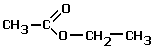
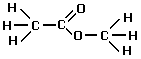
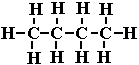
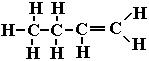
Which of the following is a carboxylic acid? [eo-2]
Which of the following is an alkene? [eo-3]
Which of the following is an ester? [eo-4]
Which of the following is an alcohol? [eo-5]
Which of the following is called propane? [eo-6]
Which of the following is called propanoic acid? [eo-7]
Which of the following is called propene? [eo-8]
Which of the following is called methyl ethanoate? [eo-9]
Which of the following is called propan-1-ol? [eo-10]
Which of the following is a hydrocarbon fuel that does not readily react with bromine? [eo-11]
Which of the following 'fizzes' with a carbonate and forms an ester with alcohols? [eo-12]
Which of the following readily reacts with bromine to produce a colourless product? [eo-13]
Which of the following is a pleasant smelling liquid of a type of molecule used in perfumes and flavourings? [eo-14]
Which of the following is a molecule that reacts with organic acids to form pleasant smelling esters? [eo-15]
Which of the following is an 'ESTERIFICATION' type of reaction? [eo-16]
CH3COOH + C2H5OH ==> CH3COOC2H5 + H2O
C2H5OH + 3O2 ==> 2CO2 + 3H2O
C3H8 + 5O2 ==> 3CO2 + 4H2O
n CH2=CH2 ==> (-CH2-CH2-)n
n HO-XXX-OH ==> (-O-XXX-)n + nH2O
C6H12O6 ==> 2C2H5OH + 2CO2
CH3COOH + NaOH ==> CH3COONa + H2O
C6H14 => C2H4 + C4H10
6CO2 + 6H2O ==> C6H12O6 + 6O2
C6H12O6 + 6O2 ==> 6CO2 + 6H2O
Which of the following is an 'ALCOHOL COMBUSTION' type of reaction? [eo-17]
CH3COOH + C2H5OH ==> CH3COOC2H5 + H2O
C2H5OH + 3O2 ==> 2CO2 + 3H2O
C3H8 + 5O2 ==> 3CO2 + 4H2O
n CH2=CH2 ==> (-CH2-CH2-)n
n HO-XXX-OH ==> (-O-XXX-)n + nH2O
C6H12O6 ==> 2C2H5OH + 2CO2
CH3COOH + NaOH ==> CH3COONa + H2O
C6H14 => C2H4 + C4H10
6CO2 + 6H2O ==> C6H12O6 + 6O2
C6H12O6 + 6O2 ==> 6CO2 + 6H2O
Which of the following is a 'HYDROCARBON COMBUSTION' type of reaction? [eo-18]
CH3COOH + C2H5OH ==> CH3COOC2H5 + H2O
C2H5OH + 3O2 ==> 2CO2 + 3H2O
C3H8 + 5O2 ==> 3CO2 + 4H2O
n CH2=CH2 ==> (-CH2-CH2-)n
n HO-XXX-OH ==> (-O-XXX-)n + nH2O
C6H12O6 ==> 2C2H5OH + 2CO2
CH3COOH + NaOH ==> CH3COONa + H2O
C6H14 => C2H4 + C4H10
6CO2 + 6H2O ==> C6H12O6 + 6O2
C6H12O6 + 6O2 ==> 6CO2 + 6H2O
Which of the following is a 'ADDITION POLYMERISATION' type of reaction? [eo-19]
CH3COOH + C2H5OH ==> CH3COOC2H5 + H2O
C2H5OH + 3O2 ==> 2CO2 + 3H2O
C3H8 + 5O2 ==> 3CO2 + 4H2O
n CH2=CH2 ==> (-CH2-CH2-)n
n HO-XXX-OH ==> (-O-XXX-)n + nH2O
C6H12O6 ==> 2C2H5OH + 2CO2
CH3COOH + NaOH ==> CH3COONa + H2O
C6H14 => C2H4 + C4H10
6CO2 + 6H2O ==> C6H12O6 + 6O2
C6H12O6 + 6O2 ==> 6CO2 + 6H2O
Which of the following is a 'CONDENSATION POLYMERISATION' type of reaction? [eo-20]
CH3COOH + C2H5OH ==> CH3COOC2H5 + H2O
C2H5OH + 3O2 ==> 2CO2 + 3H2O
C3H8 + 5O2 ==> 3CO2 + 4H2O
n CH2=CH2 ==> (-CH2-CH2-)n
n HO-XXX-OH ==> (-O-XXX-)n + nH2O
C6H12O6 ==> 2C2H5OH + 2CO2
CH3COOH + NaOH ==> CH3COONa + H2O
C6H14 => C2H4 + C4H10
6CO2 + 6H2O ==> C6H12O6 + 6O2
C6H12O6 + 6O2 ==> 6CO2 + 6H2O
Which of the following is a 'FERMENTATION' type of reaction? [eo-21]
CH3COOH + C2H5OH ==> CH3COOC2H5 + H2O
C2H5OH + 3O2 ==> 2CO2 + 3H2O
C3H8 + 5O2 ==> 3CO2 + 4H2O
n CH2=CH2 ==> (-CH2-CH2-)n
n HO-XXX-OH ==> (-O-XXX-)n + nH2O
C6H12O6 ==> 2C2H5OH + 2CO2
CH3COOH + NaOH ==> CH3COONa + H2O
C6H14 => C2H4 + C4H10
6CO2 + 6H2O ==> C6H12O6 + 6O2
C6H12O6 + 6O2 ==> 6CO2 + 6H2O
Which of the following is a 'NEUTRALISATION' type of reaction? [eo-22]
CH3COOH + C2H5OH ==> CH3COOC2H5 + H2O
C2H5OH + 3O2 ==> 2CO2 + 3H2O
C3H8 + 5O2 ==> 3CO2 + 4H2O
n CH2=CH2 ==> (-CH2-CH2-)n
n HO-XXX-OH ==> (-O-XXX-)n + nH2O
C6H12O6 ==> 2C2H5OH + 2CO2
CH3COOH + NaOH ==> CH3COONa + H2O
C6H14 => C2H4 + C4H10
6CO2 + 6H2O ==> C6H12O6 + 6O2
C6H12O6 + 6O2 ==> 6CO2 + 6H2O
Which of the following is a 'CRACKING' type of reaction? [eo-23]
CH3COOH + C2H5OH ==> CH3COOC2H5 + H2O
C2H5OH + 3O2 ==> 2CO2 + 3H2O
C3H8 + 5O2 ==> 3CO2 + 4H2O
n CH2=CH2 ==> (-CH2-CH2-)n
n HO-XXX-OH ==> (-O-XXX-)n + nH2O
C6H12O6 ==> 2C2H5OH + 2CO2
CH3COOH + NaOH ==> CH3COONa + H2O
C6H14 => C2H4 + C4H10
6CO2 + 6H2O ==> C6H12O6 + 6O2
C6H12O6 + 6O2 ==> 6CO2 + 6H2O
Which of the following represents 'PHOTOSYNTHESIS'? [eo-24]
CH3COOH + C2H5OH ==> CH3COOC2H5 + H2O
C2H5OH + 3O2 ==> 2CO2 + 3H2O
C3H8 + 5O2 ==> 3CO2 + 4H2O
n CH2=CH2 ==> (-CH2-CH2-)n
n HO-XXX-OH ==> (-O-XXX-)n + nH2O
C6H12O6 ==> 2C2H5OH + 2CO2
CH3COOH + NaOH ==> CH3COONa + H2O
C6H14 => C2H4 + C4H10
6CO2 + 6H2O ==> C6H12O6 + 6O2
C6H12O6 + 6O2 ==> 6CO2 + 6H2O
Which of the following represents 'RESPIRATION'? [eo-25]
CH3COOH + C2H5OH ==> CH3COOC2H5 + H2O
C2H5OH + 3O2 ==> 2CO2 + 3H2O
C3H8 + 5O2 ==> 3CO2 + 4H2O
n CH2=CH2 ==> (-CH2-CH2-)n
n HO-XXX-OH ==> (-O-XXX-)n + nH2O
C6H12O6 ==> 2C2H5OH + 2CO2
CH3COOH + NaOH ==> CH3COONa + H2O
C6H14 => C2H4 + C4H10
6CO2 + 6H2O ==> C6H12O6 + 6O2
C6H12O6 + 6O2 ==> 6CO2 + 6H2O
Which of the following is an 'ESTERIFICATION' type of reaction? [eo-26]
ethanoic acid + ethanol ==> ethyl ethanoate + water
ethanol + oxygen ==> carbon dioxide + water
propane + oxygen ==> carbon dioxide + water
ethene ==> poly(ethene)
glucose ==> starch + water
glucose ==> ethanol + carbon dioxide
ethanoic acid + sodium hydroxide ==> sodium ethanoate + water
hexane ==> ethene + butane
carbon dioxide + water ==> glucose + oxygen
glucose + oxygen ==> carbon dioxide + water
Which of the following is an 'ALCOHOL COMBUSTION' type of reaction? [eo-27]
ethanoic acid + ethanol ==> ethyl ethanoate + water
ethanol + oxygen ==> carbon dioxide + water
propane + oxygen ==> carbon dioxide + water
ethene ==> poly(ethene)
glucose ==> starch + water
glucose ==> ethanol + carbon dioxide
ethanoic acid + sodium hydroxide ==> sodium ethanoate + water
hexane ==> ethene + butane
carbon dioxide + water ==> glucose + oxygen
glucose + oxygen ==> carbon dioxide + water
Which of the following is a 'HYDROCARBON COMBUSTION' type of reaction? [eo-28]
ethanoic acid + ethanol ==> ethyl ethanoate + water
ethanol + oxygen ==> carbon dioxide + water
propane + oxygen ==> carbon dioxide + water
ethene ==> poly(ethene)
glucose ==> starch + water
glucose ==> ethanol + carbon dioxide
ethanoic acid + sodium hydroxide ==> sodium ethanoate + water
hexane ==> ethene + butane
carbon dioxide + water ==> glucose + oxygen
glucose + oxygen ==> carbon dioxide + water
Which of the following is an 'ADDITION POLYMERISATION' type of reaction? [eo-29]
ethanoic acid + ethanol ==> ethyl ethanoate + water
ethanol + oxygen ==> carbon dioxide + water
propane + oxygen ==> carbon dioxide + water
ethene ==> poly(ethene)
glucose ==> starch + water
glucose ==> ethanol + carbon dioxide
ethanoic acid + sodium hydroxide ==> sodium ethanoate + water
hexane ==> ethene + butane
carbon dioxide + water ==> glucose + oxygen
glucose + oxygen ==> carbon dioxide + water
Which of the following is a 'CONDENSATION POLYMERISATION' type of reaction? [eo-30]
ethanoic acid + ethanol ==> ethyl ethanoate + water
ethanol + oxygen ==> carbon dioxide + water
propane + oxygen ==> carbon dioxide + water
ethene ==> poly(ethene)
glucose ==> starch + water
glucose ==> ethanol + carbon dioxide
ethanoic acid + sodium hydroxide ==> sodium ethanoate + water
hexane ==> ethene + butane
carbon dioxide + water ==> glucose + oxygen
glucose + oxygen ==> carbon dioxide + water
Which of the following is a 'FERMENTATION' type of reaction? [eo-31]
ethanoic acid + ethanol ==> ethyl ethanoate + water
ethanol + oxygen ==> carbon dioxide + water
propane + oxygen ==> carbon dioxide + water
ethene ==> poly(ethene)
glucose ==> starch + water
glucose ==> ethanol + carbon dioxide
ethanoic acid + sodium hydroxide ==> sodium ethanoate + water
hexane ==> ethene + butane
carbon dioxide + water ==> glucose + oxygen
glucose + oxygen ==> carbon dioxide + water
Which of the following is a 'NEUTRALISATION' type of reaction? [eo-32]
ethanoic acid + ethanol ==> ethyl ethanoate + water
ethanol + oxygen ==> carbon dioxide + water
propane + oxygen ==> carbon dioxide + water
ethene ==> poly(ethene)
glucose ==> starch + water
glucose ==> ethanol + carbon dioxide
ethanoic acid + sodium hydroxide ==> sodium ethanoate + water
hexane ==> ethene + butane
carbon dioxide + water ==> glucose + oxygen
glucose + oxygen ==> carbon dioxide + water
Which of the following is a 'CRACKING' type of reaction? [eo-33]
ethanoic acid + ethanol ==> ethyl ethanoate + water
ethanol + oxygen ==> carbon dioxide + water
propane + oxygen ==> carbon dioxide + water
ethene ==> poly(ethene)
glucose ==> starch + water
glucose ==> ethanol + carbon dioxide
ethanoic acid + sodium hydroxide ==> sodium ethanoate + water
hexane ==> ethene + butane
carbon dioxide + water ==> glucose + oxygen
glucose + oxygen ==> carbon dioxide + water
Which of the following represents 'PHOTOSYNTHESIS'? [eo-34]
ethanoic acid + ethanol ==> ethyl ethanoate + water
ethanol + oxygen ==> carbon dioxide + water
propane + oxygen ==> carbon dioxide + water
ethene ==> poly(ethene)
glucose ==> starch + water
glucose ==> ethanol + carbon dioxide
ethanoic acid + sodium hydroxide ==> sodium ethanoate + water
hexane ==> ethene + butane
carbon dioxide + water ==> glucose + oxygen
glucose + oxygen ==> carbon dioxide + water
Which of the following represents 'RESPIRATION' reaction? [eo-35]
ethanoic acid + ethanol ==> ethyl ethanoate + water
ethanol + oxygen ==> carbon dioxide + water
propane + oxygen ==> carbon dioxide + water
ethene ==> poly(ethene)
glucose ==> starch + water
glucose ==> ethanol + carbon dioxide
ethanoic acid + sodium hydroxide ==> sodium ethanoate + water
hexane ==> ethene + butane
carbon dioxide + water ==> glucose + oxygen
glucose + oxygen ==> carbon dioxide + water
Which of the following chemical reagents and reaction conditions is used in the laboratory to convert 'ethanol to ethanoic acid'? [eo-36]
acidified potassium dichromate(VI)
steam and phosphoric(V) acid catalyst
heating with aqueous sodium hydroxide
hydrogen gas and nickel catalyst
Which of the following chemical reagents and reaction conditions is used in industry to convert 'ethene to ethanol'? [eo-37]
acidified potassium dichromate(VI)
steam and phosphoric(V) acid catalyst
heating with aqueous sodium hydroxide
hydrogen gas and nickel catalyst
Which of the following chemical reagents and reaction conditions is used in the laboratory or industry to convert 'natural vegetable oils to soap'? [eo-38]
acidified potassium dichromate(VI)
steam and phosphoric(V) acid catalyst
heating with aqueous sodium hydroxide
hydrogen gas and nickel catalyst
Which of the following chemical reagents and reaction conditions is used in industry to convert 'vegetable oils to margarine'? [eo-39]
acidified potassium dichromate(VI)
steam and phosphoric(V) acid catalyst
heating with aqueous sodium hydroxide
hydrogen gas and nickel catalyst
Which of the following chemical reagents and reaction conditions is used in to 'breakdown protein into amino acids'? [eo-40]
acidified potassium dichromate(VI)
steam and phosphoric(V) acid catalyst
hydrogen gas and nickel catalyst
heating with hydrochloric acid
Which of the following chemical reagents and reaction conditions is used in to 'breakdown starch into glucose'? [eo-41]
acidified potassium dichromate(VI)
steam and phosphoric(V) acid catalyst
hydrogen gas and nickel catalyst
heating with hydrochloric acid
Which of the following molecular pictures corresponds to a 'typical thermoplastic' used for making bottles? [eo-42]
picture 1
picture 2
picture 3
Which of the following molecular pictures corresponds to a 'thermoplastic fibre'? [eo-43]
picture 1
picture 2
picture 3
Which of the following molecular pictures corresponds to a 'hard thermoset plastic'? [eo-44]
picture 1
picture 2
picture 3
Which of the following molecular pictures corresponds to unprocessed 'thermosoftening plastic'? [eo-45]
picture 1
picture 2
picture 3
Which of the following molecular pictures corresponds to 'Nylon or Terylene used in clothing'? [eo-46]
picture 1
picture 2
picture 3
Which of the following molecular pictures corresponds to the 'plastic set in a fibre glass car body'? [eo-47]
picture 1
picture 2
picture 3
Which of the following separation methods of would be used to 'separate amino acids from hydrolysed protein? [eo-48]
chromatography
fractional distillation
filtration
crystallisation
Which of the following separation methods of would be used to 'obtain much purer ethanol/alcohol from fermented sugar solution? [eo-49]
chromatography
fractional distillation
filtration
crystallisation
Which of the following separation methods of would be used to 'remove yeast from fermented sugar solution? [eo-50]
chromatography
fractional distillation
filtration
crystallisation
Which of the following separation methods of would be used to 'obtain a purer sample of aspirin powder from a chemical preparation of it? [eo-51]
chromatography
fractional distillation
filtration
crystallisation
The diagrams above show the molecular structure of three common synthetic pain killers (analgesics) and the naturally
occurring vitamin C (ascorbic acid) found in fruit and vegetables. Which of them is most likely to readily react with bromine? [eo-52]
ascorbic acid (vitamin C)
aspirin
ibuprofen
paracetamol
The diagrams above show the molecular structure of three common synthetic pain killers (analgesics) and the naturally
occurring vitamin C (ascorbic acid) found in fruit and vegetables. Which of them is both a carboxylic acid and an ester? [eo-53]
ascorbic acid (vitamin C)
aspirin
ibuprofen
paracetamol
The diagrams above show the molecular structure of three common synthetic pain killers (analgesics) and the naturally
occurring vitamin C (ascorbic acid) found in fruit and vegetables. Which of them is not an ester, but is a carboxylic acid? [eo-54]
ascorbic acid (vitamin C)
aspirin
ibuprofen
paracetamol
The diagrams above show the molecular structure of three common synthetic pain killers (analgesics) and the naturally
occurring vitamin C (ascorbic acid) found in fruit and vegetables. Which of the molecules contains one element the other three do not have in their structure? [eo-55]
ascorbic acid (vitamin C)
aspirin
ibuprofen
paracetamol
The diagrams above show the molecular structure of three common synthetic pain killers (analgesics) and the naturally
occurring vitamin C (ascorbic acid) found in fruit and vegetables. Which of them has the formula C6H8O6? [eo-56]
ascorbic acid (vitamin C)
aspirin
ibuprofen
paracetamol
The diagrams above show the molecular structure of three common synthetic pain killers (analgesics) and the naturally
occurring vitamin C (ascorbic acid) found in fruit and vegetables. Which of them has the formula C9H8O4? [eo-57]
ascorbic acid (vitamin C)
aspirin
ibuprofen
paracetamol
The diagrams above show the molecular structure of three common synthetic pain killers (analgesics) and the naturally
occurring vitamin C (ascorbic acid) found in fruit and vegetables. Which of them has the formula C13H18O2? [eo-58]
ascorbic acid (vitamin C)
aspirin
ibuprofen
paracetamol
The diagrams above show the molecular structure of three common synthetic pain killers (analgesics) and the naturally
occurring vitamin C (ascorbic acid) found in fruit and vegetables. Which of them has the formula C8H9NO2? [eo-59]
ascorbic acid (vitamin C)
aspirin
ibuprofen
paracetamol
The diagrams above show the molecular structure of three common synthetic pain killers (analgesics) and the naturally
occurring vitamin C (ascorbic acid) found in fruit and vegetables. Which of them can form an ester with a carboxylic acid and readily form a dibromo compound with bromine? [eo-60]
ascorbic acid (vitamin C)
aspirin
ibuprofen
paracetamol
The diagrams above show the molecular structure of three common synthetic pain killers (analgesics) and the naturally
occurring vitamin C (ascorbic acid) found in fruit and vegetables. Which of them is an ester and can still form an ester with an alcohol? [eo-61]
ascorbic acid (vitamin C)
aspirin
ibuprofen
paracetamol
The diagrams above show the molecular structure of three common synthetic pain killers (analgesics) and the naturally
occurring vitamin C (ascorbic acid) found in fruit and vegetables. Which of them is not an ester, but can form an ester with an alcohol and will not readily react with bromine? [eo-62]
ascorbic acid (vitamin C)
aspirin
ibuprofen
paracetamol
The diagrams above show the molecular structure of three common synthetic pain killers (analgesics) and the naturally
occurring vitamin C (ascorbic acid) found in fruit and vegetables. Which of them is not an ester or a carboxylic acid or an alcohol? [eo-63]
ascorbic acid (vitamin C)
aspirin
ibuprofen
paracetamol
Which of the following general formula represents the homologous series of alkanes? [eo-6]
CnH2n+2 where n = 1, 2, 3, ...
CnH2n where n = 2, 3, 4, ...
CnH2n+1OH where n = 1, 2, 3, ...
CnH2n+1COOH where n = 0, 1, 2, ...
Which of the following general formula represents the homologous series of alkenes? [eo-65]
CnH2n+2 where n = 1, 2, 3, ...
CnH2n where n = 2, 3, 4, ...
CnH2n+1OH where n = 1, 2, 3, ...
CnH2n+1COOH where n = 0, 1, 2, ...
Which of the following general formula represents the homologous series of alcohols? [eo-66]
CnH2n+2 where n = 1, 2, 3, ...
CnH2n where n = 2, 3, 4, ...
CnH2n+1OH where n = 1, 2, 3, ...
CnH2n+1COOH where n = 0, 1, 2, ...
Which of the following general formula represents the homologous series of carboxylic acids? [eo-67]
CnH2n+2 where n = 1, 2, 3, ...
CnH2n where n = 2, 3, 4, ...
CnH2n+1OH where n = 1, 2, 3, ...
CnH2n+1COOH where n = 0, 1, 2, ...
The diagrams above show the molecular structure of three common synthetic pain killers (analgesics) and the naturally
occurring vitamin C (ascorbic acid) found in fruit and vegetables. Which of them is good at removing harmful free radicals in the body? [eo-68]
ascorbic acid (vitamin C)
aspirin
ibuprofen
paracetamol
The diagrams above show the molecular structure of three common synthetic pain killers (analgesics) and the naturally
occurring vitamin C (ascorbic acid) found in fruit and vegetables. Which of them does NOT produce fizzing when mixed with water and a carbonate? [eo-69]
ascorbic acid (vitamin C)
aspirin
ibuprofen
paracetamol
Which word corresponds to a hydrocarbon molecule? [op-13]
compound
element
fraction
mixture
Which word corresponds to carbon? [op-14]
compound
element
fraction
mixture
Which word corresponds to a narrow boiling range of hydrocarbons from oil? [op-15]
compound
element
fraction
condensate
Which word corresponds to crude oil? [op-16]
compound
element
fraction
mixture
Which word corresponds to methane gas? [op-17]
compound
element
fraction
mixture
Which word corresponds to hydrogen? [op-18]
compound
element
fraction
mixture
Which word corresponds to a range of similar sized hydrocarbons from oil? [op-19]
compound
element
fraction
crackate
Which word corresponds to a fraction of crude oil? [op-20]
compound
element
evaporate
mixture
Which word means changing a gas into liquid? [op-21]
condensing
cracking
distilling
evaporating
Which word means breaking up big molecules into small ones? [op-22]
condensing
cracking
distilling
evaporating
Which of the following involves liquid to gas AND gas to liquid without chemical change? [op-23]
condensing
cracking
distilling
evaporating
Which word means what happens to spilt petrol? [op-24]
condensing
cracking
distilling
evaporating
Which of the following is TRUE about crude oil? [op-45]
formed from the decayed remains of plants and animals
its a renewable energy resource
its an infinite energy resource
its a compound
Which of the following is TRUE about crude oil? [op-46]
formed from the erosion of sedimentary rock
its a non-renewable energy resource
its an infinite energy resource
its a compound
Which of the following is TRUE about crude oil? [op-47]
formed from the erosion of sedimentary rock
its a renewable energy resource
its a finite energy resource
its a compound
Which of the following is TRUE about crude oil? [op-48]
formed from the erosion of sedimentary rock
its a renewable energy resource
its an infinite energy resource
its a mixture of hydrocarbons
Which of the following is TRUE about crude oil? [op-49]
the mixture can separated by distillation
its a non-fossil fuel
the molecules are all the same size
the components have the same boiling point
Which of the following is TRUE about crude oil? [op-50]
the mixture can't be separated by distillation
its a fossil fuel
the molecules are all the same size
the components have the same boiling point
Which of the following is TRUE about crude oil? [op-51]
the mixture can't be separated by distillation
its a non-fossil fuel
the molecules are of different size
the components have the same boiling point
Which of the following is TRUE about crude oil? [op-52]
the mixture can't be separated by distillation
its a non-fossil fuel
the molecules are the same size
the components have the different boiling points
Which is TRUE as a hydrocarbon molecule gets bigger (more carbon atoms in chain)? [op-53]
the boiling point gets higher
it gets more volatile (more easily vaporised)
it gets less viscous (less sticky)
it gets more easy to ignite (gets more flammable)
Which is TRUE as a hydrocarbon molecule gets bigger (more carbon atoms in chain)? [op-54]
the boiling point gets lower
it gets less volatile (less easily vaporised)
it gets less viscous (less sticky)
it gets more easy to ignite (gets more flammable)
Which is TRUE as a hydrocarbon molecule gets bigger (more carbon atoms in chain)? [op-55]
the boiling point gets lower
it gets more volatile (more easily vaporised)
it gets more viscous (more sticky)
it gets more easy to ignite (gets more flammable)
Which is TRUE as a hydrocarbon molecule gets bigger (more carbon atoms in chain)? [op-56]
the boiling point gets lower
it gets more volatile (more easily vaporised)
it gets less viscous (less sticky)
it gets less easy to ignite (gets less flammable)
Cracking is an example of? [op-57]
thermal decomposition
polymerisation
fractional distillation
combustion
Making plastics is an example of? [op-58]
thermal decomposition
polymerisation
fractional distillation
combustion
The separation of crude oil products is an example of? [op-59]
thermal decomposition
polymerisation
fractional distillation
combustion
Burning a fuel is an example of? [op-60]
thermal decomposition
polymerisation
fractional distillation
combustion
Which TRUE about the process of 'cracking' in the petrochemical oil industry? [op-61]
it needs a high temperature
it doesn't need a catalyst
it makes small molecules into more useful bigger molecules
it can make plastics
Which TRUE about the process of 'cracking' in the petrochemical oil industry? [op-62]
it needs a low temperature
it needs a catalyst
it makes small molecules into more useful bigger molecules
it can make plastics
Which TRUE about the process of 'cracking' in the petrochemical oil industry? [op-63]
it needs a low temperature
it doesn't need a catalyst
it makes big molecules into more useful smaller molecules like petrol
it can make plastics
Which TRUE about the process of 'cracking' in the petrochemical oil industry? [op-64]
it needs a low temperature
it doesn't need a catalyst
it makes small molecules into more useful bigger molecules like petrol
it can make small molecules to convert into plastics
Which corresponds to a process that has been
occurring over a very long period of geological time? [op-65]
process J
process N
process K
process M
Which corresponds to a process of combustion? [op-66]
process J
process N
process K
process M
Which corresponds to a process of fractional distillation? [op-67]
process J
process N
process K
process M
Which corresponds to a process of polymerisation? [op-68]
process L
process N
process K
process M
Which corresponds to a process of cracking? [op-69]
process L
process Q
process K
process M
Which corresponds to a very slow process, sometimes described as 'non-biodegradable'? [op-70]
process L
process Q
process N
process M
Which corresponds to the cause of the 'greenhouse effect'? [op-71]
process L
process Q
process N
process M
Which corresponds to changing bigger molecules into smaller molecules with heat and a catalyst? [op-72]
process K
process Q
process N
process L
Which corresponds to changing small molecules into big molecules? [op-73]
process M
process Q
process N
process K
Which corresponds to a process that works because different hydrocarbons in oil having different boiling points? [op-74]
process L
process K
process N
process M
Which corresponds to a process that causes acid rain? [op-75]
process Q
process K
process N
process M
Which corresponds to the process that makes extra petrol that wasn't originally in the crude oil? [op-76]
process M
process K
process N
process L
Which is a chemical test for the gas hydrogen? [op-77]
pops with lit splint
turns limewater cloudy
relights a glowing splint
bleaches damp litmus paper
Which is a chemical test for the gas carbon dioxide? [op-78]
pops with a lit splint
turns limewater cloudy
relights a glowing splint
bleaches damp litmus paper
Which is a chemical test for water? [op-79]
turns orange potassium dichromate paper green
turns universal indicator orange
turns blue cobalt chloride paper pink
turns litmus paper green
Which is a chemical test for water? [op-80]
turns orange potassium dichromate paper green
turns universal indicator turquoise
turns litmus paper green
turns white copper
sulfate blue
Which of the following, when fossil fuels are burned, causes acid rain? [op-81]
sulfur dioxide
carbon dioxide
carbon (soot)
carbon monoxide
Which of the following, when fossil fuels are burned causes the 'greenhouse effect'? [op-82]
sulfur dioxide
carbon dioxide
carbon (soot)
carbon monoxide
Which of the following, when fossil fuels are burned, is formed when there is lack of oxygen? [op-83]
sulfur dioxide
carbon dioxide
carbon (soot)
nitrogen dioxide
Which of the following, when fossil fuels are burned, is formed when there is lack of oxygen? [op-84]
sulfur dioxide
carbon dioxide
nitrogen dioxide
carbon monoxide
At 1 the crude oil is a ..?.. of hydrocarbons. [op-85]
mixture
volatiles
compounds
viscous
At 2 the hydrocarbons are? [op-86]
big molecules
volatile
not very flammable
viscous
At 1-4 the hydrocarbons are a ..?.. of hydrogen and carbon. [op-87]
atom
mixture
compound
fraction
At 4 the hydrocarbons are very? [op-88]
volatile
runny
flammable
viscous
At 1 the hydrocarbon mixture is? [op-89]
dark in colour
very flammable
like diesel
very runny
At 2 the hydrocarbon mixture is? [op-90]
dark in colour
very flammable
like diesel
viscous
At 3 the hydrocarbon mixture is? [op-91]
very dark in colour
very flammable
like diesel
very viscous
At 4 the hydrocarbon mixture is? [op-92]
very light in colour
very flammable
like diesel
not very flammable
... Substance X is a hydrocarbon with a low boiling point. ... Substance Y is a hydrocarbon with a high boiling point. Which statement is TRUE about the hydrocarbons X and Y? [op-93]
X has
smaller molecules than Y
X is less flammable than Y
X is less volatile than Y
X has more carbon atoms than Y
Substance X is a hydrocarbon with a low boiling point. Substance Y is a hydrocarbon with a high boiling point. Which statement is TRUE about the hydrocarbons X and Y? [op-94]
X has larger molecules than Y
X is more flammable than Y
X is less volatile than Y
X has more carbon atoms than Y
Substance X is a hydrocarbon with a low boiling point. Substance Y is a hydrocarbon with a high boiling point. Which statement is TRUE about the hydrocarbons X and Y? [op-95]
X has larger molecules than Y
X is less flammable than Y
X is more volatile than Y
X has more carbon atoms than Y
Substance X is a hydrocarbon with a low boiling point. Substance Y is a hydrocarbon with a high boiling point. Which statement is TRUE about the hydrocarbons X and Y? [op-96]
X has larger molecules than Y
X is less flammable than Y
X is less volatile than Y
X has fewer carbon atoms than Y
Substance X is a hydrocarbon with a low boiling point. Substance Y is a hydrocarbon with a high boiling point. Which statement is TRUE about the hydrocarbons X and Y? [op-97]
X is less viscous than Y
X is less flammable than Y
X is less volatile than Y
X has more carbon atoms than Y
The main waste products of the combustion of a hydrocarbon fuel are? [op-98]
carbon and water
carbon dioxide and water
carbon dioxide and hydrogen
carbon monoxide and water
The 'clean' or complete combustion of methane (natural gas) produces? [op-99]
carbon dioxide and hydrogen
carbon and water
carbon dioxide and water
carbon monoxide and water
The combustion of hydrogen produces? [op-100]
carbon dioxide only
carbon and water
carbon dioxide and water
only water
Which is a suitable physical test for a liquid thought to be pure water by seeing if it? [op-119]
boils at a particular temperature
mixes with oil
dissolves salt
freezes
Which is a definition of an atom? [op-120]
the smallest particles of matter that make up substances
collection of substances which keep their own properties and easily separated
two or more atoms joined together to make a bigger particle
two or more elements chemically joined together and not easily separated
Which is a definition of a mixture? [op-121]
the smallest particles of matter that make up substances
collection of substances which keep their own properties and easily separated
two or more atoms joined together to make a bigger particle
two or more elements chemically joined together and not easily separated
Which is a definition of a molecule? [op-122]
the smallest particles of matter that make up substances
collection of substances which keep their own properties and easily separated
two or more atoms joined together to make a bigger particle
two or more elements chemically joined together and not easily separated
Which is a definition of a compound? [op-123]
the smallest particles of matter that make up substances
collection of substances which keep their own properties and easily separated
two or more atoms joined together to make a bigger particle
two or more elements chemically joined together and not easily separated
Which of the following means a 'hydrocarbon'? [op-124]
a mixture of carbon and hydrogen atoms
a molecule made of carbon and hydrogen atoms chemically combined
a mixture of carbon and hydrogen molecules
a molecule made from reacting carbon and water
Which statement is TRUE about polymers (plastics)? [op-125]
poly(ethene) is readily broken down by microorganisms
poly(propene) is not easily shaped when softened by heat
poly(ethene) is used for plastic bags
poly(propene) is not strong enough to make into ropes
Which statement is TRUE about polymers (plastics)? [op-126]
poly(ethene) is readily broken down by microorganisms
poly(propene) is not easily shaped when softened by heat
poly(ethene) is too expensive to use for plastic bags
poly(propene) is strong enough to make into ropes
Which statement is TRUE about polymers (plastics)? [op-127]
poly(ethene) is not readily broken down by microorganisms
poly(propene) is not easily shaped when softened by heat
poly(ethene) is too expensive to use for plastic bags and bottles
poly(propene) is not strong enough to make into ropes
Which statement is TRUE about polymers (plastics)? [op-128]
poly(ethene) is readily broken down by microorganisms
poly(propene) is easily shaped when softened by heat
poly(ethene) is too expensive to use for bottles
poly(propene) is too weak to make into ropes
Which statement is TRUE about polymers (plastics)? [op-129]
poly(ethene) is readily broken down by microorganisms
poly(propene) is not easily shaped when softened by heat
poly(ethene) is cheap to use for plastic bottles
poly(propene) is too weak to make into ropes
Which statement is TRUE about polymers (plastics)? [op-130]
poly(ethene) is readily broken down by microorganisms
poly(propene) is not easily shaped when softened by heat
poly(ethene) is too expensive to use for plastic bottles
poly(propene) is strong enough to make into crates
Which statement is TRUE about polymers (plastics)? [op-131]
poly(propene) is not biodegradable
poly(propene) is not easily shaped when softened by heat
poly(ethene) is too expensive to use for plastic bottles
poly(propene) is not strong enough to make into crates
Which statement is TRUE about polymers (plastics)? [op-132]
poly(propene) is biodegradable
poly(ethene) is easily shaped when softened by heat
poly(ethene) is too expensive to use for plastic bottles
poly(propene) is not strong enough to make into crates
Which explains why the gasoline fraction is used for petrol? [op-133]
not too flammable and not too viscous
quite viscous but will not freeze or evaporate easily
a liquid that is easily vapourised and not too viscous
can be liquified under pressure but easily changes back to a gas
Which explains why the refinery gas fraction is used for 'camping gaz' burners? [op-134]
not too flammable and not too viscous
quite viscous but will not freeze or evaporate easily
a liquid that is easily vapourised and not too viscous
can be liquified under pressure but easily changes back to a gas
Which explains why the fuel oil fraction is used for central heating? [op-135]
not too flammable and not too viscous
quite viscous but will not freeze or evaporate easily
a liquid that is easily vapourised and not too viscous
can be liquified under pressure but easily changes back to a gas
Which explains why the lubricating oil fraction is used as a lubricant? [op-136]
not too flammable and not too viscous
quite viscous but will not freeze or evaporate easily
a liquid that is easily vapourised and not too viscous
can be liquified under pressure but easily changes back to a gas
Which represents an addition polymerisation reaction? [op-137]
ethene ==> poly(ethene)
methane + oxygen ==> carbon dioxide + water
hexane ==> butane + ethene
ethene + bromine ==> dibromoethane
Which represents a combustion reaction? [op-138]
ethene ==> poly(ethene)
methane + oxygen ==> carbon dioxide + water
hexane ==> butane + ethene
ethene + bromine ==> dibromoethane
Which represents a cracking reaction? [op-139]
ethene ==> poly(ethene)
methane + oxygen ==> carbon dioxide + water
hexane ==> butane + ethene
ethene + bromine ==> dibromoethane
Which represents a reaction that tests for ethene? [op-140]
ethene ==> poly(ethene)
ethene + oxygen ==> carbon dioxide + water
hexane ==> butane + ethene
ethene + bromine ==> dibromoethane
Below is a list of processes involved in the petrochemical industry. 1. combustion , 2. cracking , 3. drilling , 4. fractional distillation , 5. polymerisation Which is the correct order to produce a plastic? [op-141]
3 2 4 5
2 5 1 4
3 4 2 5
4 2 3 5
Carbon monoxide has the formula CO. It is therefore? [op-142]
an atom
an element
a mixture
a compound
Which is a single compound? [op-143]
methane
carbon
lubricating oil
hydrogen
Which is a solid element? [op-144]
methane
carbon
bitumen tar
wax
Which is a mixture? [op-145]
methane
carbon
product(s) of burning methane
hydrogen
Which is a particularly toxic gas sometimes produced by faulty gas fires? [op-146]
methane
carbon dioxide
nitrogen
carbon monoxide
Which represents a thermal decomposition reaction? [op-147]
ethene ==> poly(ethene)
methane + oxygen ==> carbon dioxide + water
hexane ==> butane + ethene
ethene + bromine ==> dibromoethane
Which is a thermal
decomposition reaction in the petrochemical industry? [op-148]
combustion
addition polymerisation
fractional distillation
cracking
What is formed by the complete combustion of wax? [op-161]
water + carbon dioxide
water only
carbon dioxide only
carbon monoxide and water
What may be formed by the incomplete combustion of petrol? [op-162]
water + carbon dioxide
water, carbon dioxide and carbon monoxide
only carbon dioxide
only water
Drips of a colourless liquid were seen at the end of a car exhaust. The colourless liquid is most likely to be? [op-163]
unburned petrol
engine oil
water
partly burned petrol
A
sample of gas from a car exhaust was tested with limewater and gave a white precipitate. The gas was most likely to be? [op-164]
carbon monoxide
unburned petrol vapour
partly burned petrol vapour
carbon dioxide
Poly(ethene) and poly(propene) are described as examples of? [op-165]
plastics
fuels
hydrocarbons
crackates
Petrol and diesel are best described as examples of? [op-165]
plastics
fuels
lubricants
crackates
Incomplete combustion can happen when there is a shortage of? [op-167]
carbon dioxide
fuel
oxygen
carbon monoxide
Biodegradable plastics are environmentally friendly because they? [op-168]
are structurally weak
don't produce harmful fumes when burned
are not attacked by fungus
rot away in a land fill site
Which is a hydrocarbon molecule? [op-169]
C2H6
C2H5Br
C2H5OH
CH3COOH
The following 'carbon numbers' correspond to gasoline, bottled gas, bitumen and
kerosene. Which is likely to be gasoline? [op-170]
3 carbon atoms
8 carbon atoms
15 carbon atoms
over 40 carbon atoms
The following 'carbon numbers' correspond to gasoline, bottled gas, bitumen and
kerosene. Which is likely to be kerosene? [op-171]
3 carbon atoms
8 carbon atoms
15 carbon atoms
over 40 carbon atoms
The following 'carbon numbers' correspond to gasoline, bottled gas, bitumen and
kerosene. Which is likely to be bitumen? [op-172]
3 carbon atoms
8 carbon atoms
15 carbon atoms
over 40 carbon atoms
The following 'carbon numbers' correspond to gasoline, bottled gas, bitumen and
kerosene. Which is likely to be bottled gas? [op-173]
3 carbon atoms
8 carbon atoms
15 carbon atoms
over 40 carbon atoms
The 'carbon numbers' correspond to molecules with different uses: for road surfacing, petrol engine fuel, camping gas and diesel
engine fuel. Which best matches petrol fuel? [op-174]
3 carbon atoms
8 carbon atoms
20 carbon atoms
over 40 carbon atoms
The 'carbon numbers' correspond to molecules with different uses: for road surfacing, petrol engine fuel, camping gas and diesel
engine fuel. Which best matches diesel fuel? [op-175]
3 carbon atoms
8 carbon atoms
20 carbon atoms
over 40 carbon atoms
The 'carbon numbers' correspond to molecules with different uses: for road surfacing, petrol engine fuel, camping gas and diesel
engine fuel. Which best matches road surfacing material? [op-176]
3 carbon atoms
8 carbon atoms
20 carbon atoms
over 40 carbon atoms
The 'carbon numbers' correspond to molecules with different uses: for road surfacing, petrol engine fuel, camping gas and diesel
engine fuel. Which best matches camping gas? [op-177]
3 carbon atoms
8 carbon atoms
20 carbon atoms
over 40 carbon atoms
The following 'carbon numbers' correspond to hydrocarbon molecules with different characteristics. These are: a not very flammable oily liquid, a light flammable liquid, a thick viscous (sticky) liquid, and a flammable gas. Which corresponds to a light flammable liquid? [op-178]
3 carbon atoms
8 carbon atoms
15 carbon atoms
30 carbon atoms
The following 'carbon numbers' correspond to hydrocarbon molecules with different characteristics. These are: a not very flammable oily liquid, a light flammable liquid, a thick viscous (sticky) liquid, and a flammable gas. Which corresponds to a not very flammable liquid? [op-179]
3 carbon atoms
8 carbon atoms
15 carbon atoms
30 carbon atoms
The following 'carbon numbers' correspond to hydrocarbon molecules with different characteristics. These are: a not very flammable oily liquid, a light flammable liquid, a thick viscous (sticky) liquid, and a flammable gas. Which corresponds to a thick viscous liquid? [op-180]
3 carbon atoms
8 carbon atoms
15 carbon atoms
30 carbon atoms
The following 'carbon numbers' correspond to hydrocarbon molecules with different characteristics. These are: a not very flammable oily liquid, a light flammable liquid, a thick viscous (sticky) liquid, and a flammable gas. Which corresponds to a flammable gas? [op-181]
3 carbon atoms
8 carbon atoms
15 carbon atoms
30 carbon atoms
Which is a plastic? [op-182]
petrol
polythene
paraffin
propanol
Which is a plastic? [op-183]
petrol
paraffin
polypropene
propanol
Which is a plastic? [op-184]
PDB
ASE
DDT
PVC
[op-1] Which four quantities a, b, c and d are required to balance the equation? a CH4(g) + b O2(g) ==> c CO2(g) + d H2O(l)
1 2 1 2
1 1 1 2
1 2 2 1
1 1 1 1
[op-2] Which four quantities a, b, c and d are required to balance the equation? a C2H6(g) + b O2(g) ==> c CO2(g) + d H2O(l)
1 2 1 3
2 7 4 6
2 4 4 6
1 7 2 3
[op-3] Which four quantities a, b, c and d are required to balance the equation? a C3H8(g) + b O2(g) ==> c CO2(g) + d H2O(l)
1 3 3 4
2 10 4 6
1 5 3 4
2 5 2 3
[op-4] Which four quantities a, b, c and d are required to balance the equation? a C4H10(g) + b O2(g) ==> c CO2(g) + d H2O(l)
1 13 8 4
2 7 4 10
1 5 3 4
2 13 8 10
[op-5] Which four quantities a, b, c and d are required to balance the equation? a C5H12(l) + b O2(g) ==> c CO2(g) + d H2O(l)
1 8 5 6
1 4 4 6
2 4 5 12
2 8 10 12
[op-6] Which four quantities a, b, c and d are required to balance the equation? a C6H14(g) + b O2(g) ==> c CO2(g) + d H2O(l)
2 9 6 14
2 19 12 14
1 9 6 7
1 10 12 7
[op-7] Which four quantities a, b, c and d are required to balance the equation? a C7H16(l) + b O2(g) ==> c CO2(g) + d H2O(l)
1 5 7 8
2 12 14 16
1 11 7 8
2 11 14 16
[op-8] Which four quantities a, b, c and d are required to balance the equation? a C8H18(g) + b O2(g) ==> c CO2(g) + d H2O(l)
1 13 8 18
1 13 8 9
2 13 16 18
2 25 16 18
[op-9] Which four quantities a, b, c and d are required to balance the equation? a C2H4(g) + b O2(g) ==> c CO2(g) + d H2O(l)
1 3 2 2
1 2 2 2
2 3 4 4
2 6 4 4
[op-10] Which four quantities a, b, c and d are required to balance the equation? a C3H6(g) + b O2(g) ==> c CO2(g) + d H2O(l)
2 5 6 6
2 9 6 6
1 5 3 3
1 9 3 3
[op-11] Which four quantities a, b, c and d are required to balance the equation? a C4H8(g) + b O2(g) ==> c CO2(g) + d H2O(l)
2 12 8 8
2 6 8 8
1 6 4 4
1 3 4 4
[op-12] Which four quantities a, b, c and d are required to balance the equation? a C7H8(g) + b O2(g) ==> c CO2(g) + d H2O(l)
2 9 4 8
2 10 14 8
1 5 7 4
1 9 7 4
Which molecule is natural gas? [op-25]
Which molecule is methane? [op-26]
Which molecule has the lowest boiling point? [op-27]
Which molecule reacts readily reacts and decolourises bromine water at room temperature? [op-28]
Which molecule is unsaturated? [op-29]
Which molecule can be polymerised to a plastic material? [op-30]
Which molecule is an alkene? [op-31]
Which molecule has the highest boiling point? [op-32]
Which molecule readily reacts to decolourise bromine water? [op-33]
Which molecule is unsaturated? [op-34]
Which molecule can be polymerised to form a plastic material? [op-35]
Which molecule is an alkene? [op-36]
Which of the molecules is saturated? [op-37]
Which of the molecules is an alkane? [op-38]
Which of the molecules is saturated? [op-39]
Which of the molecules is saturated? [op-40]
Which molecule has the lowest boiling point? [op-41]
Which molecule is most likely to be a liquid? [op-42]
Which molecule is likely to be the most chemically reactive? [op-43]
Which molecule has the highest boiling point? [op-44]
Which is TRUE about an alkane hydrocarbon molecule? [op-101]
it is saturated
it has single and double covalent bonds
it readily reacts with bromine
it can be polymerised to a plastic polymer
Which is TRUE about an alkane hydrocarbon molecule? [op-102]
it is unsaturated
it has single covalent bonds only
it readily reacts with bromine
it can be polymerised to a plastic polymer
Which is TRUE about an alkane hydrocarbon molecule? [op-103]
it is unsaturated
it has single and double covalent bonds
it does not readily react with bromine
it can be polymerised to a plastic polymer
Which is TRUE about an alkane hydrocarbon molecule? [op-104]
it is unsaturated
it has single and double covalent bonds
it readily reacts with bromine
it cannot be polymerised to a plastic polymer
Which is TRUE about an alkene hydrocarbon molecule? [op-105]
it is unsaturated
it has single covalent bonds only
it does not readily react with bromine
it cannot be polymerised to a plastic polymer
Which is TRUE about an alkene hydrocarbon molecule? [op-106]
it is saturated
it has single and double covalent bonds
it does not readily react with bromine
it cannot be polymerised to a plastic polymer
Which is TRUE about an alkene hydrocarbon molecule? [op-107]
it is saturated
it has single covalent bonds only
it readily reacts with bromine
it cannot be polymerised to a plastic polymer
Which is TRUE about an alkene hydrocarbon molecule? [op-108]
it is saturated
it has single covalent bonds only
it does not readily react with bromine
it can be polymerised to a plastic polymer
The drawings show 'space-filling' diagrams of four hydrocarbon molecules. Which is unsaturated? [op-109]
molecule 2
molecule 1
molecule 3
molecule 6
The drawings show 'space-filling' diagrams of four hydrocarbon molecules. Which is an alkene? [op-110]
molecule 1
molecule 2
molecule 3
molecule 6
The drawings show 'space-filling' diagrams of four hydrocarbon molecules. Which are alkanes? [op-111]
molecules 2 and 4
molecule 2 only
molecules 1 and 3
molecule 1 only
The drawings show 'space-filling' diagrams of four hydrocarbon molecules. Which are alkenes? [op-112]
molecules 1 and 3
molecule 2 only
molecule 1 only
molecules 2 and 4
What polymer is formed from this molecule? [op-113]
poly(ethene)
poly(propene)
poly(styrene)
poly(vinyl chloride)
What polymer is formed from this molecule? [op-114]
poly(ethene)
poly(propene)
poly(styrene)
poly(vinyl chloride)
The drawings show 'space-filling' diagrams of four hydrocarbon molecules. Which has the formula C2H6? [op-115]
molecule 5
molecule 6
molecule 3
molecule 4
The drawings show 'space-filling' diagrams of four hydrocarbon molecules. Which has the formula C3H6? [op-116]
molecule 5
molecule 6
molecule 3
molecule 4
The drawings show 'space-filling' diagrams of four hydrocarbon molecules. Which has the formula C3H8? [op-117]
molecule 5
molecule 6
molecule 3
molecule 4
The drawings show 'space-filling' diagrams of four hydrocarbon molecules. Which has the formula C4H10? [op-118]
molecule 5
molecule 6
molecule 3
molecule 4
A student made some sketches of possible addition polymer structures. Which one of the following could be a correct structure? [op-149]
structure (2)
structure (4)
structure (3)
structure (5)
A student made some sketches of possible addition polymer structures. Which one of the following could be a correct structure? [op-150]
structure (4)
structure (6)
structure (3)
structure (5)
A test for alkenes is to shake it with bromine water and look for decolourisation of the orange colour of bromine. If ethene was tested in this way, which student correctly predicted the structure of the product? [op-151]
Joe
Tanya
Fred
Suzy
The bonding between atoms in a hydrocarbon molecule is? [op-152]
ionic only
intermolecular only
ionic and covalent
covalent only
'Cracking' or thermal
decomposition is used in the oil industry to convert higher fractions of hydrocarbons into more useful molecules. For example, lower alkanes for petrol or alkenes for making plastics. Given the following cracking equation, what is the missing molecule? [op-153] C9H20 ==> C7H16 + ????
C2H4
C2H6
C3H6
C3H8
'Cracking' or thermal
decomposition is used in the oil industry to convert higher fractions of hydrocarbons into more useful molecules. For example, lower alkanes for petrol or alkenes for making plastics. Given the following cracking equation, what is the missing molecule? [op-154] C10H22 ==> C6H12 + ????
C4H8
C4H10
2C2H4
C4H12
'Cracking' or thermal
decomposition is used in the oil industry to convert higher fractions of hydrocarbons into more useful molecules. For example, lower alkanes for petrol or alkenes for making plastics. Given the following cracking equation, what is the missing molecule? [op-155] C10H22 ==> CH4 + C6H12 + ????
C2H4
C2H6
C3H6
C3H8
'Cracking' or thermal
decomposition is used in the oil industry to convert higher fractions of hydrocarbons into more useful molecules. For example, lower alkanes for petrol or alkenes for making plastics. Given the following cracking equation, what is the missing molecule? [op-156] C12H26 ==> C2H4 + C7H14 + ????
C2H4
C4H8
C3H6
C3H8
Which is a suitable chemical test for an alkene, to distinguish it from an alkane? [op-157]
an alkene decolourises orange bromine water
an alkene burns with a more smokey flame
an alkane reacts with bromine water when bright light is shone on the mixture
the alkane with the same number of carbon atoms has a slightly higher boiling point
Which of the following explains why alkenes are more reactive than alkanes? [op-158]
alkenes have a smaller molecular mass than the corresponding alkane with the same number of carbon atoms
alkenes have a reactive C=C double bond
alkenes have a lower boiling point than the corresponding alkane with the same number of carbon atoms
the C=C double bond in alkenes is weaker than the C-C single bond
'Cracking' or thermal
decomposition is used in the oil industry to convert higher fractions of hydrocarbons into more useful molecules. For example, lower alkanes for petrol or alkenes for making plastics. Given the following cracking equation, what is the missing molecule? [op-159] C16H34 ==> C2H4 + C7H16 + H2 + ????
C6H12
C6H14
C7H12
C7H14
'Cracking' or thermal
decomposition is used in the oil industry to convert higher fractions of hydrocarbons into more useful molecules. For example, lower alkanes for petrol or alkenes for making plastics. Given the following cracking equation, what is the missing molecule? [op-160] C18H38 ==> C3H8 + C7H14 + H2 + ????
C7H16
C7H14
C8H16
C8H14
Which of the following statements is TRUE? [op-185]
the monomer to make polythene is ethene
unsaturated hydrocarbons are generally unreactive
unsaturated hydrocarbons have no carbon-carbon double bond
a hydrocarbon of formula C3H8 will decolourise bromine water
Which of the following statements is TRUE? [op-186]
the monomer to make polythene is ethane
unsaturated hydrocarbons are generally reactive
unsaturated hydrocarbons have no carbon-carbon double bond
a hydrocarbon of formula C3H8 will decolourise bromine water
Which of the following statements is TRUE? [op-187]
the monomer to make polythene is ethane
unsaturated hydrocarbons are generally unreactive
unsaturated hydrocarbons have a carbon-carbon double bond
a hydrocarbon of formula C4H10 will decolourise bromine water
Which of the following statements is TRUE? [op-188]
the monomer to make polypropene is propane
unsaturated hydrocarbons are generally unreactive
unsaturated hydrocarbons have no carbon-carbon double bond
a hydrocarbon of formula C4H8 will decolourise bromine water
Which of the following statements is TRUE? [op-189]
the monomer to make polypropene is propene
unsaturated hydrocarbons are generally unreactive
unsaturated hydrocarbons have no carbon-carbon double bond
a hydrocarbon of formula C4H10 will decolourise bromine water
Which of the following statements is TRUE? [op-190]
the monomer to make polypropene is propane
the products of cracking a long chain hydrocarbon are more volatile
unsaturated hydrocarbons have no carbon-carbon double bond
a hydrocarbon of formula C4H10 will decolourise bromine water
Which of the following statements is TRUE? [op-191]
a hydrocarbon of formula C4H10 will decolourise bromine water
the monomer to make polypropene is propane
the products of cracking a long chain hydrocarbon are more flammable
addition polymers are made by combining alkane monomers
Which of the following statements is TRUE? [op-192]
a hydrocarbon of formula C4H10 will decolourise bromine water
the monomer to make polypropene is propane
the products of cracking a long chain hydrocarbon are more viscous
addition polymers are made by combining alkene monomers
Which of these will decolourise bromine water? [op-193]
ethene
poly(ethene)
propane
butane
Which of these will decolourise bromine water? [op-194]
ethane
propene
propane
poly(ethene)
The general formula for alkanes is CnH2n + 2, where n is an integer (1, 2, 3 etc.). Which is the correct general formula for an alkene? [op-195]
CnH2n + 1
CnHn
CnH2n
CnH2n - 2
The general formula for alkenes is CnH2n, where n is an integer (1, 2, 3 etc.). Which is the correct general formula for an alkane? [op-196]
CnH2n + 1
CnHn
CnH2n - 2
CnH2n + 2
Which of these statements is TRUE about crude oil and fractional distillation? [op-197]
crude oil consists of short and long chain hydrocarbons
short chain hydrocarbons condense at the bottom of the column
crude oil fractions are burned to crack them
hydrocarbons at the bottom of the column have a low viscosity
Which of these statements is TRUE about crude oil and fractional distillation? [op-198]
crude oil consists of long chain hydrocarbons
short chain hydrocarbons condense at the top of the column
crude oil fractions are burned to crack them
hydrocarbons at the bottom of the column have a low viscosity
Which of these statements is TRUE about crude oil and fractional distillation? [op-199]
crude oil consists of long chain hydrocarbons
long chain hydrocarbons condense at the top of the column
crude oil fractions are heated with a catalyst to crack them
hydrocarbons at the bottom of the column have a low viscosity
Which of these statements is TRUE about crude oil and fractional distillation? [op-200]
crude oil consists of long chain hydrocarbons
long chain hydrocarbons condense at the top of the column
crude oil fractions are burned to crack them
hydrocarbons at the bottom of the column have a high viscosity
Which of these statements is TRUE about crude oil and fractional distillation? [op-201]
hydrocarbons at the top of the column are flammable
long chain hydrocarbons condense at the top of the column
crude oil fractions are burned to crack them
hydrocarbons at the bottom of the column have a low viscosity
Which of these statements is TRUE about crude oil and fractional distillation? [op-202]
hydrocarbons at the bottom of the column are flammable
surplus long chain fractions can be cracked to make more petrol
very short chain fractions are cracked to make alkenes for plastics
hydrocarbons towards the bottom of the column have no use at all
Which of these statements is TRUE about crude oil and fractional distillation? [op-203]
hydrocarbons at the bottom of the column are flammable
very short chain fractions can be cracked to make more petrol
surplus long chain fractions are cracked to make alkenes for plastics
hydrocarbons towards the bottom of the column have no use at all
Which of these statements is TRUE about crude oil and fractional distillation? [op-204]
hydrocarbons at the bottom of the column are flammable
very short chain fractions can be cracked to make more petrol
long chain fractions cannot be cracked to make alkenes for plastics
hydrocarbons towards the bottom of the column have some limited uses
The diagram shows the formation of a polymer. Which is TRUE? [op-205]
in the monomer molecule the bonds shown between the carbon atoms are double covalent bonds
the monomer is reactive because it has easily broken single bond
the diagram shows a condensation polymerisation
when W, X, Y and Z are hydrogen the monomer is ethane and the polymer is poly(ethane)
The diagram shows the formation of a polymer. Which is TRUE? [op-206]
in the monomer molecule the bonds shown between the carbon atoms are triple covalent bonds
the monomer is reactive because it has an easily broken double bond
the diagram shows a condensation polymerisation
when W, X, Y and Z are hydrogen the monomer is ethane and the polymer is poly(ethane)
The diagram shows the formation of a polymer. Which is TRUE? [op-207]
in the monomer molecule the bonds shown between the atoms are all single covalent bonds
the monomer is reactive because it has an easily broken single bond
the diagram shows an addition polymerisation
when W, X, Y and Z are hydrogen the monomer is ethane and the polymer is poly(ethane)
The diagram shows the formation of a polymer. Which is TRUE? [op-208]
in the monomer molecule the bonds shown between the atoms are all single covalent bonds
the monomer is reactive because it has an easily broken single bond
the diagram shows a condensation polymerisation
when W, X, Y and Z are hydrogen the monomer is ethene and the polymer is poly(ethene)
Which reaction is causes the high temperature in a blast furnace? [me-9]
carbon + oxygen ==> carbon dioxide
carbon dioxide + carbon ==> carbon monoxide
iron(III) oxide + carbon monoxide ==> iron + carbon dioxide
[me-17] The reactions in the blast furnace to produce iron are summarised by equations (1) to (4). The symbol equations may NOT be numerically balanced. ... (1) C + O2 ==> CO2 ... (2) CO2 + C ==> CO ... (3) Fe2O3 + CO ==> Fe + CO2 ... (4) CaCO3 + SiO2 ==> CaSiO3 + CO2 Which statement is TRUE?
in reaction (1) carbon is oxidised
in reaction (2) carbon is reduced
in reaction (3) carbon dioxide is oxidised
in reaction (4) calcium carbonate is reduced
[me-18] The reactions in the blast furnace to produce iron are summarised by equations (1) to (4). The symbol equations may NOT be numerically balanced. ... (1) C + O2 ==> CO2 ... (2) CO2 + C ==> CO ... (3) Fe2O3 + CO ==> Fe + CO2 ... (4) CaCO3 + SiO2 ==> CaSiO3 + CO2 Which statement is TRUE?
in reaction (1) carbon is reduced
in reaction (2) carbon is oxidised
in reaction (3) carbon dioxide is oxidised
in reaction (4) calcium carbonate is reduced
[me-19] The reactions in the blast furnace to produce iron are summarised by equations (1) to (4). The symbol equations may NOT be numerically balanced. ... (1) C + O2 ==> CO2 ... (2) CO2 + C ==> CO ... (3) Fe2O3 + CO ==> Fe + CO2 ... (4) CaCO3 + SiO2 ==> CaSiO3 + CO2 Which statement is TRUE?
in reaction (1) carbon is reduced
in reaction (3) iron is oxidised
in reaction (2) carbon dioxide is reduced
in reaction (4) calcium carbonate is oxidised
[me-20] The reactions in the blast furnace to produce iron are summarised by equations (1) to (4). The symbol equations may NOT be numerically balanced. ... (1) C + O2 ==> CO2 ... (2) CO2 + C ==> CO ... (3) Fe2O3 + CO ==> Fe + CO2 ... (4) CaCO3 + SiO2 ==> CaSiO3 + CO2 Which statement is TRUE?
in reaction (1) carbon is reduced
in reaction (4) calcium carbonate is oxidised
in reaction (2) carbon monoxide is oxidised
in reaction (3) iron oxide is reduced
[me-21] The reactions in the blast furnace to produce iron are summarised by equations (1) to (4). The symbol equations may NOT be numerically balanced. ... (1) C + O2 ==> CO2 ... (2) CO2 + C ==> CO ... (3) Fe2O3 + CO ==> Fe + CO2 ... (4) CaCO3 + SiO2 ==> CaSiO3 + CO2 Which statement is TRUE?
in reaction (3) carbon monoxide is oxidised
in reaction (4) silicon dioxide is reduced
in reaction (1) carbon is reduced
in reaction (3) iron is oxidised
In the reactions in a blast furnace what happens to most of the carbon monoxide? [me-22]
it reacts with carbon to form carbon dioxide
it combines with the oxygen in the iron oxide ore
it reacts with the oxygen in the hot air to form carbon dioxide
it reacts with silica and limestone to form the 'slag'
Oxidation of a substance can be defined as? [me-23]
a molecule reacting with oxygen molecules
an atom losing oxygen atoms
an atom or molecule combining with oxygen
a molecule losing oxygen atoms
Reduction of a substance can be defined as? [me-24]
a molecule not reacting with oxygen molecules
an atom gaining oxygen atoms
an atom or molecule combining with oxygen
a molecule losing oxygen atoms
To produce aluminium, electricity is passed through? [me-31]
molten aluminium oxide and molten cryolite
molten cryolite
molten aluminium oxide
molten aluminium oxide and molten limestone
To produce aluminium by electrolysis the ore must be molten so that? [me-32]
the aluminium oxide decomposes with the heat
the ions from the ore are free to move
the molecules from the ore are free to move
the aluminium formed will be liquid
During the electrolysis of molten aluminium oxide ore, the aluminium ions move? [me-33]
to the negative electrode because they are negatively charged
to the positive electrode because they are positively charged
to the negative electrode because they are positively charged
to the positive electrode because they are negatively charged
During the electrolysis of molten aluminium oxide ore, the oxide ions move? [me-34]
to the negative electrode because they are negatively charged
to the positive electrode because they are positively charged
to the negative electrode because they are positively charged
to the positive electrode because they are negatively charged
In the extraction of aluminium by electrolysis of molten aluminium oxide ore, the ore is dissolved in cryolite to? [me-35]
lower the melting point of the aluminium ore to reduce the temperature of the process
to decompose the ore into aluminium and oxygen at a higher temperature
to help keep the aluminium molten at a higher temperature
to help stop the electrodes from corroding away at high temperature
In the extraction of aluminium by electrolysis of its ore, the positive electrodes have to be regularly replaced because? [me-36]
they are attacked by hot molten aluminium
they react with oxygen to form a gas
they slowly dissolve in cryolite
they gradually vaporise at the high temperature of the electrolysis cell
In the extraction of aluminium by the electrolysis of molten aluminium oxide ore, the aluminium forms? [me-37]
throughout the bulk of the molten ore
only when the electrodes are close together
only at the negative electrode
only at the positive electrode
In the extraction of aluminium by the electrolysis of molten aluminium oxide ore, oxygen forms? [me-38]
throughout the bulk of the molten ore
only when the electrodes are close together
only at the negative electrode
only at the positive electrode
The name of a common ore from which iron can be extracted is called? [me-39]
haematite
bauxite
cryolite
charcoal
The name of a common ore from which aluminium can be extracted is called? [me-40]
haematite
bauxite
cryolite
charcoal
The name of the substance used to lower the melting point of aluminium oxide ore in the electrolytic extraction of aluminium is called? [me-41]
haematite
bauxite
cryolite
carbon
In the electrolysis of aluminium oxide to extract aluminium, the electrodes are made of? [me-42]
haematite
bauxite
cryolite
carbon
After the initial chemical extraction of copper from a copper ore, the copper is purified by? [me-51]
electrolysis
crystallisation
distillation
hydrolysis
After the initial chemical extraction of copper from a copper ore, the copper is purified by electrolysis. The negative electrode is made of? [me-52]
copper
sulfide
pure copper
impure copper
copper
sulfate
After the initial chemical extraction of copper from a copper ore, the copper is purified by electrolysis. The positive electrode is made of? [me-53]
copper
sulfide
pure copper
impure copper
copper
sulfate
After the initial chemical extraction of copper from a copper ore, the copper is purified by electrolysis. The electrolyte solution contains dissolved? [me-54]
copper
sulfide
pure copper
impure copper
copper
sulfate
Which element is a metal that is most likely to be found in rocks as the metal itself? [me-55]
copper
carbon
iron
sodium
Which element is a non-metal with some metallic character? [me-56]
copper
carbon
iron
sodium
Which element is a metal that displaces hydrogen from dilute acids but not from cold water? [me-57]
copper
carbon
iron
sodium
Which element is a metal that cannot be extracted using carbon? [me-58]
copper
tin
iron
sodium
Which metal is more reactive than hydrogen but less reactive than carbon? [me-59]
tin
aluminium
copper
silver
Which metal is less reactive than sodium but must be extracted using electrolysis of the molten ore? [me-60]
tin
aluminium
lead
silver
Which of these metals should react with dilute hydrochloric acid, but very slowly? [me-61]
calcium
iron
lead
silver
Which metal is most likely to be found in rocks as the metal itself? [me-62]
tin
aluminium
lead
silver
Which contains the iron oxide in the blast furnace extraction of iron? [me-63]
haematite
coke
limestone
sandstone
Which is oxidised in the blast furnace extraction of iron? [me-64]
haematite
coke
limestone
air
Which is NOT a raw material in the blast furnace extraction of iron? [me-66]
haematite
coke
limestone
sandstone
Which metals is obtained from bauxite ore? [me-67]
aluminium
iron
copper
gold
Which metals is obtained from haematite ore? [me-68]
aluminium
iron
copper
gold
Which metals is purified by electrolysis? [me-69]
aluminium
iron
copper
gold
Which metals is most likely to be found as the element and not as an oxide or
sulfide compound? [me-70]
aluminium
iron
copper
gold
Which statement is TRUE? [me-71]
aluminium is obtained from its ore by reduction using electrolysis
iron is obtained from its ore by reduction using electrolysis
aluminium is obtained from its ore by oxidation using carbon
iron is obtained from its ore by oxidation using carbon
Which statement is TRUE? [me-72]
aluminium is obtained from its ore by reduction using carbon
iron is obtained from its ore by reduction using carbon
aluminium is obtained from its ore by oxidation using electrolysis
iron is obtained from its ore by oxidation using electrolysis
A mineral from which a metal can be extracted, is called? [me-73]
compound
mixture
an ore
rock
Which is the reason why aluminium was first extracted commercially by electrolysis in the 19th century but metals like iron had been extracted for thousands of years? [me-74]
no aluminium ores had been previously discovered
there was no electricity supply available until this time
no one was interested in using aluminium
technology was sufficiently advanced by then
Which metal is added to aluminium to make a stronger alloy? [me-77]
magnesium
chromium
gold
sodium
Which metal is added to steel to give it good anti-corrosion properties? [me-78]
magnesium
chromium
gold
sodium
Which metal is found as the free element in the Earth's crust? [me-79]
magnesium
chromium
gold
sodium
Which metal is less reactive than calcium, but whose oxide ore cannot be reduced with carbon? [me-80]
sodium
potassium
zinc
magnesium
Which chemical change corresponds to an electrolysis? [me-81]
aluminium and oxygen are produced when an electric current is passed through molten aluminium oxide
calcium carbonate forms calcium oxide and carbon dioxide in the blast furnace extraction of iron
carbon monoxide reacts with iron oxide to form carbon dioxide in the blast furnace
calcium hydroxide reacts with acid waste gases from an industrial metal extraction process to form a harmless salt and water
Which chemical change corresponds to a thermal decomposition? [me-82]
aluminium and oxygen are produced when an electric current is passed through molten aluminium oxide
calcium carbonate forms calcium oxide and carbon dioxide in the blast furnace extraction of iron
carbon monoxide reacts with iron oxide to form carbon dioxide in the blast furnace
calcium hydroxide reacts with acid waste gases from an industrial metal extraction process to form a harmless salt and water
Which chemical change corresponds to an oxidation? [me-83]
aluminium and oxygen are produced when an electric current is passed through molten aluminium oxide
calcium carbonate forms calcium oxide and carbon dioxide in the blast furnace extraction of iron
carbon monoxide reacts with iron oxide to form carbon dioxide in the blast furnace
calcium hydroxide reacts with acid waste gases from an industrial metal extraction process to form a harmless salt and water
Which chemical change corresponds to a neutralisation? [me-84]
aluminium and oxygen are produced when an electric current is passed through molten aluminium oxide
calcium carbonate forms calcium oxide and carbon dioxide in the blast furnace extraction of iron
carbon monoxide reacts with iron oxide to form carbon dioxide in the blast furnace
calcium hydroxide reacts with acid waste gases from an industrial metal extraction process to form a harmless salt and water
Which chemical change corresponds to a reduction? [me-85]
changing copper oxide into copper in a smelter
calcium carbonate forms calcium oxide and carbon dioxide in the blast furnace extraction of iron
carbon monoxide reacts with iron oxide to form carbon dioxide in the blast furnace
calcium hydroxide reacts with acid waste gases from an industrial metal extraction process to form a harmless salt and water
Stages in the extraction of iron in a blast furnace are described below after iron ore, coke and limestone have been added at the top, but not in the correct order. (1) carbon dioxide reacts with coke (carbon) to form carbon monoxide (2) limestone combines with acid impurities (3) hot air is blown into the furnace (4) carbon monoxide reacts with iron oxide to make iron (5) coke (carbon) burns to form carbon dioxide Which is the correct order of sequence for (1) to (5)? [me-86]
(5) (3) (1) (2) (4)
(3) (5) (1) (4) (2)
(5) (1) (3) (2) (4)
(3) (5) (4) (1) (2)
Why is hot air blown into a blast furnace? [me-87]
too keep the iron molten
to melt the iron ore
to react with coke and release energy
to react with impurities in the iron
Which is formed on burning coke in the blast furnace? [me-88]
calcium oxide
slag
carbon monoxide
carbon dioxide
Which removes the oxygen from the iron ore in a blast furnace? [me-89]
carbon monoxide
slag
limestone
carbon dioxide
Which is produced when limestone combines with acidic impurities in the blast furnace extraction of iron? [me-90]
carbon monoxide
slag
iron oxide
carbon dioxide
Which is added to a blast furnace to produce carbon monoxide and heat energy? [me-91]
calcium oxide
limestone
carbon
carbon dioxide
Haematite iron ore contains mainly? [me-92]
iron oxide and slag impurities
iron carbonate and calcium oxide
iron carbonate and slag impurities
iron oxide and acidic impurities
Ingots of aluminium from its electrolytic extraction can be stored outside in all weathers. Why do aluminium ingots not corrode away, despite aluminium being quite high in the reactivity series of metals? [me-93]
aluminium is coated in an oxide layer
aluminium will not react with oxygen
aluminium has a particularly shiny surface
it is not a transition metal like chromium
Which pair of elements are non-metals which will displace less reactive metals from their oxide ores? [me-94]
nitrogen and helium
carbon and hydrogen
sulfur and oxygen
chlorine and argon
Given the equation of the reduction of an iron oxide in a blast furnace: ? + 4CO ==> 3Fe + 4CO2 What must the formula of the original iron oxide ore? [me-25]
Fe3O2
Fe4O3
Fe3O4
Fe2O3
It is possible for an iron oxide ore in a blast furnace to be directly reduced by the coke (carbon) to form iron. a Fe2O3 + b C ==> c Fe + d CO2 Which four quantities a, b, c and d give the ratio to balance the equation? [me-26]
1, 3, 6, 3
1, 2, 3, 6
2, 2, 6, 4
2, 3, 4, 3
It is possible for an iron oxide ore in a blast furnace to be directly reduced by the coke (carbon) to form iron. a Fe3O4 + b C ==> c Fe + d CO2 Which four quantities a, b, c and d give the ratio to balance the equation? [me-27]
1, 2, 3, 2
1, 2, 3, 4
2, 3, 6, 3
2, 4, 6, 4
Iron oxide ore in a blast furnace is mainly reduced by carbon monoxide to form iron. a Fe2O3 + b CO ==> c Fe + d CO2 Which four quantities a, b, c and d give the ratio to balance the equation? [me-28]
1, 2, 3, 2
1, 3, 2, 3
2, 6, 2, 3
2, 4, 6, 4
Which is the correct and balanced equation for the formation of carbon monoxide in the blast furnace? [me-29]
CO2 + C ==> CO
CO2 + 2C ==> 2CO
CO2 + C ==> 2CO
2CO2 + C ==> 2CO
Given the equation of the reduction of an iron oxide in a blast furnace ... a Fe3O4 + b CO ==> c Fe + d CO2 Which four quantities a, b, c and d give the ratio to balance the equation? [me-30]
2, 2, 3, 4
1, 4, 2, 3
2, 2, 3, 2
1, 4, 3, 4
In the extraction of aluminium by electrolysis of molten aluminium oxide, all the chemical changes occur on the surface of the electrodes. The formula for aluminium oxide is Al2O3. Which is the correct equation to show the change at the negative electrode? [me-43]
Al3+ + 3e- ==> Al
2O2- - 4e- ==> O2
Al+ + e- ==> Al
2O2- - 2e- ==> O2
In the extraction of aluminium by electrolysis of molten aluminium oxide, all the chemical changes occur on the surface of the electrodes. The formula for aluminium oxide is Al2O3. Which is the correct equation to show the change at the positive electrode? [me-44]
Al3+ + 3e- ==> Al
2O2- - 4e- ==> O2
Al+ + e- ==> Al
2O2- - 2e- ==> O2
In the extraction of aluminium by electrolysis of molten aluminium oxide, all the chemical changes occur on the surface of the electrodes. The formula for aluminium oxide is Al2O3. Which word describes the process happening on the surface of the positive electrode? [me-45]
electrolysis
decomposition
oxidation
reduction
In the extraction of aluminium by electrolysis of molten aluminium oxide, all the chemical changes occur on the surface of the electrodes. The formula for aluminium oxide is Al2O3. Which word describes the process happening on the surface of the negative electrode? [me-46]
electrolysis
decomposition
oxidation
reduction
Copper is purified by the electrolysis of copper(II)
sulfate solution using copper electrodes. All the chemical changes occur on the surface of the electrodes. The formula for copper(II)
sulfate is CuSO4. Which word describes the process happening on the surface of the positive electrode? [me-47]
electrolysis
decomposition
oxidation
reduction
Copper is purified by the electrolysis of copper(II)
sulfate solution using copper electrodes. All the chemical changes occur on the surface of the electrodes. The formula for copper(II)
sulfate is CuSO4. Which word describes the process happening on the surface of the negative electrode? [me-48]
electrolysis
decomposition
oxidation
reduction
Copper is purified by the electrolysis of copper(II)
sulfate solution using copper electrodes. All the chemical changes occur on the surface of the electrodes. The formula for copper(II)
sulfate is CuSO4. Which equation correctly describes the process happening on the surface of the positive electrode? [me-49]
2H+(aq) + 2e- ==> H2(aq)
2O2- - 4e- ==> O2
Cu(s) - 2e- ==> Cu2+(aq)
Cu2+(aq) + 2e- ==> Cu(s)
Copper is purified by the electrolysis of copper(II)
sulfate solution using copper electrodes. All the chemical changes occur on the surface of the electrodes. The formula for copper(II)
sulfate is CuSO4. Which equation correctly describes the process happening on the surface of the negative electrode? [me-50]
2H+(aq) + 2e- ==> H2(aq)
2O2- - 4e- ==> O2
Cu(s) - 2e- ==> Cu2+(aq)
Cu2+(aq) + 2e- ==> Cu(s)
Which is TRUE about the extraction of aluminium by electrolysis? [me-75]
aluminium ions move to the positive electrode and are oxidised to aluminium atoms by electron loss
oxide ions move to the positive electrode and are reduced by electron gain
aluminium ions move to the negative electrode and are reduced to aluminium atoms by electron gain
oxide ions move to the negative electrode and are oxidised by electron loss
Which is TRUE about the extraction of aluminium by electrolysis? [me-76]
aluminium ions move to the negative electrode and are oxidised to aluminium atoms by electron loss
oxide ions move to the negative electrode and are reduced by electron gain
aluminium ions move to the positive electrode and are reduced to aluminium atoms by electron gain
oxide ions move to the positive electrode and are oxidised by electron loss
The diagram shows how copper is purified by electrolysis. What happens at the negative electrode? [me-95]
copper ions gain electrons to become neutral copper atoms
neutral copper atoms lose electrons to become ions
neutral copper atoms gain electrons to become ions
copper ions lose electrons to become neutral atoms
The diagram shows how copper is purified by electrolysis. What happens at the positive electrode? [me-96]
copper ions gain electrons to become neutral copper atoms
neutral copper atoms lose electrons to become ions
neutral copper atoms gain electrons to become ions
copper ions lose electrons to become neutral atoms
The diagram shows how copper is purified by electrolysis. Which is a suitable salt to use? [me-97]
aluminium
sulfate
sodium chloride
copper
sulfate
magnesium chloride
Electrolysis processes can only be done on solutions or molten materials because? [me-98]
less energy is needed
the product might be a gas, liquid or a solid
electrons cannot flow through solids
the ions must free to move to electrodes
In an electrolysis process which word describes the overall chemical change? [me-99]
redox
oxidation
reduction
neutralisation
In an electrolysis process which word describes the change at the positive electrode? [me-100]
redox
oxidation
reduction
neutralisation
In an electrolysis process which word describes the change at the negative electrode? [me-101]
redox
oxidation
reduction
neutralisation
Sodium and chlorine can be manufactured by passing a direct current through the molten salt sodium chloride. What happens at the negative electrode? [me-102]
chloride ions lose electrons and become chlorine atoms (which form molecules)
sodium atoms lose electrons and become sodium ions
chlorine atoms gain electrons and become chloride ions
sodium ions gain electrons and become sodium atoms
Sodium and chlorine can be manufactured by passing a direct current through the molten salt sodium chloride. What happens at the positive electrode? [me-103]
chloride ions lose electrons and become chlorine atoms (which form molecules)
sodium atoms lose electrons and become sodium ions
chlorine atoms gain electrons and become chloride ions
sodium ions gain electrons and become sodium atoms
Sodium and chlorine can be manufactured by passing a direct current through the molten salt sodium chloride. What happens to the sodium ions is an example of? [me-104]
displacement
reduction
oxidation
decomposition
Sodium and chlorine can be manufactured by passing a direct current through the molten salt sodium chloride. What happens to the chloride ion is an example of? [me-105]
displacement
reduction
oxidation
decomposition
Which metal is less reactive than copper? [mr-1]
Gold
Sodium
Iron
Aluminium
Which metal is more reactive than magnesium? [mr-2]
Gold
Sodium
Iron
Aluminium
Which metal is more reactive than hydrogen but less reactive than carbon? [mr-3]
Gold
Sodium
Iron
Aluminium
Which metal is less reactive than sodium but cannot be extracted using carbon? [mr-4]
Gold
Potassium
Iron
Aluminium
Which is formed when a metal reacts with cold water? [mr-5]
a metal hydroxide
a salt
carbon dioxide
an oxide
Which is a compound formed when a metal reacts with an acid? [mr-6]
a metal hydroxide
a salt
hydrogen
an oxide
Which is formed when a metal reacts with either water or an acid? [mr-7]
a metal hydroxide
a salt
hydrogen
an oxide
Which is formed when a heated metal reacts with steam? [mr-8]
a metal hydroxide
a salt
carbon dioxide
an oxide
Information is given below on the reactivity of four metals Wa, Xb, Yc and Zd (NOT their real chemical symbols) ... Metal Wa does not readily react with dilute acid Metals Xb and Yc react slowly with acid Metal Zd will displace Yc from the
sulfate salt solution of Yc, YcSO4(aq). Metal Zd will NOT displace Xb from the chloride salt solution of Xb, XbCl2(aq). If their reactivity order is from the most reactive (1) (2) (3) (4) to the least reactive ... which metal corresponds to (1), the most reactive of the four metals? [mr-9]
metal Xb
metal Zd
metal Yc
metal Wa
Information is given below on the reactivity of four metals Wa, Xb, Yc and Zd (NOT their real chemical symbols) ... Metal Wa does not readily react with dilute acid Metals Xb and Yc react slowly with acid Metal Zd will displace Yc from the
sulfate salt solution of Yc, YcSO4(aq). Metal Zd will NOT displace Xb from the chloride salt solution of Xb, XbCl2(aq). If their reactivity order is from the most reactive (1) (2) (3) (4) to the least reactive ... which metal corresponds to (2), the 2nd most reactive of the four metals? [mr-10]
metal Xb
metal Zd
metal Yc
metal Wa
Information is given below on the reactivity of four metals Wa, Xb, Yc and Zd (NOT their real chemical symbols) ... Metal Wa does not readily react with dilute acid Metals Xb and Yc react slowly with acid Metal Zd will displace Yc from the
sulfate salt solution of Yc, YcSO4(aq). Metal Zd will NOT displace Xb from the chloride salt solution of Xb, XbCl2(aq). If their reactivity order is from the most reactive (1) (2) (3) (4) to the least reactive ... which metal corresponds to (3), the 3rd most reactive of the four metals? [mr-11]
metal Xb
metal Zd
metal Yc
metal Wa
Information is given below on the reactivity of four metals Wa, Xb, Yc and Zd (NOT their real chemical symbols) ... Metal Wa does not readily react with dilute acid Metals Xb and Yc react slowly with acid Metal Zd will displace Yc from the
sulfate salt solution of Yc, YcSO4(aq). Metal Zd will NOT displace Xb from the chloride salt solution of Xb, XbCl2(aq). If their reactivity order is from the most reactive (1) (2) (3) (4) to the least reactive ... which metal corresponds to (4), the least reactive of the four metals? [mr-12]
metal Xb
metal Zd
metal Yc
metal Wa
From the four elements listed, which is a metal which is most likely to be found in the ground as the metal itself? [mr-13]
copper
hydrogen
iron
magnesium
From the four elements listed, which is a non-metal with no metallic character at all? [mr-14]
copper
hydrogen
iron
magnesium
From the four elements listed, which is a metal that displaces hydrogen from acids but not from cold water? [mr-15]
copper
gold
iron
magnesium
From the four elements listed, which is a metal that cannot be extracted by displacement with carbon? [mr-16]
copper
hydrogen
iron
magnesium
Which is formed by the reaction of heated magnesium with steam? [mr-17]
magnesium oxide + hydrogen
magnesium hydroxide + hydrogen
magnesium chloride + hydrogen
magnesium
sulfate + hydrogen
Which is formed by the reaction of magnesium with cold water? [mr-18]
magnesium oxide + hydrogen
magnesium hydroxide + hydrogen
magnesium chloride + hydrogen
magnesium
sulfate + hydrogen
Which is formed by the reaction of magnesium with hydrochloric acid? [mr-19]
magnesium chloride + water
magnesium hydroxide + hydrogen
magnesium chloride + hydrogen
magnesium
sulfate + chlorine
Which is formed by the reaction of magnesium with
sulfuric acid? [mr-20]
magnesium
sulfate + water
magnesium hydroxide +
sulfur dioxide
magnesium chloride + hydrogen
magnesium
sulfate + hydrogen
Which of A to D is less reactive than copper? [mr-21]
Platinum
Potassium
Zinc
Magnesium
Which is more reactive than magnesium? [mr-22]
Platinum
Potassium
Zinc
Tin
Which is more reactive than hydrogen but less reactive than carbon? [mr-23]
Platinum
Potassium
Zinc
Magnesium
Which is less reactive than sodium but cannot be extracted from its ore using carbon? [mr-24]
Platinum
Potassium
Zinc
Magnesium
Which is found in rocks as the metal itself? [mr-25]
Gold
Carbon
Zinc
Potassium
Which is a non-metal with a little metallic character? [mr-26]
Gold
Carbon
Zinc
Potassium
Which is a metal that displaces hydrogen from dilute acids but not from cold water? [mr-27]
Gold
Carbon
Zinc
Potassium
Which cannot be extracted from its ore with carbon? [mr-28]
Gold
iron
Zinc
Potassium
Which of these in contact with iron will cause rusting? [mr-29]
air and water
boiled saltwater
dry pure oxygen
pure boiled water
A steel pier in the sea rusts. The rust consists of? [mr-30]
iron carbonate
iron oxide
iron chloride
iron
sulfate
Which of these metals can be used in the 'sacrificial corrosion' method for protecting steel structures from rusting? [mr-31]
copper
lead
magnesium
gold
Which of these metals can be used in the 'sacrificial corrosion' method for protecting steel structures from rusting? [mr-32]
Rust readily forms if an iron object is surrounded by? [mr-45]
water with dissolved oxygen
water with no dissolved oxygen
boiled dilute acid
dry air
Which of the following cannot be predicted about metal X, given its position in the reactivity series of metals? [mr-46]
whether X reacts with acid to form hydrogen
whether X acts as a catalyst
the method of extraction of X from an ore
the product of reacting metal X with the
sulfate solution of another metal
Which will displace iron from iron oxide? [mr-47]
tin
copper
magnesium
silver
Road tankers carrying acid use steel tanks lined with glass. The glass is used because? [mr-48]
glass only reacts with alkalis
steel is not strong enough on its own
glass is flexible enough to withstand a crash
acid reacts with steel forming hydrogen
Corrosion occurs when a metal is attacked by? [mr-49]
oxygen
hydrogen
nitrogen
carbon dioxide
When scrap iron is added to blue copper
sulfate solution, a pinky-brown deposit is formed and a pale green solution is left above it. The pinky-brown deposit is? [mr-50]
steel
copper metal
iron
sulfate
rust
When scrap iron is added to blue copper
sulfate solution, a pinky-brown deposit is formed and a pale green solution is left above it. The pale green solution is of? [mr-51]
sulfuric acid
iron oxide
iron
sulfate
copper chloride
When iron becomes coated in rust, the chemical process is an example of? [mr-52]
electrolysis
electroplating
reduction
oxidation
The effect of connecting other metals to an iron nail was investigated. From the observations you can deduce? [mr-57]
iron rusts more quickly when attached to a less reactive metal
iron rusts more quickly when attached to a more reactive metal
iron is less reactive than tin
iron is more reactive than magnesium
The effect of connecting other metals to an iron nail was investigated. From the observations you can deduce? [mr-58]
iron rusts less quickly when attached to a less reactive metal
iron rusts less quickly when attached to a more reactive metal
iron is less reactive than tin
iron is more reactive than magnesium
The effect of connecting other metals to an iron nail was investigated. From the observations you can deduce? [mr-59]
iron rusts less quickly when attached to a less reactive metal
iron rusts more quickly when attached to a more reactive metal
iron is more reactive than tin
iron is more reactive than magnesium
The effect of connecting other metals to an iron nail was investigated. From the observations you can deduce? [mr-60]
iron rusts less quickly when attached to a less reactive metal
iron rusts more quickly when attached to a more reactive metal
iron is less reactive than tin
iron is less reactive than magnesium
The steel hulls of ships can be protected from rusting by bolting on blocks of? [mr-61]
zinc
tin
copper
iron
Steel pipes underground can be protected from rusting by attaching blocks of? [mr-62]
tin
magnesium
copper
iron
Aluminium window frames do not corrode away because the aluminium is? [mr-63]
not reactive enough with oxygen
not reactive enough with water
coated in a layer of aluminium oxide
not capable of forming an oxide
Rust protection from galvanising steel car bodies is done by coating the metal in? [mr-64]
tin
copper
hard wearing paint
zinc
The rusting of iron is described as an oxidation because the iron atoms? [mr-65]
combine with oxygen atoms
gain electrons
combine with water molecules
are so reactive
Which reacts with water to form hydrogen? [mr-66]
zinc
potassium
copper
mercury
Copper can be used for roofing domes on buildings because it? [mr-67]
corrodes very slowly
cannot react with water and oxygen
forms a green carbonate layer on the surface
forms a black oxide layer on the surface
Salt water speeds up the corrosion of metals because it contains ions from salts like sodium chloride. Aluminium can be used for the upper structures of ships because the aluminium? [mr-68]
will not react at all with sea water
will not react with oxygen
is not capable of forming soluble aluminium chloride
is coated in a protective layer of aluminium oxide
In which reaction is a metal oxidised? [mr-69]
magnesium + water (steam) ==> magnesium oxide + hydrogen
carbon + oxygen ==> carbon dioxide
hydrogen + lead oxide ==> lead + water
copper oxide + carbon ==> copper + carbon dioxide
In which reaction is a solid non-metal oxidised? [mr-70]
magnesium + water (steam) ==> magnesium oxide + hydrogen
carbon + water ==> hydrogen + carbon monoxide
hydrogen + lead oxide ==> lead + water
copper oxide + hydrogen ==> copper + water
In which reaction is a gaseous non-metal oxidised? [mr-71]
magnesium + water ==> magnesium hydroxide + hydrogen
carbon + water ==> hydrogen + carbon monoxide
hydrogen + lead oxide ==> lead + water
copper oxide + carbon ==> copper + carbon dioxide
In which reaction is a metal oxide reduced? [mr-72]
magnesium + water ==> magnesium hydroxide + hydrogen
carbon + water ==> hydrogen + carbon monoxide
water (steam) + magnesium ==> magnesium oxide + hydrogen
copper oxide + carbon ==> copper + carbon dioxide
Four chemical changes are shown below as part, or full, word equations. Which can be described as an oxidation only? [mr-73]
carbon ==> carbon monoxide
lead oxide ==> lead
copper oxide + hydrogen ==> copper + water
carbon dioxide ==> carbon monoxide
Four chemical changes are shown below as part, or full, word equations. Which can be described as a reduction only? [mr-74]
carbon ==> carbon monoxide
lead oxide ==> lead
copper oxide + hydrogen ==> copper + water
carbon monoxide ==> carbon dioxide
Four chemical changes are shown below as part, or full, word equations. Which can be described as an oxidation and reduction (redox)? [mr-75]
carbon ==> carbon monoxide
lead oxide ==> lead
copper oxide + hydrogen ==> copper + water
carbon monoxide ==> carbon dioxide
Four chemical changes are shown below as part, or full, word equations. Which can be described as an oxidation and reduction (redox)? [mr-76]
carbon ==> carbon monoxide
lead oxide ==> lead
carbon dioxide ==> carbon monoxide
iron oxide + carbon ==> iron + carbon dioxide
Given the following four observations of the reactions of four metals ... (1) Metals F and G slowly react with water (2) Metal H will displace metal G form its chloride salt solution (3) Metal E will not react with dilute acids (4) Metal H will NOT displace metal F from its
sulfate salt solution What is their reactivity order, from the most to the least reactive? [mr-86]
F > H > G > E
H > E > F > G
E > G > H > F
H > G > F > E
Given the following five observations of the reactions of four metals with hydrogen (H), carbon (C) and other metal oxides ... (1) Metal Y can displace metal Z from its oxide (2) Carbon can displace metal W and metal X from their oxides (3) Hydrogen will displace metal W from its oxide (4) Hydrogen will NOT displace metal X from its oxide (5) Carbon will NOT displace metals Y and Z from their oxides What is their reactivity order, from the most to the least reactive? [mr-87]
(C) > W > X (H) > Y > Z
Y > Z > (C) > X > (H) > W
Z > Y > (C) > W > (H) > X
Y > W > (C) > X > (H) > Z
Underground pipes made of steel (alloy of iron) can be protected from rusting if you attach metal blocks made of a? [mr-88]
chromium alloy
less reactive metal than iron
metal more reactive than iron
a metal of similar reactivity
Stainless steel is made by alloying iron, nickel and ? [mr-89]
copper
aluminium
magnesium
chromium
Roofs of buildings made of copper weather to give a compound ? in colour. [mr-90]
green
orange
black
white
Roofs of buildings made of iron weather to give a compound ? in colour. [mr-91]
green
orange
black
white
When copper is heated in air, the oxide compound formed is ? in colour. [mr-92]
green
orange
black
white
When magnesium burns in air, the oxide compound formed is ? in colour. [mr-93]
green
orange
black
white
Given the following three observations of the reactions of four metals ... (1) Metal O will displace metal N from its chloride (2) Only metal L reacts with cold water (3) Metal N reacts faster with acid than metal M What is their reactivity order, from the most to the least reactive? [mr-94]
L > O > N > M
O > L > N > M
L > N > O > M
M > O > N > L
Given the following ionic redox equation for the displacement of copper from copper(II)
sulfate using zinc metal ... Zn(s) + Cu2+(aq) ==> Zn2+(aq) + Cu(s) In the reaction which is oxidised? [mr-41]
Zn(s)
Cu2+(aq)
Zn2+(aq)
Cu(s)
Given the following ionic redox equation for the displacement of copper from copper(II)
sulfate using zinc metal ... Zn(s) + Cu2+(aq) ==> Zn2+(aq) + Cu(s) In the reaction which is reduced? [mr-42]
Zn(s)
Cu2+(aq)
Zn2+(aq)
Cu(s)
Given the following ionic redox equation for the displacement of copper from copper(II)
sulfate using zinc metal ... Zn(s) + Cu2+(aq) ==> Zn2+(aq) + Cu(s) In the reaction which is formed by an electron loss or oxidation process? [mr-43]
Zn(s)
Cu2+(aq)
Zn2+(aq)
Cu(s)
Given the following ionic redox equation for the displacement of copper from copper(II)
sulfate using zinc metal ... Zn(s) + Cu2+(aq) ==> Zn2+(aq) + Cu(s) In the reaction which is formed by an electron gain or reduction process? [mr-44]
Zn(s)
Cu2+(aq)
Zn2+(aq)
Cu(s)
A simple battery cell can be made by connecting two metal strips dipped into a conducting solution of ions to form a complete circuit. The copper-zinc cell gives a voltage of 1.10 V. What voltage would be produced by a magnesium-iron cell? [mr-53]
1.90 V
2.80 V
2.45 V
2.35 V
A simple battery cell can be made by connecting two metal strips dipped into a conducting solution of ions to form a complete circuit. The copper-zinc cell gives a voltage of 1.10 V. What voltage would be produced by a zinc-silver cell? [mr-54]
0.04 V
1.56 V
1.25 V
0.41 V
A simple battery cell can be made by connecting two metal strips dipped into a conducting solution of ions to form a complete circuit. The copper-zinc cell gives a voltage of 1.10 V. Which combination of metals will give a voltage of 0.79 V? [mr-55]
magnesium-copper
tin-zinc
copper-iron
tin-silver
A simple battery cell can be made by connecting two metal strips dipped into a conducting solution of ions to form a complete circuit. The copper-zinc cell gives a voltage of 1.10 V. Which combination of metals will give a voltage of 0.95 V? [mr-56]
zinc-silver
tin-zinc
copper-iron
tin-silver
Given the following equation: Mg(s) + ? ==> MgCl2(aq) + H2(g) Which of A-D is missing ? [mr-77]
2HCl(aq)
H2Cl2(aq)
HCl(aq)
(HCl)2(aq)
Given the following equation: Ca(s) + 2H2O(l) ==> ? + H2(g) Which of A-D missing ? [mr-78]
CaOH2(aq)
Ca(OH)2(aq)
2CaOH(aq)
Ca2OH(aq)
Given the following equation: Zn(s) + H2SO4(aq) ==> ? + H2(g) Which of A-D is missing ? [mr-79]
2ZnSO4(aq)
Zn2SO4(aq)
ZnSO4(aq)
Zn(SO4)2(aq)
Given the following equation: Mg(s) + ? ==> MgO(s) H2(g) Which of A-D is missing ? [mr-80]
OH(g)
H2O2(g)
OH2(g)
H2O(g)
Given the following equation: Zn(s) + ? ==> ZnSO4(aq) + Fe(s) Which of A-D is missing ? [mr-81]
FeSO4(aq)
Fe2SO4(aq)
Fe(SO4)2(aq)
H2SO4(aq)
Given the following equation: ? + 3Zn(s) ==> 2Fe(s) + 3ZnSO4(aq) Which of A-D is missing ? [mr-82]
2FeSO4(aq)
Fe2(SO4)3(aq)
3FeSO4(aq)
Fe(SO4)3(aq)
Given the following equation: 2Al(s) + 3CuO(s) ==> ? + 3Cu(s) Which of A-D is missing ? [mr-83]
2AlO3(s)
AlO3(s)
Al2O3(s)
Al3O2(s)
Given the following equation: 2K(s) + 2H2O(l) ==> ? + H2(g) Which of A-D is missing ? [mr-84]
KOH(aq)
KOH2(aq)
K2OH(aq)
2KOH(aq)
The rusting of iron is described as an oxidation because the iron atoms? [mr-85]
lose electrons
lose oxygen atoms
combine with water
are not very reactive
Which of the following is a definition of oxidation? [mr-95]
gain of electrons
loss of electrons
gain of hydrogen
loss of oxygen
Which of the following is a definition of reduction? [mr-96]
gain of oxygen
loss of electrons
gain of electrons
loss of hydrogen
Which of the following is a definition of reduction? [mr-97]
gain of oxygen
loss of electrons
loss of hydrogen
loss of oxygen
Galvanising, means 'coating with zinc', and is used to protect iron and steel objects from corrosion. The object can be dipped in a bath of molten zinc! but it is now mainly done by electrolysis. At the positive electrode? [mr-98]
zinc atoms lose electrons and form zinc ions
zinc ions gain electrons and form zinc atoms
zinc atoms gain electrons and form zinc ions
zinc ions lose electrons and form zinc atoms
Galvanising, means 'coating with zinc', and is used to protect iron and steel objects from corrosion. The object can be dipped in a bath of molten zinc! but it is now mainly done by electrolysis. At the negative electrode? [mr-99]
zinc atoms lose electrons and form zinc ions
zinc ions gain electrons and form zinc atoms
zinc atoms gain electrons and form zinc ions
zinc ions lose electrons and form zinc atoms
Galvanising, means 'coating with zinc', and is used to protect iron and steel objects from corrosion. The object can be dipped in a bath of molten zinc! but it is now mainly done by electrolysis. The process at the positive electrode is described as a ...?... reaction. [mr-100]
a displacement
a redox
an oxidation
a reduction
Galvanising, means 'coating with zinc', and is used to protect iron and steel objects from corrosion. The object can be dipped in a bath of molten zinc! but it is now mainly done by electrolysis. The process at the negative electrode is described as ...?... reaction. [mr-101]
a displacement
a redox
an oxidation
a reduction
Galvanising, means 'coating with zinc', and is used to protect iron and steel objects from corrosion. The object can be dipped in a bath of molten zinc! but it is now mainly done by electrolysis. The overall process is described as ...?... reaction. [mr-102]
a redox
a displacement
an oxidation
a reduction
Galvanising means coating an iron (Fe) or steel object with a layer of zinc (Zn) to protect it from corrosion. Steel cans can also be coated with tin (Sn), also to protect it from corrosion, including fruit juices in 'tin' cans. When the zinc coating is scratched through to the iron underneath, the iron still does not corrode
initially. However, if the tin surface is scratched through to the iron, the iron corrodes even faster compared to when there was no coating at. This means? [mr-103]
iron corrodes faster when connected to a more reactive metal
iron corrodes faster when connected to a less reactive metal
tin is more reactive than iron
zinc is less reactive than iron
Galvanising means coating an iron (Fe) or steel object with a layer of zinc (Zn) to protect it from corrosion. Steel cans can also be coated with tin (Sn), also to protect it from corrosion, including fruit juices in 'tin' cans. When the zinc coating is scratched through to the iron underneath, the iron still does not corrode
initially. However, if the tin surface is scratched through to the iron, the iron corrodes even faster compared to when there was no coating at. This means? [mr-104]
iron corrodes faster when connected to a more reactive metal
iron corrodes slower when connected to a less reactive metal
tin is less reactive than iron
zinc is less reactive than iron
Galvanising means coating an iron (Fe) or steel object with a layer of zinc (Zn) to protect it from corrosion. Steel cans can also be coated with tin (Sn), also to protect it from corrosion, including fruit juices in 'tin' cans. When the zinc coating is scratched through to the iron underneath, the iron still does not corrode
initially. However, if the tin surface is scratched through to the iron, the iron corrodes even faster compared to when there was no coating at. This means? [mr-105]
iron corrodes faster when connected to a more reactive metal
iron corrodes slower when connected to a less reactive metal
tin is less reactive than iron
zinc is less reactive than iron
Galvanising means coating an iron (Fe) or steel object with a layer of zinc (Zn) to protect it from corrosion. Steel cans can also be coated with tin (Sn), also to protect it from corrosion, including fruit juices in 'tin' cans. When the zinc coating is scratched through to the iron underneath, the iron still does not corrode
initially. However, if the tin surface is scratched through to the iron, the iron corrodes even faster compared to when there was no coating at. This means? [mr-106]
iron corrodes faster when connected to a more reactive metal
iron corrodes slower when connected to a less reactive metal
tin is more reactive than iron
zinc is more reactive than iron
Galvanising means coating an iron (Fe) or steel object with a layer of zinc (Zn) to protect it from corrosion. Steel cans can also be coated with tin (Sn), also to protect it from corrosion, including fruit juices in 'tin' cans. When the zinc coating is scratched through to the iron underneath, the iron still does not corrode
initially. However, if the tin surface is scratched through to the iron, the iron corrodes even faster compared to when there was no coating at. This means? [mr-107]
iron corrodes slower when connected to a more reactive metal
iron corrodes slower when connected to a less reactive metal
tin is more reactive than iron
zinc is less reactive than iron
A simple battery cell can be made by connecting two metal strips dipped into a conducting solution of ions to form a complete circuit. Some of the first 'batteries' were made from dipping strips of zinc and copper into their salt solutions, but even a solution of acid works too. The electrode potential (V) is a measure of how easily a metal loses electrons. The more negative the potential the more easily the metal atoms lose electrons. The potential difference of the cell (p.d. in Volts) is the difference between the two electrode potentials of the two metals (shown in the table compared to hydrogen). What voltage does this cell produce if copper and zinc electrodes are used? [mr-108]
0.42 V
1.10 V
0.76 V
0.34 V
A simple battery cell can be made by connecting two metal strips dipped into a conducting solution of ions to form a complete circuit. Some of the first 'batteries' were made from dipping strips of zinc and copper into their salt solutions, but even a solution of acid works too. The electrode potential (V) is a measure of how easily a metal loses electrons. The more negative the potential the more easily the metal atoms lose electrons. The potential difference of the cell (p.d. in Volts) is the difference between the two electrode potentials of the two metals (shown in the table compared to hydrogen). Which two metals will give a cell voltage of 1.25V? [mr-109]
copper and magnesium
zinc and iron
silver and iron
tin and zinc
A simple battery cell can be made by connecting two metal strips dipped into a conducting solution of ions to form a complete circuit. Some of the first 'batteries' were made from dipping strips of zinc and copper into their salt solutions, but even a solution of acid works too. The electrode potential (V) is a measure of how easily a metal loses electrons. The more negative the potential the more easily the metal atoms lose electrons. The potential difference of the cell (p.d. in Volts) is the difference between the two electrode potentials of the two metals (shown in the table compared to hydrogen). Which two metals will give a cell voltage of 0.65V? [mr-110]
copper and magnesium
zinc and iron
silver and iron
tin and zinc
A simple battery cell can be made by connecting two metal strips dipped into a conducting solution of ions to form a complete circuit. Some of the first 'batteries' were made from dipping strips of zinc and copper into their salt solutions, but even a solution of acid works too. The electrode potential (V) is a measure of how easily a metal loses electrons. The more negative the potential the more easily the metal atoms lose electrons. The potential difference of the cell (p.d. in Volts) is the difference between the two electrode potentials of the two metals (shown in the table compared to hydrogen). Which statement is TRUE if copper and zinc metal electrodes are used? [mr-111]
Zn(s) ==> Zn2+(aq) + 2e- occurs on the zinc plate
copper will deposit on the copper plate
Cu(s) ==> Cu2+(aq) + 2e- occurs on the copper plate
the zinc plate will turn red-brown in colour
A simple battery cell can be made by connecting two metal strips dipped into a conducting solution of ions to form a complete circuit. Some of the first 'batteries' were made from dipping strips of zinc and copper into their salt solutions, but even a solution of acid works too. The electrode potential (V) is a measure of how easily a metal loses electrons. The more negative the potential the more easily the metal atoms lose electrons. The potential difference of the cell (p.d. in Volts) is the difference between the two electrode potentials of the two metals (shown in the table compared to hydrogen). Which statement is TRUE if copper and zinc metal electrodes are used? [mr-112]
Zn2+(aq) + 2e- ==> Zn(s) occurs on the zinc plate
the zinc
electrode slowly dissolves
Cu(s) ==> Cu2+(aq) + 2e- occurs on the copper plate
the zinc electrode plate will turn red-brown in colour
The diagram shows the results of some sacrificial rust protection experiments. When silver is connected to iron, electrons transfer from iron to silver. This causes? [mr-113]
iron ions to change to iron atoms
silver atoms to change to silver ions
iron atoms to change to iron ions
silver ions to change to silver atoms
The diagram shows the results of some sacrificial rust protection experiments. When zinc is connected to iron, electrons transfer from zinc to iron. This causes? [mr-114]
iron ions to change to iron atoms
zinc ions to change to zinc atoms
iron atoms to change to iron ions
zinc atoms to change to zinc ions
If an iron sheet is dipped into a silver nitrate solution it becomes coated in grey layer of silver. The overall reaction is an example of? [mr-115]
displacement
reduction only
electrolysis
neutralisation
If an iron sheet is dipped into a copper
sulfate solution it becomes coated in pink-brown deposit of copper. This formation of the copper is an example of? [mr-116]
oxidation only
reduction only
electrolysis
neutralisation
In the electrolysis of moderately concentrated sodium chloride solution (brine) using carbon/platinum electrodes, the principal product formed at the positive anode is? [ef1]
chlorine
hydrogen
oxygen
sodium
In the electrolysis of moderately concentrated sodium chloride solution (brine) using carbon/platinum electrodes, the principal product formed at the negative cathode is? [ef2]
chlorine
hydrogen
oxygen
sodium
When copper(II) sulfate solution undergoes electrolysis using carbon/platinum electrodes the product at the positive anode is? [ef3]
sulfur
hydrogen
oxygen
copper
When copper(II) sulfate solution undergoes electrolysis using carbon/platinum electrodes the product at the negative cathode is? [ef4]
sulfur
hydrogen
oxygen
copper
In the electrolysis of sodium sulfate solution with carbon/platinum electrodes, what product is formed on the surface of the negative cathode? [ef5]
hydrogen
oxygen
sodium
sulfur dioxide
In the electrolysis of sodium sulfate solution with carbon/platinum electrodes, what product is formed on the surface of the positive anode? [ef6]
hydrogen
oxygen
sodium
sulfur dioxide
In the electrolysis of water acidified with sulfuric acid, using carbon/platinum electrodes, what product is formed on the surface of the negative cathode? [ef7]
sulfur
sulfur dioxide
hydrogen
oxygen
In the electrolysis of water acidified with sulfuric acid, using carbon/platinum electrodes, what product is formed on the surface of the positive anode? [ef8]
copper ions
sulfur dioxide
hydrogen
oxygen
When copper(II) sulfate solution undergoes electrolysis using a carbon cathode and copper anode electrodes the product at the negative cathode is? [ef9]
copper
blue copper(II) ions
oxygen
hydrogen
When copper(II) sulfate solution undergoes electrolysis using a carbon cathode and copper anode electrodes the product at the positive anode is? [ef10]
copper
blue copper(II) ions
oxygen
hydrogen
When copper(II) chloride solution undergoes electrolysis using a carbon/platinum electrodes the product at the negative cathode is? [ef11]
hydrogen
blue copper(II) ions
copper
chlorine
When copper(II) chloride solution undergoes electrolysis using a carbon/platinum electrodes the product at the positive anode is? [ef12]
hydrogen
blue copper(II) ions
copper
chlorine
Which of the following statements is FALSE concerning the electrolysis of molten lead bromide, PbBr2 ? [ef13]
solid lead bromide can also undergo electrolysis
lead is formed at the cathode
bromine is formed at the anode
molten lead bromide can be decomposed by the passage of a d.c. electric current
Which of the following statements is FALSE concerning the electrolysis of molten lead bromide, PbBr2 ? [ef14]
solid lead bromide cannot undergo electrolysis
lead oxide is formed at the cathode
bromine is formed at the anode
molten lead bromide can be decomposed by the passage of a d.c. electric current
Which of the following statements is FALSE concerning the electrolysis of molten lead bromide, PbBr2 ? [ef15]
solid lead bromide cannot undergo electrolysis
lead is formed at the cathode
oxygen is formed at the anode
molten lead bromide can be decomposed by the passage of a d.c. electric current
Which of the following statements is FALSE concerning the electrolysis of molten lead bromide, PbBr2 ? [ef16]
solid lead bromide cannot undergo electrolysis
lead is formed at the cathode
bromine is formed at the anode
molten lead bromide can be decomposed by the passage of an a.c. electric current
Which of the following statements is FALSE concerning the electrolysis of molten sodium chloride, NaCl ? [ef17]
solid sodium chloride can also undergo electrolysis
sodium is formed at the cathode
chlorine is formed at the anode
molten sodium chloride can be decomposed by the passage of an d.c. electric current
Which of the following statements is FALSE concerning the electrolysis of molten sodium chloride, NaCl ? [ef18]
solid sodium chloride cannot undergo electrolysis
sodium is oxidised at the cathode
chlorine is formed at the anode
molten sodium chloride can be decomposed by the passage of an d.c. electric current
Which of the following statements is FALSE concerning the electrolysis of molten sodium chloride, NaCl ? [ef19]
solid sodium chloride cannot undergo electrolysis
sodium is formed at the cathode
chlorine is oxidised at the anode
molten sodium chloride can be decomposed by the passage of an d.c. electric current
Which of the following statements is FALSE concerning the electrolysis of molten sodium chloride, NaCl ? [ef20]
solid sodium chloride cannot undergo electrolysis
sodium is formed at the cathode
chlorine is formed at the anode
molten sodium chloride can be decomposed by the passage of an a.c. electric current
Which of the following statements is FALSE concerning the electrolysis of molten aluminium oxide, Al2O3 ? [ef21]
solid aluminium oxide can also undergo electrolysis
aluminium is formed at the cathode
oxygen is formed at the anode
molten aluminium oxide can be decomposed by the passage of an d.c. electric current
Which of the following statements is FALSE concerning the electrolysis of molten aluminium oxide, Al2O3 ? [ef22]
solid aluminium oxide cannot undergo electrolysis
aluminium is oxidised at the cathode
oxygen is formed at the anode
molten aluminium oxide can be decomposed by the passage of an d.c. electric current
Which of the following statements is FALSE concerning the electrolysis of molten aluminium oxide, Al2O3 ? [ef23]
solid aluminium oxide cannot undergo electrolysis
aluminium is formed at the cathode
oxygen cannot form at the anode
molten aluminium oxide can be decomposed by the passage of an d.c. electric current
Which of the following statements is FALSE concerning the electrolysis of molten aluminium oxide, Al2O3 ? [ef24]
solid aluminium oxide cannot undergo electrolysis
aluminium is formed at the cathode
oxygen is formed at the anode
molten aluminium oxide can be decomposed by the passage of an a.c. electric current
When copper(II) sulfate solution undergoes electrolysis using copper electrodes the product at the positive anode is? [ef25]
blue copper(II) ions
copper
hydrogen
oxygen
When copper(II) sulfate solution undergoes electrolysis using copper electrodes the product at the negative cathode is? [ef26]
blue copper(II) ions
copper
hydrogen
oxygen
Which of the following statements about electrolysis is FALSE? [ef27]
metals or hydrogen are formed at the cathode
any ionic compound dissolved in water can undergo electrolysis
an electrolyte is a solution or melt that cannot conduct a d.c. electrical current
positively charged ions migrate to the negatively charged cathode
Which of the following statements about electrolysis is FALSE? [ef28]
metals or hydrogen are formed at the cathode
any ionic compound dissolved in water can undergo electrolysis
an electrolyte is a solution or melt that contains ions and so conducts electricity
positively charged ions migrate to the anode
Which of the following statements about electrolysis is FALSE? [ef29]
metals or hydrogen are formed at the anode
any ionic compound dissolved in water can undergo electrolysis
an electrolyte is a solution or melt that contains ions and so conducts electricity
negatively charged ions migrate to the anode
Which of the following statements about electrolysis is FALSE? [ef30]
any ionic compound dissolved in water can undergo electrolysis
non-metals like oxygen and chlorine are formed at the cathode
an electrolyte is a solution or melt that contains ions and so conducts electricity
negatively charged ions migrate to the anode
Which of the following statements about electrolysis is FALSE? [ef31]
any ionic compound dissolved in water can undergo electrolysis
non-metals like oxygen and chlorine are formed at the anode
any compound dissolved in water can readily conduct electricity and undergo electrolysis.
positively charged ions migrate to the cathode
Which of the following statements about electrolysis is FALSE? [ef32]
any ionic compound dissolved in water can undergo electrolysis
non-metals like oxygen and chlorine are formed at the anode
What do we call the positive electrode in an electrolysis cell? [ef33]
anode
cathode
electrolyte
anion
cation
What do we call the negative electrode in an electrolysis cell? [ef34]
anode
cathode
electrolyte
anion
cation
What do we call a negatively charged ion? [ef35]
anode
cathode
electrolyte
anion
cation
What do we call a positively charged ion? [ef36]
anode
cathode
electrolyte
anion
cation
Electrolysis is brought about by passing a d.c. electrical current through a solution of ions (electrolyte). Which of the following statements is FALSE? [eh-1]
oxidation involves electron gain
an electrolyte is an electrically conducting solution of ions
oxidation occurs at the anode
cations are reduced at an electrode
Electrolysis is brought about by passing a d.c. electrical current through a solution of ions (electrolyte). Which of the following statements is FALSE? [eh-2]
an electrolyte is an electrically conducting solution of ions
reduction involves electron loss
oxidation occurs at the anode
cations are reduced at an electrode
Electrolysis is brought about by passing a d.c. electrical current through a solution of ions (electrolyte). Which of the following statements is FALSE? [eh-3]
anions are oxidised at an electrode
reduction involves electron gain
oxidation occurs at the cathode
an electrolyte is an electrically conducting solution of ions
Electrolysis is brought about by passing a d.c. electrical current through a solution of ions (electrolyte). Which of the following statements is FALSE? [eh-4]
anions are oxidised at an electrode
reduction involves electron gain
an electrolyte is an electrically conducting solution of ions
cations are reduced at the anode
Given the following half-equation for what may happen on the surface of an electrode in electrolysis. 2H+(aq) + 2e- ==> H2(g) Which statement is TRUE about this electrode equation? [eh-5]
it is a reduction at the cathode
it is an oxidation at the anode
the solution must to be acid for this cathode half-reaction to happen
it involves electron gain at the anode
Given the following half-equation for what may happen on the surface of an electrode in electrolysis. 2H+(aq) + 2e- ==> H2(g) Which statement is TRUE about this electrode equation? [eh-6]
it is an oxidation at the anode
the solution does not have to be acid for this cathode half-reaction to happen
it is an oxidation at the cathode
it involves electron loss at the anode
Given the following half-equation for what may happen on the surface of an electrode in electrolysis. 2Cl-(aq) ==> Cl2(g) + 2e- Which statement is TRUE about this electrode equation? [eh-7]
it is a reduction at the cathode
it involves electron loss at the cathode
it is an oxidation at the anode
it involves electron gain at the anode
Given the following half-equation for what may happen on the surface of an electrode in electrolysis. 2Cl-(aq) ==> Cl2(g) + 2e- Which statement is TRUE about this electrode equation? [eh-8]
it is a reduction at the cathode
it involves electron loss at the cathode
it is a reduction at the anode
it involves electron loss at the anode
Given the following half-equation for what may happen on the surface of an electrode in electrolysis. Cu2+(aq) + 2e- ==> Cu(s) Which statement is TRUE about this electrode equation? [eh-9]
it is a reduction at the cathode
it is an oxidation at the anode
it involves electron loss at the cathode
it involves electron gain at the anode
Given the following half-equation for what may happen on the surface of an electrode in electrolysis. Cu2+(aq) + 2e- ==> Cu(s) Which statement is TRUE about this electrode equation? [eh-10]
it is an oxidation at the cathode
it involves electron gain at the cathode
it involves electron loss at the anode
it involves electron gain at the anode
Given the following half-equation for what may happen on the surface of an electrode in electrolysis. Cu(s) ==> Cu2+(aq) + 2e- Which statement is TRUE about this electrode equation? [eh-11]
it is an oxidation at the cathode
it involves electron gain at the cathode
it involves electron loss at the anode
it involves reduction at the anode
Given the following half-equation for what may happen on the surface of an electrode in electrolysis. Cu(s) ==> Cu2+(aq) + 2e- Which statement is TRUE about this electrode equation? [eh-12]
it is an oxidation at the cathode
it involves electron gain at the cathode
it involves electron gain at the anode
it involves an oxidation at the anode
Given the following half-equation for what may happen on the surface of an electrode in electrolysis. 4OH- ==> 2H2O(l) + O2(g) + 4e- Which statement is TRUE about this electrode equation? [eh-13]
it involves electron loss at the anode
it involves electron gain at the cathode
it involves reduction at the anode
it involves an oxidation at the cathode
Given the following half-equation for what may happen on the surface of an electrode in electrolysis. 4OH- ==> 2H2O(l) + O2(g) + 4e- Which statement is TRUE about this electrode equation? [eh-13]
it is an reduction at the cathode
it involves an oxidation at the anode
it involves electron gain at the anode
it involves electron loss at the cathode
Which of the following is the correctly balanced electrode half equation for the cathode in the electrolysis of acidified water? [eh-15]
2H+(aq) + 2e- ==> H2(g)
4OH- ==> 2H2O(l) + O2(g) + 4e-
H+(aq) + e- ==> H(g)
2OH- ==> H2O(l) + O2(g) + 2e-
Which of the following is the correctly balanced electrode half equation for the anode in the electrolysis of acidified water? [eh-16]
2H+(aq) + 2e- ==> H2(g)
4OH- ==> 2H2O(l) + O2(g) + 4e-
H+(aq) + e- ==> H(g)
2OH- ==> H2O(l) + O2(g) + 2e-
Which of the following is the correctly balanced electrode half equation for the cathode in the electrolysis of copper(II) sulfate with carbon electrodes? [eh-17]
Cu2+(aq) + 2e- ==> Cu(s)
Cu(s) ==> Cu2+(aq) + 2e-
4OH- ==> 2H2O(l) + O2(g) + 4e-
2OH- ==> H2O(l) + O2(g) + 2e-
Cu2+(aq) + e- ==> Cu(s)
Cu(s) ==> Cu2+(aq) + e-
Which of the following is the correctly balanced electrode half equation for the anode in the electrolysis of copper(II) sulfate with carbon electrodes? [eh-18]
Cu2+(aq) + 2e- ==> Cu(s)
Cu(s) ==> Cu2+(aq) + 2e-
4OH- ==> 2H2O(l) + O2(g) + 4e-
2OH- ==> H2O(l) + O2(g) + 2e-
Cu2+(aq) + e- ==> Cu(s)
Cu(s) ==> Cu2+(aq) + e-
Which of the following is the correctly balanced electrode half equation for the anode in the electrolysis of copper(II) sulfate with copper electrodes? [eh-19]
Cu2+(aq) + 2e- ==> Cu(s)
Cu(s) ==> Cu2+(aq) + 2e-
4OH- ==> 2H2O(l) + O2(g) + 4e-
2OH- ==> H2O(l) + O2(g) + 2e-
Cu2+(aq) + e- ==> Cu(s)
Cu(s) ==> Cu2+(aq) + e-
Which of the following is the correctly balanced electrode half equation for the cathode in the electrolysis of copper(II) sulfate with copper electrodes? [eh-20]
Cu2+(aq) + 2e- ==> Cu(s)
Cu(s) ==> Cu2+(aq) + 2e-
4OH- ==> 2H2O(l) + O2(g) + 4e-
2OH- ==> H2O(l) + O2(g) + 2e-
Cu2+(aq) + e- ==> Cu(s)
Cu(s) ==> Cu2+(aq) + e-
Which metal is less reactive than copper? [mr-1]
Gold
Sodium
Iron
Aluminium
Which metal is more reactive than magnesium? [mr-2]
Gold
Sodium
Iron
Aluminium
Which metal is more reactive than hydrogen but less reactive than carbon? [mr-3]
Gold
Sodium
Iron
Aluminium
Which metal is less reactive than sodium but cannot be extracted using carbon? [mr-4]
Gold
Potassium
Iron
Aluminium
Which is formed when a metal reacts with cold water? [mr-5]
a metal hydroxide
a salt
carbon dioxide
an oxide
Which is a compound formed when a metal reacts with an acid? [mr-6]
a metal hydroxide
a salt
hydrogen
an oxide
Which is formed when a metal reacts with either water or an acid? [mr-7]
a metal hydroxide
a salt
hydrogen
an oxide
Which is formed when a heated metal reacts with steam? [mr-8]
a metal hydroxide
a salt
carbon dioxide
an oxide
Information is given below on the reactivity of four metals Wa, Xb, Yc and Zd (NOT their real chemical symbols) ... Metal Wa does not readily react with dilute acid Metals Xb and Yc react slowly with acid Metal Zd will displace Yc from the
sulfate salt solution of Yc, YcSO4(aq). Metal Zd will NOT displace Xb from the chloride salt solution of Xb, XbCl2(aq). If their reactivity order is from the most reactive (1) (2) (3) (4) to the least reactive ... which metal corresponds to (1), the most reactive of the four metals? [mr-9]
metal Xb
metal Zd
metal Yc
metal Wa
Information is given below on the reactivity of four metals Wa, Xb, Yc and Zd (NOT their real chemical symbols) ... Metal Wa does not readily react with dilute acid Metals Xb and Yc react slowly with acid Metal Zd will displace Yc from the
sulfate salt solution of Yc, YcSO4(aq). Metal Zd will NOT displace Xb from the chloride salt solution of Xb, XbCl2(aq). If their reactivity order is from the most reactive (1) (2) (3) (4) to the least reactive ... which metal corresponds to (2), the 2nd most reactive of the four metals? [mr-10]
metal Xb
metal Zd
metal Yc
metal Wa
Information is given below on the reactivity of four metals Wa, Xb, Yc and Zd (NOT their real chemical symbols) ... Metal Wa does not readily react with dilute acid Metals Xb and Yc react slowly with acid Metal Zd will displace Yc from the
sulfate salt solution of Yc, YcSO4(aq). Metal Zd will NOT displace Xb from the chloride salt solution of Xb, XbCl2(aq). If their reactivity order is from the most reactive (1) (2) (3) (4) to the least reactive ... which metal corresponds to (3), the 3rd most reactive of the four metals? [mr-11]
metal Xb
metal Zd
metal Yc
metal Wa
Information is given below on the reactivity of four metals Wa, Xb, Yc and Zd (NOT their real chemical symbols) ... Metal Wa does not readily react with dilute acid Metals Xb and Yc react slowly with acid Metal Zd will displace Yc from the
sulfate salt solution of Yc, YcSO4(aq). Metal Zd will NOT displace Xb from the chloride salt solution of Xb, XbCl2(aq). If their reactivity order is from the most reactive (1) (2) (3) (4) to the least reactive ... which metal corresponds to (4), the least reactive of the four metals? [mr-12]
metal Xb
metal Zd
metal Yc
metal Wa
From the four elements listed, which is a metal which is most likely to be found in the ground as the metal itself? [mr-13]
copper
hydrogen
iron
magnesium
From the four elements listed, which is a non-metal with no metallic character at all? [mr-14]
copper
hydrogen
iron
magnesium
From the four elements listed, which is a metal that displaces hydrogen from acids but not from cold water? [mr-15]
copper
gold
iron
magnesium
From the four elements listed, which is a metal that cannot be extracted by displacement with carbon? [mr-16]
copper
hydrogen
iron
magnesium
Which is formed by the reaction of heated magnesium with steam? [mr-17]
magnesium oxide + hydrogen
magnesium hydroxide + hydrogen
magnesium chloride + hydrogen
magnesium
sulfate + hydrogen
Which is formed by the reaction of magnesium with cold water? [mr-18]
magnesium oxide + hydrogen
magnesium hydroxide + hydrogen
magnesium chloride + hydrogen
magnesium
sulfate + hydrogen
Which is formed by the reaction of magnesium with hydrochloric acid? [mr-19]
magnesium chloride + water
magnesium hydroxide + hydrogen
magnesium chloride + hydrogen
magnesium
sulfate + chlorine
Which is formed by the reaction of magnesium with
sulfuric acid? [mr-20]
magnesium
sulfate + water
magnesium hydroxide +
sulfur dioxide
magnesium chloride + hydrogen
magnesium
sulfate + hydrogen
Which of A to D is less reactive than copper? [mr-21]
Platinum
Potassium
Zinc
Magnesium
Which is more reactive than magnesium? [mr-22]
Platinum
Potassium
Zinc
Tin
Which is more reactive than hydrogen but less reactive than carbon? [mr-23]
Platinum
Potassium
Zinc
Magnesium
Which is less reactive than sodium but cannot be extracted from its ore using carbon? [mr-24]
Platinum
Potassium
Zinc
Magnesium
Which is found in rocks as the metal itself? [mr-25]
Gold
Carbon
Zinc
Potassium
Which is a non-metal with a little metallic character? [mr-26]
Gold
Carbon
Zinc
Potassium
Which is a metal that displaces hydrogen from dilute acids but not from cold water? [mr-27]
Gold
Carbon
Zinc
Potassium
Which cannot be extracted from its ore with carbon? [mr-28]
Gold
iron
Zinc
Potassium
Which of these in contact with iron will cause rusting? [mr-29]
air and water
boiled saltwater
dry pure oxygen
pure boiled water
A steel pier in the sea rusts. The rust consists of? [mr-30]
Rust readily forms if an iron object is surrounded by? [mr-45]
water with dissolved oxygen
water with no dissolved oxygen
boiled dilute acid
dry air
Which of the following cannot be predicted about metal X, given its position in the reactivity series of metals? [mr-46]
whether X reacts with acid to form hydrogen
whether X acts as a catalyst
the method of extraction of X from an ore
the product of reacting metal X with the
sulfate solution of another metal
Which will displace iron from iron oxide? [mr-47]
tin
copper
magnesium
silver
Road tankers carrying acid use steel tanks lined with glass. The glass is used because? [mr-48]
glass only reacts with alkalis
steel is not strong enough on its own
glass is flexible enough to withstand a crash
acid reacts with steel forming hydrogen
Corrosion occurs when a metal is attacked by? [mr-49]
oxygen
hydrogen
nitrogen
carbon dioxide
When scrap iron is added to blue copper
sulfate solution, a pinky-brown deposit is formed and a pale green solution is left above it. The pinky-brown deposit is? [mr-50]
steel
copper metal
iron
sulfate
rust
When scrap iron is added to blue copper
sulfate solution, a pinky-brown deposit is formed and a pale green solution is left above it. The pale green solution is of? [mr-51]
sulfuric acid
iron oxide
iron
sulfate
copper chloride
When iron becomes coated in rust, the chemical process is an example of? [mr-52]
electrolysis
electroplating
reduction
oxidation
The steel hulls of ships can be protected from rusting by bolting on blocks of which more reactive metal? [mr-61]
zinc
tin
copper
iron
Steel pipes underground can be protected from rusting by attaching blocks of the more reactive metal? [mr-62]
tin
magnesium
copper
iron
Aluminium window frames do not corrode away because the aluminium is? [mr-63]
not reactive enough with oxygen
not reactive enough with water
coated in a layer of aluminium oxide
not capable of forming an oxide
The rusting of iron is described as an oxidation because the iron atoms? [mr-65]
combine with oxygen atoms
gain electrons
combine with water molecules
are so reactive
Which reacts with water to form hydrogen? [mr-66]
zinc
potassium
copper
mercury
Salt water speeds up the corrosion of metals because it contains ions from salts like sodium chloride. Aluminium can be used for the upper structures of ships because the aluminium? [mr-68]
will not react at all with sea water
will not react with oxygen
is not capable of forming soluble aluminium chloride
is coated in a protective layer of aluminium oxide
In which reaction is a metal oxidised? [mr-69]
magnesium + water (steam) ==> magnesium oxide + hydrogen
carbon + oxygen ==> carbon dioxide
hydrogen + lead oxide ==> lead + water
copper oxide + carbon ==> copper + carbon dioxide
In which reaction is a solid non-metal oxidised? [mr-70]
magnesium + water (steam) ==> magnesium oxide + hydrogen
carbon + water ==> hydrogen + carbon monoxide
hydrogen + lead oxide ==> lead + water
copper oxide + hydrogen ==> copper + water
In which reaction is a gaseous non-metal oxidised? [mr-71]
magnesium + water ==> magnesium hydroxide + hydrogen
carbon + water ==> hydrogen + carbon monoxide
hydrogen + lead oxide ==> lead + water
copper oxide + carbon ==> copper + carbon dioxide
In which reaction is a metal oxide reduced? [mr-72]
magnesium + water ==> magnesium hydroxide + hydrogen
carbon + water ==> hydrogen + carbon monoxide
water (steam) + magnesium ==> magnesium oxide + hydrogen
copper oxide + carbon ==> copper + carbon dioxide
Four chemical changes are shown below as part, or full, word equations. Which can be described as an oxidation only? [mr-73]
carbon ==> carbon monoxide
lead oxide ==> lead
copper oxide + hydrogen ==> copper + water
carbon dioxide ==> carbon monoxide
Four chemical changes are shown below as part, or full, word equations. Which can be described as a reduction only? [mr-74]
carbon ==> carbon monoxide
lead oxide ==> lead
copper oxide + hydrogen ==> copper + water
carbon monoxide ==> carbon dioxide
Four chemical changes are shown below as part, or full, word equations. Which can be described as an oxidation and reduction (redox)? [mr-75]
carbon ==> carbon monoxide
lead oxide ==> lead
copper oxide + hydrogen ==> copper + water
carbon monoxide ==> carbon dioxide
Four chemical changes are shown below as part, or full, word equations. Which can be described as an oxidation and reduction (redox)? [mr-76]
carbon ==> carbon monoxide
lead oxide ==> lead
carbon dioxide ==> carbon monoxide
iron oxide + carbon ==> iron + carbon dioxide
Given the following four observations of the reactions of four metals ... (1) Metals F and G slowly react with water (2) Metal H will displace metal G form its chloride salt solution (3) Metal E will not react with dilute acids (4) Metal H will NOT displace metal F from its
sulfate salt solution What is their reactivity order, from the most to the least reactive? [mr-86]
F > H > G > E
H > E > F > G
E > G > H > F
H > G > F > E
Given the following five observations of the reactions of four metals with hydrogen (H), carbon (C) and other metal oxides ... (1) Metal Y can displace metal Z from its oxide (2) Carbon can displace metal W and metal X from their oxides (3) Hydrogen will displace metal W from its oxide (4) Hydrogen will NOT displace metal X from its oxide (5) Carbon will NOT displace metals Y and Z from their oxides What is their reactivity order, from the most to the least reactive? [mr-87]
(C) > W > X (H) > Y > Z
Y > Z > (C) > X > (H) > W
Z > Y > (C) > W > (H) > X
Y > W > (C) > X > (H) > Z
Underground pipes made of steel (alloy of iron) can be protected from rusting if you attach metal blocks made of the more reactive metal? [mr-88]
chromium alloy
less reactive metal than iron
metal more reactive than iron
a metal of similar reactivity
When copper is heated in air, the oxide compound formed is ? in colour. [mr-92]
green
orange
black
white
When magnesium burns in air, the oxide compound formed is ? in colour. [mr-93]
green
orange
black
white
Given the following three observations of the reactions of four metals ... (1) Metal O will displace metal N from its chloride (2) Only metal L reacts with cold water (3) Metal N reacts faster with acid than metal M What is their reactivity order, from the most to the least reactive? [mr-94]
 Which of the following is an alkane? [eo-1]
 Which of the following is called propane? [eo-6]
 Which of the following is a hydrocarbon fuel that does not readily react with bromine? [eo-11]

 Which word corresponds to a hydrocarbon molecule? [op-13]
 Which word corresponds to methane gas? [op-17]
 Which word corresponds to hydrogen? [op-18]
 Which word means changing a gas into liquid? [op-21]
 Which word means breaking up big molecules into small ones? [op-22]
 Which of the following is TRUE about crude oil? [op-45]
 Which is TRUE as a hydrocarbon molecule gets bigger (more carbon atoms in chain)? [op-53]
 Making plastics is an example of? [op-58]
 Which is a chemical test for the gas hydrogen? [op-77]
 Which of the following, when fossil fuels are burned, causes acid rain? [op-81]
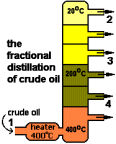 At 1 the crude oil is a ..?.. of hydrocarbons. [op-85]
 Which is a definition of an atom? [op-120]
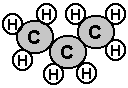 Which of the following means a 'hydrocarbon'? [op-124]
 Which statement is TRUE about polymers (plastics)? [op-126]
 Which statement is TRUE about polymers (plastics)? [op-127]
 Which explains why the gasoline fraction is used for petrol? [op-133]
 What may be formed by the incomplete combustion of petrol? [op-162]
 Which is a hydrocarbon molecule? [op-169]
 The following 'carbon numbers' correspond to gasoline, bottled gas, bitumen and
kerosene. Which is likely to be gasoline? [op-170]
The following 'carbon numbers' correspond to gasoline, bottled gas, bitumen and
kerosene. Which is likely to be gasoline? [op-170] [op-1] Which four quantities a, b, c and d are required to balance the equation?
 [op-2] Which four quantities a, b, c and d are required to balance the equation?
 Which molecule is natural gas? [op-25]
 Which molecule has the lowest boiling point? [op-27]

 Which is TRUE about an alkane hydrocarbon molecule? [op-101]


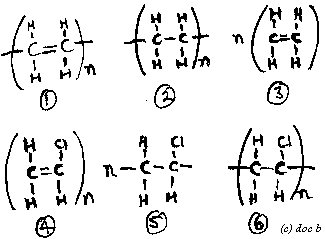 A student made some sketches of possible addition polymer structures. Which one of the following could be a correct structure? [op-149]
 A test for alkenes is to shake it with bromine water and look for decolourisation of the orange colour of bromine. If ethene was tested in this way, which student correctly predicted the structure of the product? [op-151]
  Which of these statements is TRUE about crude oil and fractional distillation? [op-197]
 The diagram shows the formation of a polymer. Which is TRUE? [op-205]
 Which reaction is causes the high temperature in a blast furnace? [me-9]
 In which reaction does an oxidation and a reduction produce the same product? [me-10]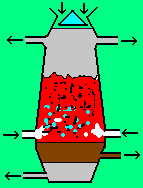
 To produce aluminium, electricity is passed through? [me-31]
 The name of a common ore from which aluminium can be extracted is called? [me-40]
 After the initial chemical extraction of copper from a copper ore, the copper is purified by? [me-51]
 Which metals is obtained from bauxite ore? [me-67]
 Which statement is TRUE? [me-71]
 Which metal is added to steel to give it good anti-corrosion properties? [me-78]

 Which metal is found as the free element in the Earth's crust? [me-79]


 Electrolysis processes can only be done on solutions or molten materials because? [me-98]
 Sodium and chlorine can be manufactured by passing a direct current through the molten salt sodium chloride. What happens at the negative electrode? [me-102]
 Which metal is less reactive than copper? [mr-1]
 The effect of connecting other metals to an iron nail was investigated. From the observations you can deduce? [mr-57]
 Copper can be used for roofing domes on buildings because it? [mr-67]
 Roofs of buildings made of iron weather to give a compound ? in colour. [mr-91]
 A simple battery cell can be made by connecting two metal strips dipped into a conducting solution of ions to form a complete circuit. The copper-zinc cell gives a voltage of 1.10 V. What voltage would be produced by a magnesium-iron cell? [mr-53]
 Galvanising, means 'coating with zinc', and is used to protect iron and steel objects from corrosion. The object can be dipped in a bath of molten zinc! but it is now mainly done by electrolysis. At the positive electrode? [mr-98]
 Galvanising means coating an iron (Fe) or steel object with a layer of zinc (Zn) to protect it from corrosion. Steel cans can also be coated with tin (Sn), also to protect it from corrosion, including fruit juices in 'tin' cans. When the zinc coating is scratched through to the iron underneath, the iron still does not corrode
initially. However, if the tin surface is scratched through to the iron, the iron corrodes even faster compared to when there was no coating at. This means? [mr-103]
Galvanising means coating an iron (Fe) or steel object with a layer of zinc (Zn) to protect it from corrosion. Steel cans can also be coated with tin (Sn), also to protect it from corrosion, including fruit juices in 'tin' cans. When the zinc coating is scratched through to the iron underneath, the iron still does not corrode
initially. However, if the tin surface is scratched through to the iron, the iron corrodes even faster compared to when there was no coating at. This means? [mr-103] The diagram shows the results of some sacrificial rust protection experiments. When silver is connected to iron, electrons transfer from iron to silver. This causes? [mr-113]
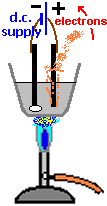 Which of the following statements is FALSE concerning the electrolysis of molten lead bromide, PbBr2 ? [ef13]
 When copper(II) sulfate solution undergoes electrolysis using copper electrodes the product at the positive anode is? [ef25]
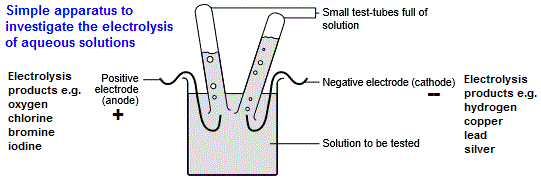 Electrolysis is brought about by passing a d.c. electrical current through a solution of ions (electrolyte). Which of the following statements is FALSE? [eh-1]