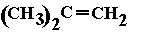
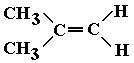
Advanced Organic Chemistry: Carbon-13 NMR spectrum of 2-methylpropene (CH3)2C=CH2
|
Interpreting and explaining the 13C NMR spectrum: 2-methylpropene (2-methylprop-1-ene) [Author © Dr Phil Brown PhD: Doc Brown's advanced level organic chemistry exam revision notes suitable for students of UK A level chemistry courses & US K12 grade 11, grade 12 and AP honors chemistry courses: Molecular spectroscopy - analysing the 13C NMR spectra of methylpropene, 2-methylpropene [spectra page updated April 4th 2026 *]email doc brown Re-edit the 13C NMR spectrum of H2C=C(CH3)2 Links associated with 2-methylpropene This is a BIG chemistry website, PLEASE take time to explore it C-13 NMR spectroscopy - spectra index * [privacy policy, cookies and disclaimer] Introductory note on the 13C NMR spectrum of 2-methylpropene
2-methylpropene,
The molecular structure and naming of alkenes
Key words & phrases: isomer of molecular formula C4H8 (CH3)2C=CH2 Interpreting the C-13 NMR spectra of 2-methylpropene, 13C nmr spectrum of 2-methylpropene, understanding the carbon-13 nmr spectrum of 2-methylpropene, explaining the line pattern in the high resolution C-13 nmr spectra of 2-methylpropene, revising the C-13 nmr spectrum of 2-methylpropene, ppm chemical shifts of the C-13 nmr spectrum of 2-methylpropene, how to construct the diagram of the C-13 nmr spectrum of 2-methylpropene, how to analyse the chemical shifts in the carbon-13 NMR spectrum of 2-methylpropene deducing the chemical environment of all the carbon atoms in 2-methylpropene examining the c13 nmr spectrum of 2-methylpropene analysing the 13C nmr spectrum of 2-methylpropene how do you sketch and interpret the C-13 NMR spectrum of 2-methylpropene interpreting interpretation of the C-13 NMR spectrum of 2-methylpropene assignment of chemical shifts in the 13C NMR spectrum of alkene functional group 2-methylpropene 2-Methylprop-1-ene methylpropene isobutene isobutylene 2-methylpropylene How do you interpret the chemical shifts of the C-13 NMR spectrum of 2-methylpropene How to interpret the C-13 NMR spectrum of 2-methylpropene Explanatory diagram of the 13C C-13 carbon-13 NMR spectrum of the number of different carbon atom environments in the 2-methylpropene molecule from its carbon-13 NMR spectrum to help work out the molecular structure of the 2-methylpropene molecule? The uses and distinctive features of the carbon-13 NMR spectrum of the 2-methylpropene molecule explained. What do the number and values of the chemical shifts from the c-13 carbon-13 NMR spectrum tell us about the 2-methylpropene molecule? explaining the decoupled carbon-13 NMR spectrum of 2-methylpropene with a detailed interpretation diagram of all the C-13 chemical shifts and intensities Links associated with 2-methylpropene The infrared spectrum of 2-methylpropene (2-methylprop-1-ene) The mass spectrum of 2-methylpropene (2-methylprop-1-ene) The H-1 NMR spectrum of 2-methylpropene (2-methylprop-1-ene) All Advanced Organic Chemistry Notes Email doc b: chem55555@hotmail.com Website content © Dr Phil Brown 2000+. All copyrights reserved on revision notes, images, quizzes, worksheets etc. Copying of Doc Brown's pre-university advanced level chemistry website material is NOT permitted. Exam revision summaries & references to science course specifications are unofficial. These organic chemistry revision notes on spectroscopy (13C NMR spectra of methylpropene, 2-methylpropene) are suitable for use of pre-university students studying AQA advanced level chemistry, Edexcel advanced level chemistry, OCR advanced level chemistry, IB advanced level chemistry, WJEC (Eduqas) advanced level chemistry, CIE advanced level chemistry, CCEA advanced level chemistry, US grade 11-12 AP honors chemistry courses and they will also prove useful to 1st year undergraduate students of chemistry. |

 ,
,
 ,
,
 ,
,

