|
Organic chemistry Part 10: Reactivity and reaction mechanisms
Part 10.8 Aromatic Hydrocarbons - Arenes - Electrophilic substitution reactions
- the Friedel-Crafts ACYLATION
reaction [Author
© email doc brown - comments - query? * [privacy, cookies and disclaimer]Index of organic chemistry technical terms and mechanism pages All my revision notes on the chemistry of aromatic compounds All my advanced A level organic chemistry notes Part 10.8 Aromatic Hydrocarbons - Arenes - Electrophilic substitution reactions - ACYLATION
Part 10.8 AROMATIC HYDROCARBONS (Arenes) 10.8.1 Introduction to the reactivity of aromatic compounds
Why do aromatic hydrocarbon molecules primarily react via electrophilic substitution reaction?
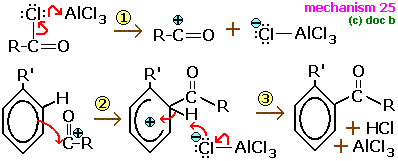
10.8.5 The electrophilic substitution of an arene - acylation mechanism (Friedel-Crafts reaction) Organic synthesis of aromatic ketones by reaction of acid/acyl chlorides with benzene/methylbenzene
Benzene is refluxed with an acid chloride and anhydrous aluminium chloride catalyst and a ketone is formed.
mechanism 25 - electrophilic substitution by an acyl group in the benzene ring
for R = CH3, methylbenzene: C6H5CH3 + R'COCl ==> R'COC6H4CH3 + HCl
FURTHER COMMENTS
10.8.7 The orientation of products in aromatic electrophilic substitution reactions
keywords phrases: reaction conditions formula intermediates organic chemistry reaction mechanisms electrophilic substitution benzene methylbenzene C6H6 + R'COCl ==> C6H5COR' + HCl If ethanoyl chloride, CH3COCl, was used (R=CH3-), benzene forms phenylethanone, C6H5-CO-CH3 RCO+ R = CH3, acylation of benzene methylbenzene : C6H5CH3 + R'COCl ==> R'COC6H4CH3 + HCl, Website content © Dr Phil Brown 2000+. All copyrights reserved on revision notes, images, quizzes, worksheets etc. Copying of website material is NOT permitted. Exam revision summaries & references to A level chemistry course specifications are unofficial. Website content © Dr Phil Brown 2000+. All copyrights reserved on these organic chemistry exam revision notes on electrophilic substitution mechanism of acylation of benzene & methylbenzene by the Friedel- Crafts reaction, these A level chemistry revision notes are suitable for use of pre-university students studying AQA advanced level organic chemistry revision notes on electrophilic substitution mechanism of acylation of benzene & methylbenzene by the Friedel- Crafts reaction, Edexcel advanced level organic chemistry revision notes on electrophilic substitution mechanism of acylation of benzene & methylbenzene by the Friedel- Crafts reaction, OCR advanced level organic chemistry revision notes on electrophilic substitution mechanism of acylation of benzene & methylbenzene by the Friedel- Crafts reaction, IB advanced level organic chemistry revision notes on electrophilic substitution mechanism of acylation of benzene & methylbenzene by the Friedel- Crafts reaction, WJEC (Eduqas) advanced level organic chemistry revision notes on electrophilic substitution mechanism of acylation of benzene & methylbenzene by the Friedel- Crafts reaction, CIE Cambridge advanced level organic chemistry revision notes on electrophilic substitution mechanism of acylation of benzene & methylbenzene by the Friedel- Crafts reaction, CCEA advanced level organic chemistry revision notes on electrophilic substitution mechanism of acylation of benzene & methylbenzene by the Friedel- Crafts reaction, and useful for US grade 11 grade 12 AP honors organic chemistry courses involving electrophilic substitution mechanism of acylation of benzene & methylbenzene by the Friedel- Crafts reaction Explaining the importance of electrophilic substitution mechanism of acylation of benzene & methylbenzene by the Friedel- Crafts reaction in organic chemistry, What you need to know about electrophilic substitution mechanism of acylation of benzene & methylbenzene by the Friedel- Crafts reaction for organic chemistry, Explaining the use of electrophilic substitution mechanism of acylation of benzene & methylbenzene by the Friedel- Crafts reaction knowledge in organic chemistry, Examples of electrophilic substitution mechanism of acylation of benzene & methylbenzene by the Friedel- Crafts reaction explained when studying organic chemistry, What is the significance of electrophilic substitution mechanism of acylation of benzene & methylbenzene by the Friedel- Crafts reaction in organic chemistry, What is the use of electrophilic substitution mechanism of acylation of benzene & methylbenzene by the Friedel- Crafts reaction in organic chemistry Describing and explaining the theory of electrophilic substitution mechanism of acylation of benzene & methylbenzene by the Friedel- Crafts reaction when studying organic chemistry, exam revision notes for electrophilic substitution mechanism of acylation of benzene & methylbenzene by the Friedel- Crafts reaction in exams, online help for electrophilic substitution mechanism of acylation of benzene & methylbenzene by the Friedel- Crafts reaction, revision notes for electrophilic substitution mechanism of acylation of benzene & methylbenzene by the Friedel- Crafts reaction, what do I need to learn for electrophilic substitution mechanism of acylation of benzene & methylbenzene by the Friedel- Crafts reaction in exams? revision summary for electrophilic substitution mechanism of acylation of benzene & methylbenzene by the Friedel- Crafts reaction, help in teaching electrophilic substitution mechanism of acylation of benzene & methylbenzene by the Friedel- Crafts reaction, learning notes for electrophilic substitution mechanism of acylation of benzene & methylbenzene by the Friedel- Crafts reaction, help to pass the electrophilic substitution mechanism of acylation of benzene & methylbenzene by the Friedel- Crafts reaction exam, how to prepare for examination questions on electrophilic substitution mechanism of acylation of benzene & methylbenzene by the Friedel- Crafts reaction? Revising Advanced Organic Chemistry Doc Brown's GCE Chemistry - GCE A Level Revision Notes PART 10 Summary of organic reaction mechanisms - A mechanistic introduction to organic chemistry and explanations of different types of organic reactions COMPLETE MECHANISM and Organic Synthesis INDEX (so far!)
|
 +
+

 + HCl
+ HCl ==>
==>
 + HCl
+ HCl